Role :
UX Researcher
Team:
5 researchers
Duration :
4 Weeks
Platform:
Dream and Color (dreamandcolor.com)
Overview
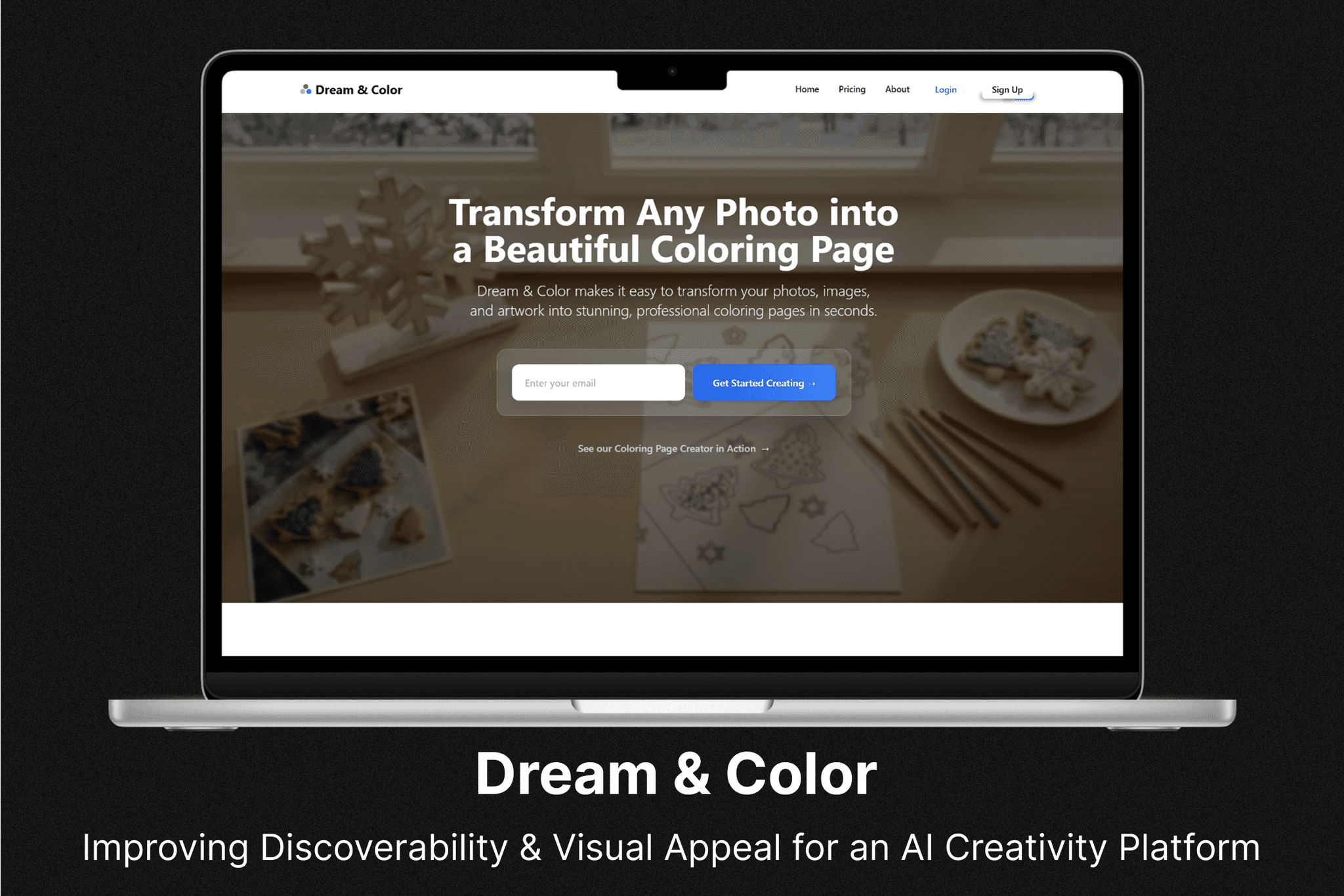
Dream and Color is a creative platform that transforms personal photos into custom coloring pages using AI. Users upload an image and the platform generates printable line art turning family photos, pet portraits, and personal memories into coloring experiences. The platform offers two generation models. Classic uses traditional edge detection to create line art. Dream 3.0 uses generative AI to produce more detailed, premium coloring pages.
The goal of this research was to evaluate how real users experience the platform where they struggle, what builds confidence, and what stands between them and paying for a subscription.
RESEARCH GOALS
The study set out to answer five core questions.
How easily can users find and access the Dream and Color website?
Can users navigate the platform to find key information before and after logging in?
How do users perceive the quality of generated coloring pages?
How does Dream and Color compare against Colorbliss, its closest competitor?
Do users feel the subscription cost reflects the value they receive?
RESEARCH APPROACH
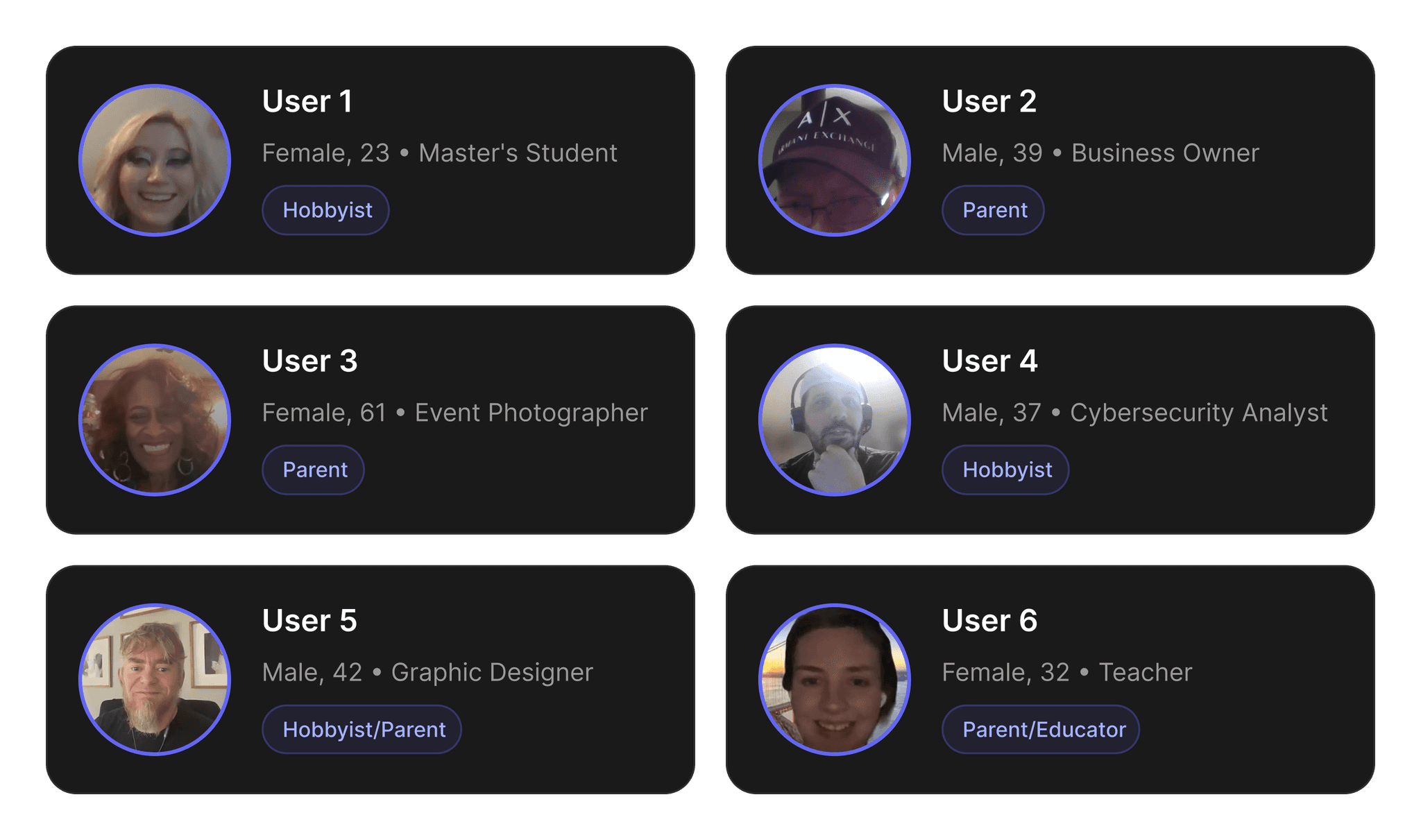
Six remote in-depth interviews were conducted over Zoom, each lasting approximately 45 minutes. Participants spanned ages 23 to 61 and represented three core user groups — parents, hobbyists, and educators — giving a broad view of how different people experience the platform.
Each session followed a structured moderation guide covering two phases: finding key information on the site, and generating coloring pages using both Classic and Dream 3.0. A competitive teardown of Colorbliss was also conducted across 10 critical user journeys to benchmark Dream and Color against its closest competitor.
My contributions included conducting 2 of the 6 interviews, contributing to the moderation guide, and participating in synthesis and recommendation development across the team.
KEY FINDINGS
Six usability themes emerged consistently across all six participants.
DISCOVERABILITY
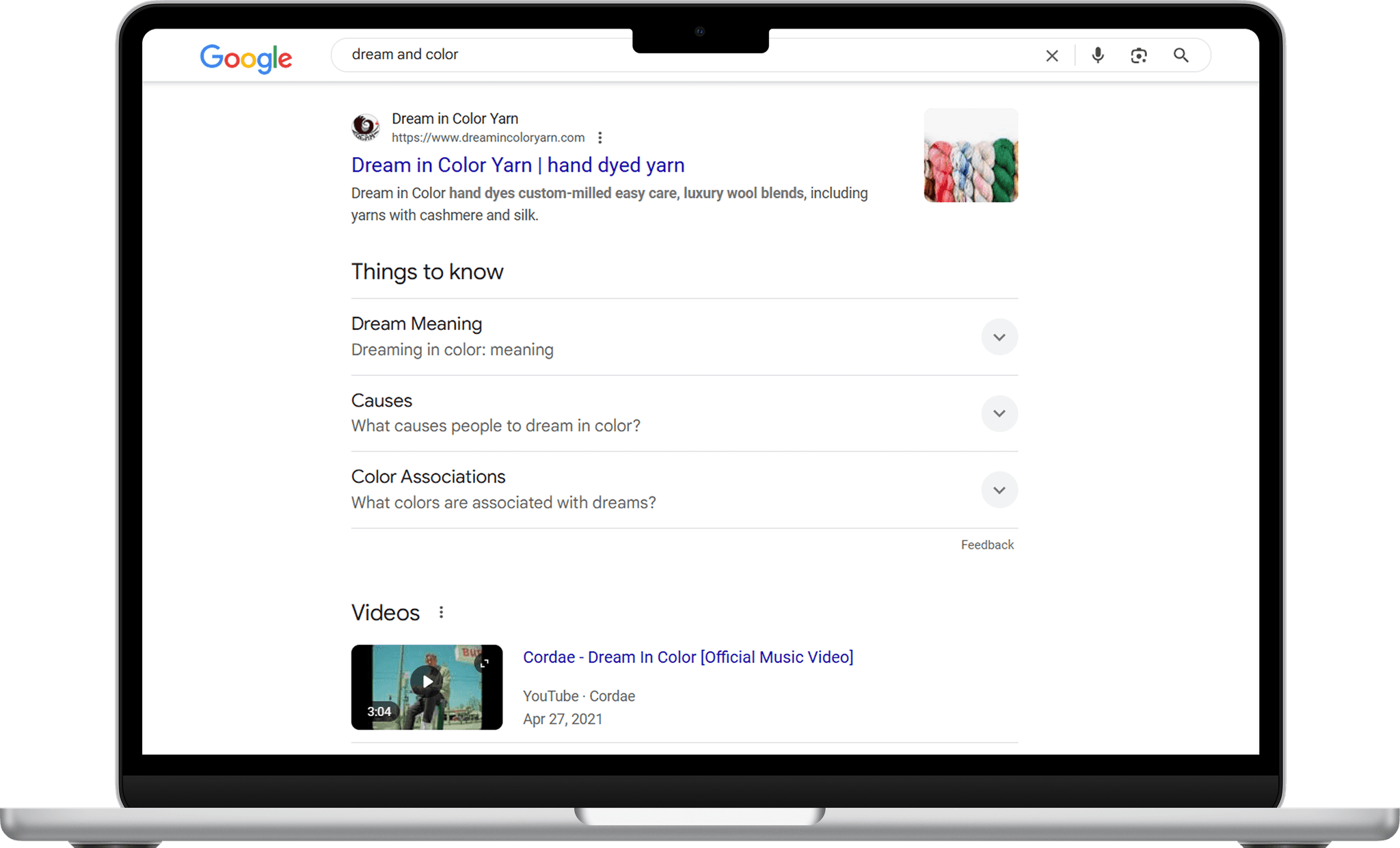
3 out of 6 users found the Dream and Color website on their first search attempt. The remaining 3 had to refine their query or scroll past unrelated results. The platform's name overlaps with yarn brands, music videos, and Reddit threads, making it easy to miss in organic search.
SITE NAVIGATION
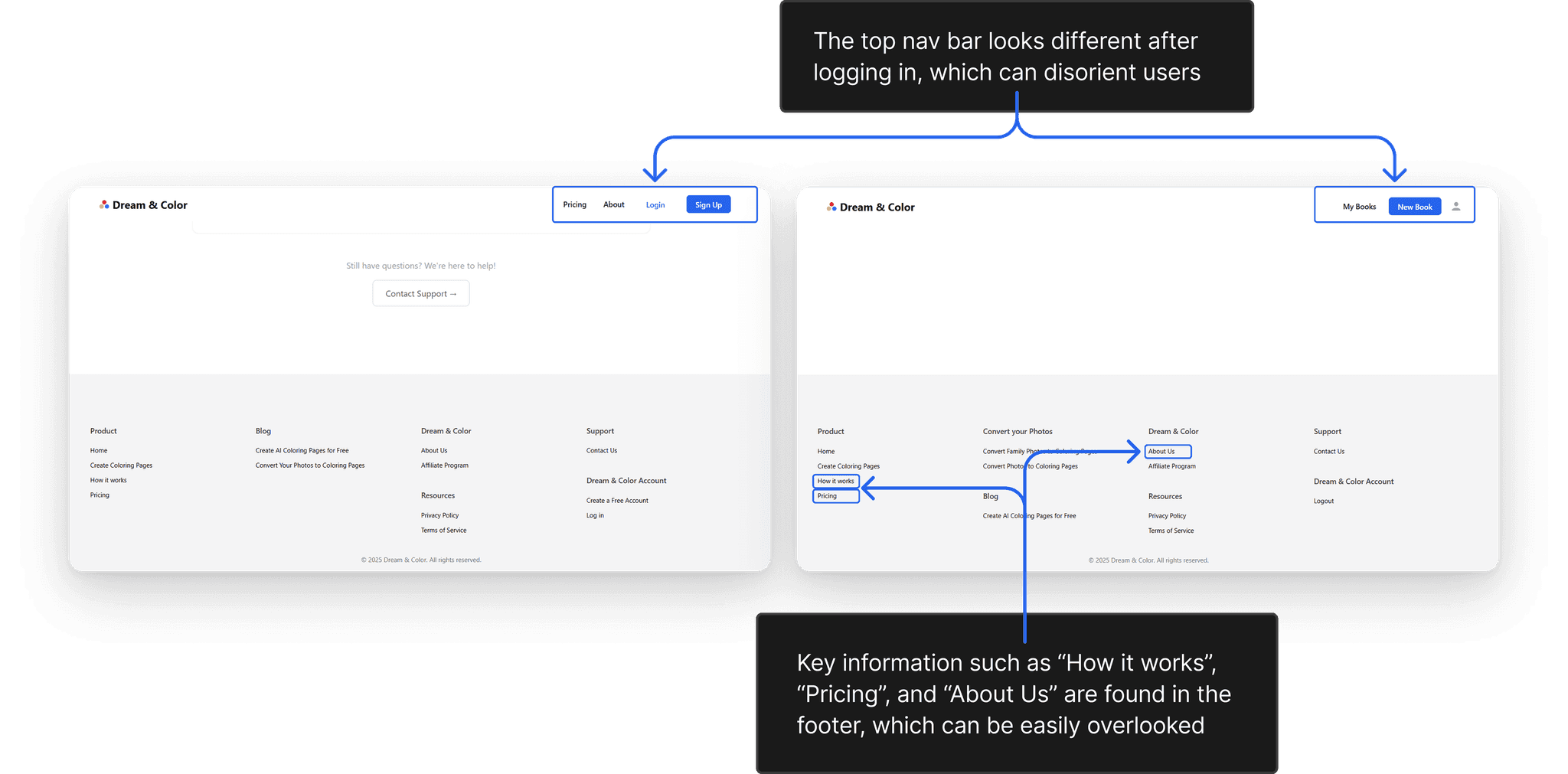
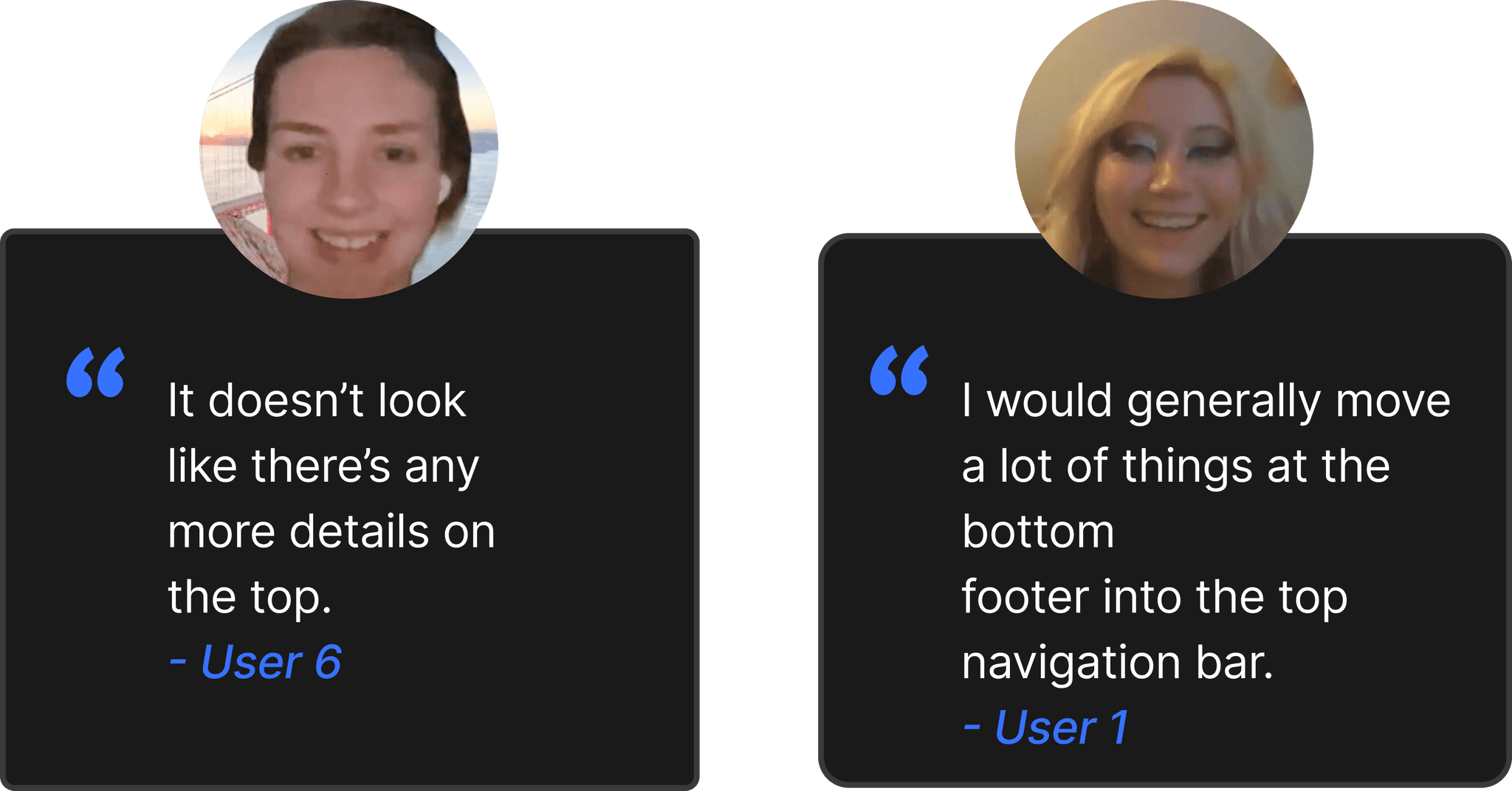
The navigation changes significantly after logging in, removing key links like Pricing, About, and How it Works from the top bar and burying them in the footer. 4 out of 6 users noticed this shift and found it disorienting. The logout option was also hidden in the footer, which 5 out of 6 users did not expect.
VISUAL APPEAL
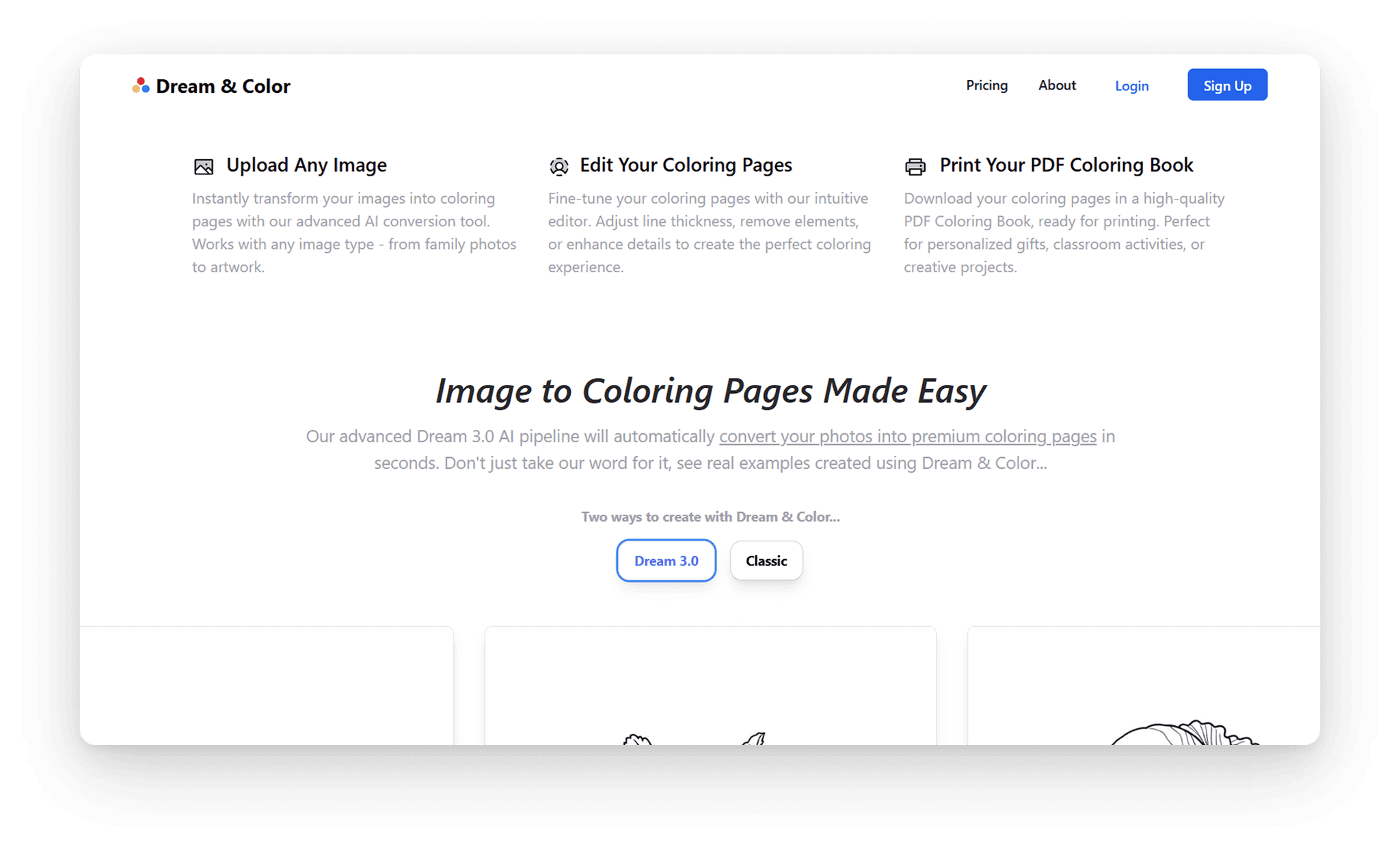
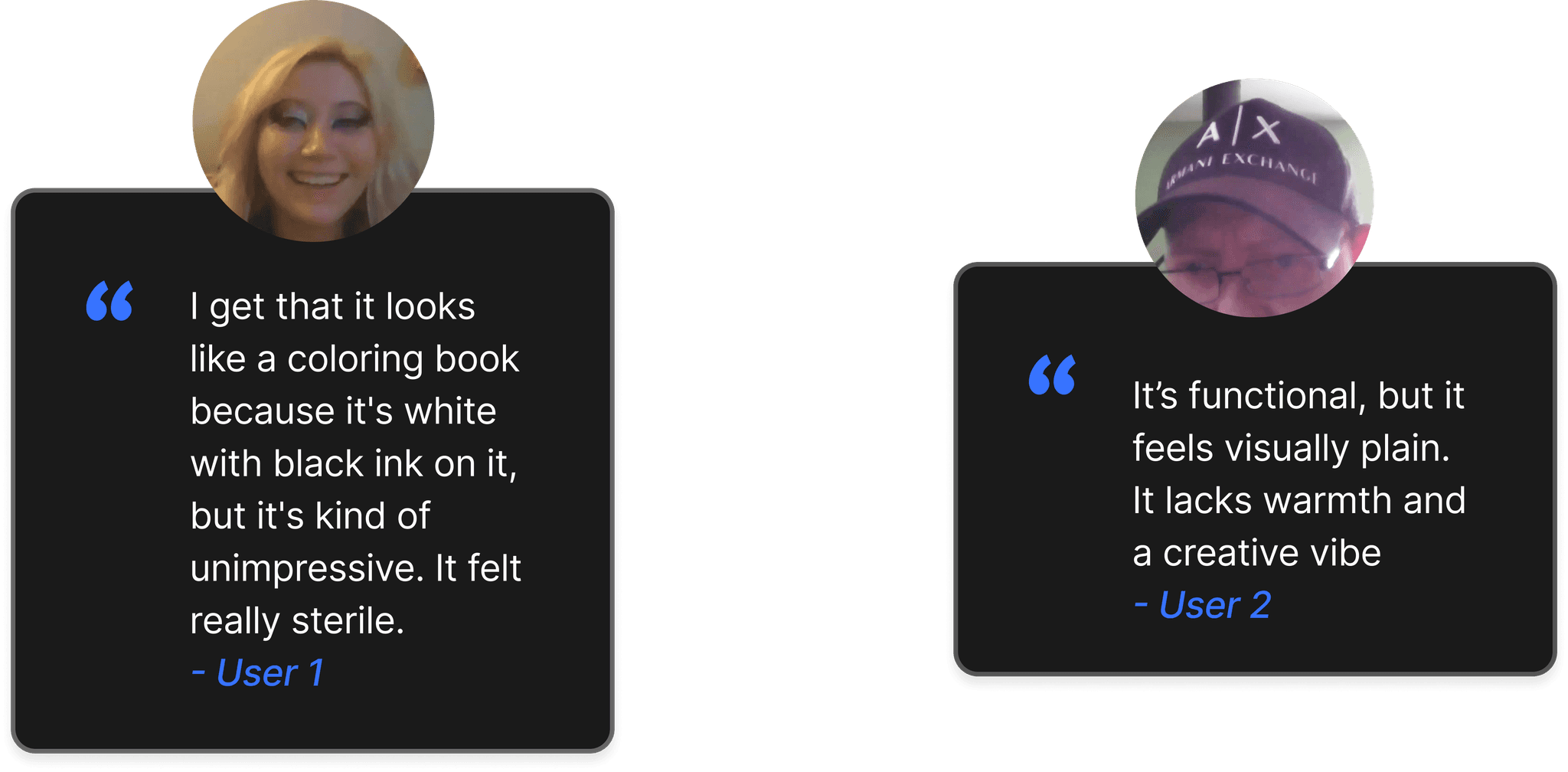
3 out of 6 users described the site as visually plain. The white and black aesthetic, while functional, did not reflect the creative and personal nature of the product. Users expected a platform about turning memories into art to feel warmer and more inviting.
COLORING PAGE QUALITY
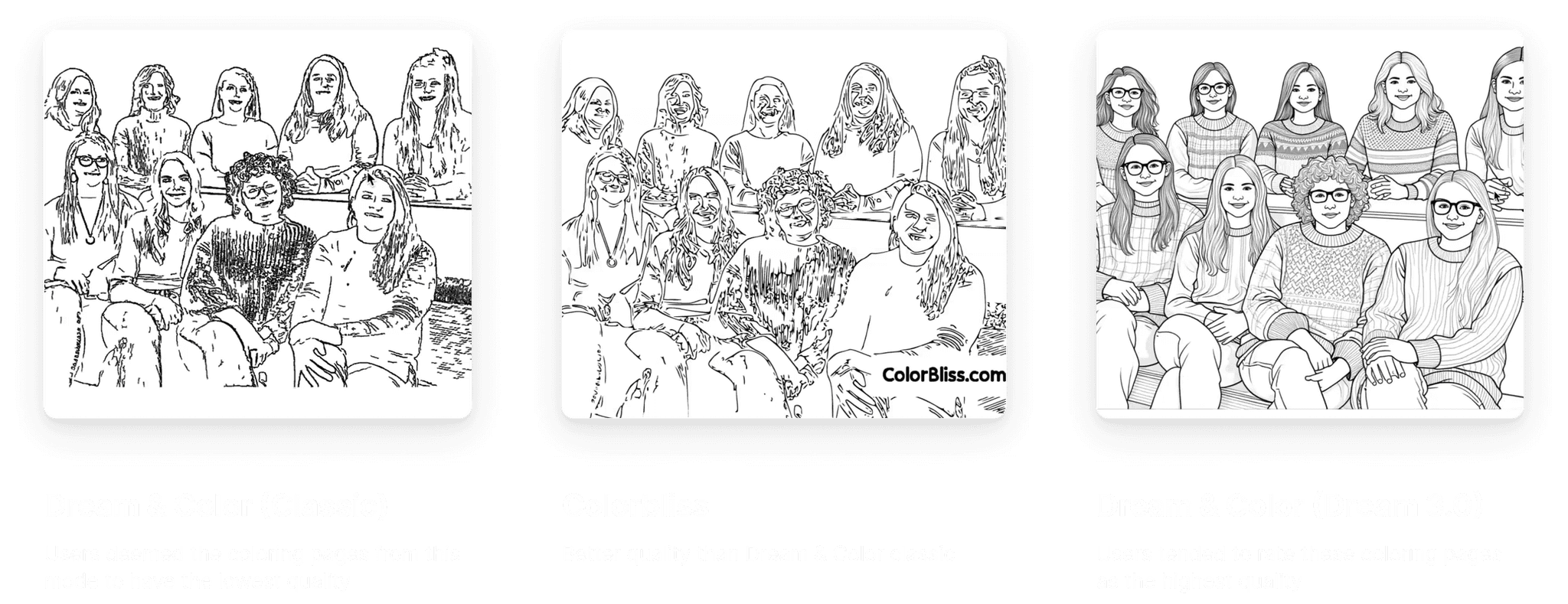
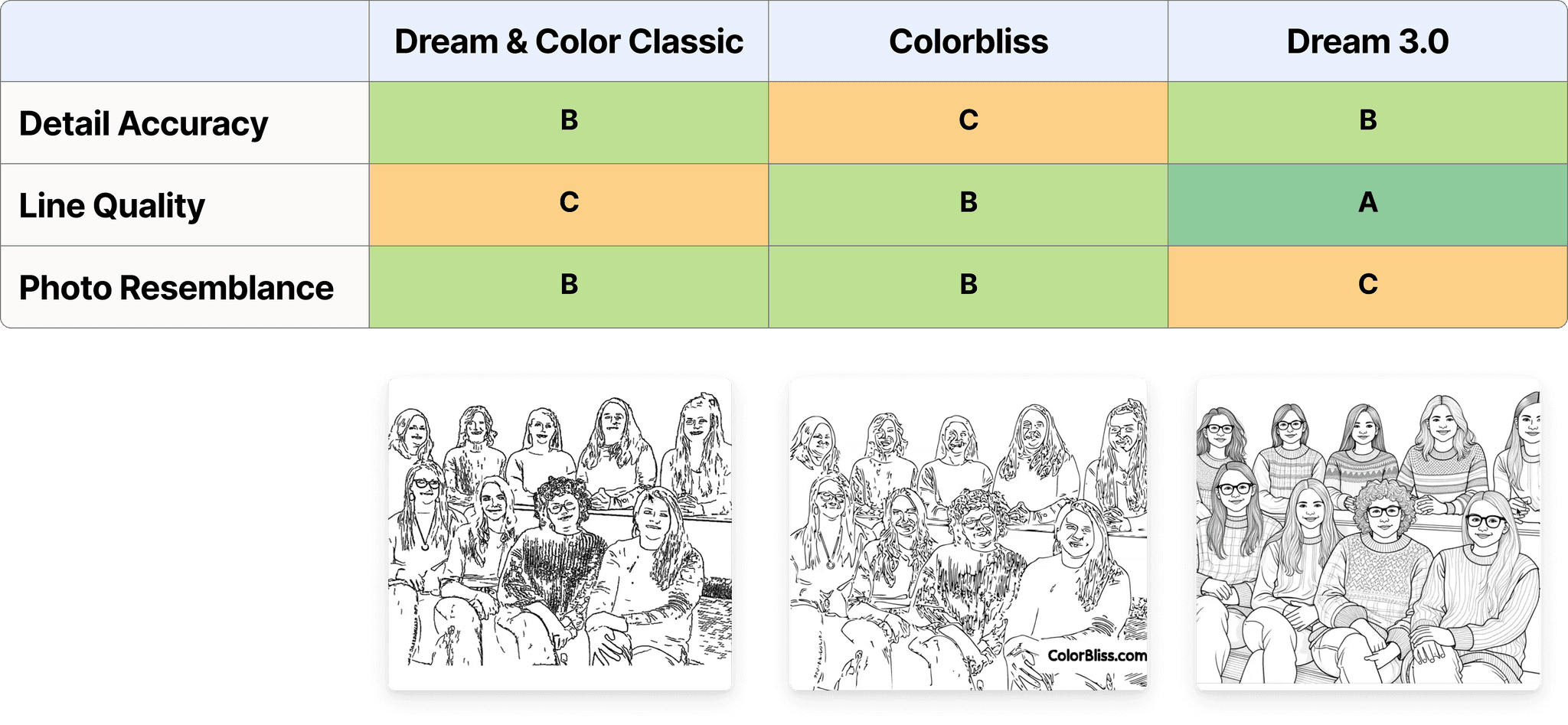
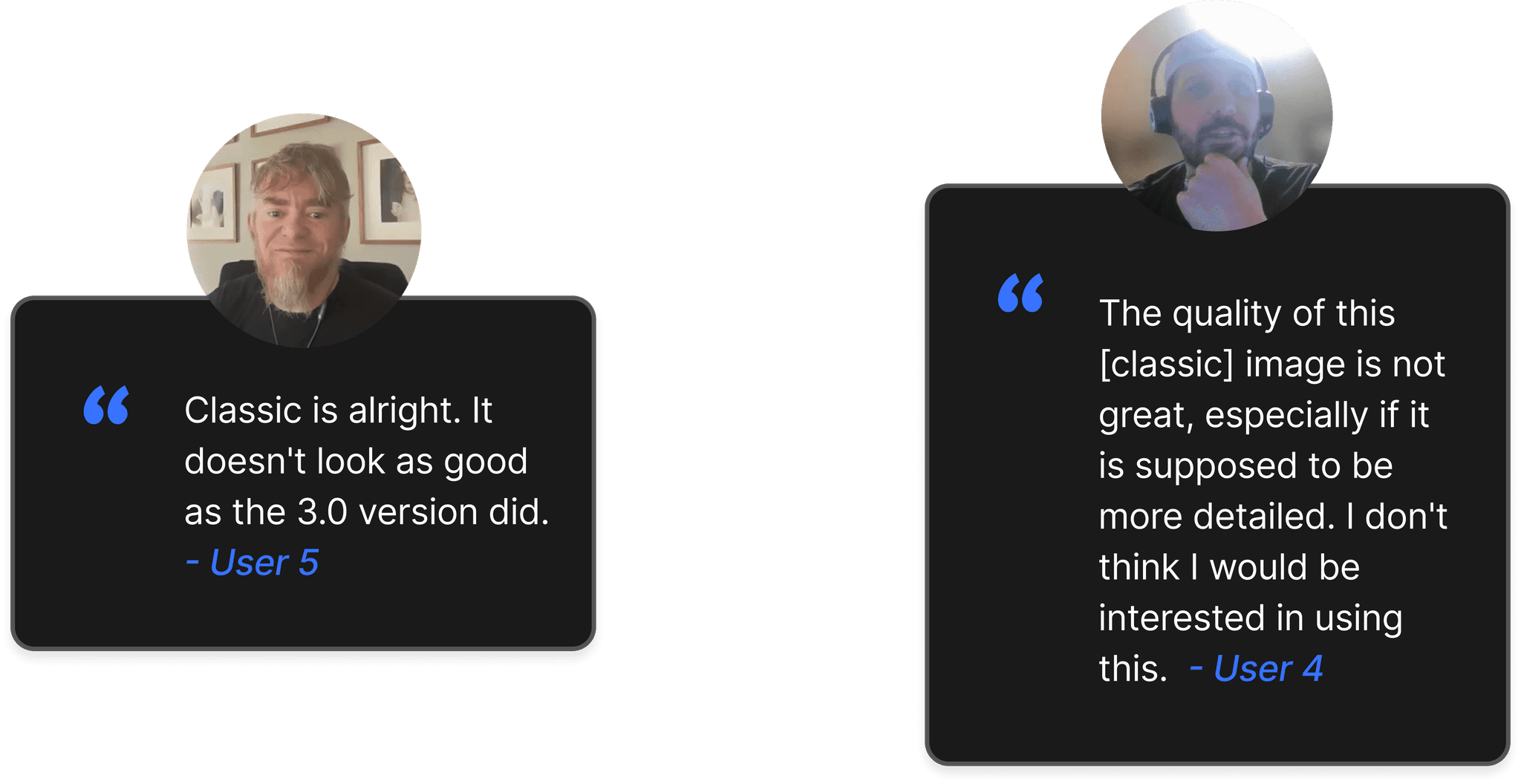
All 6 users preferred Dream 3.0 over Classic. The Classic model produced excessive noise and lacked detail, while Dream 3.0 generated cleaner, more polished line art. However, Dream 3.0 struggled with facial resemblance in portrait photos a significant gap for users whose primary use case is personal photos.
TEXT TO IMAGE
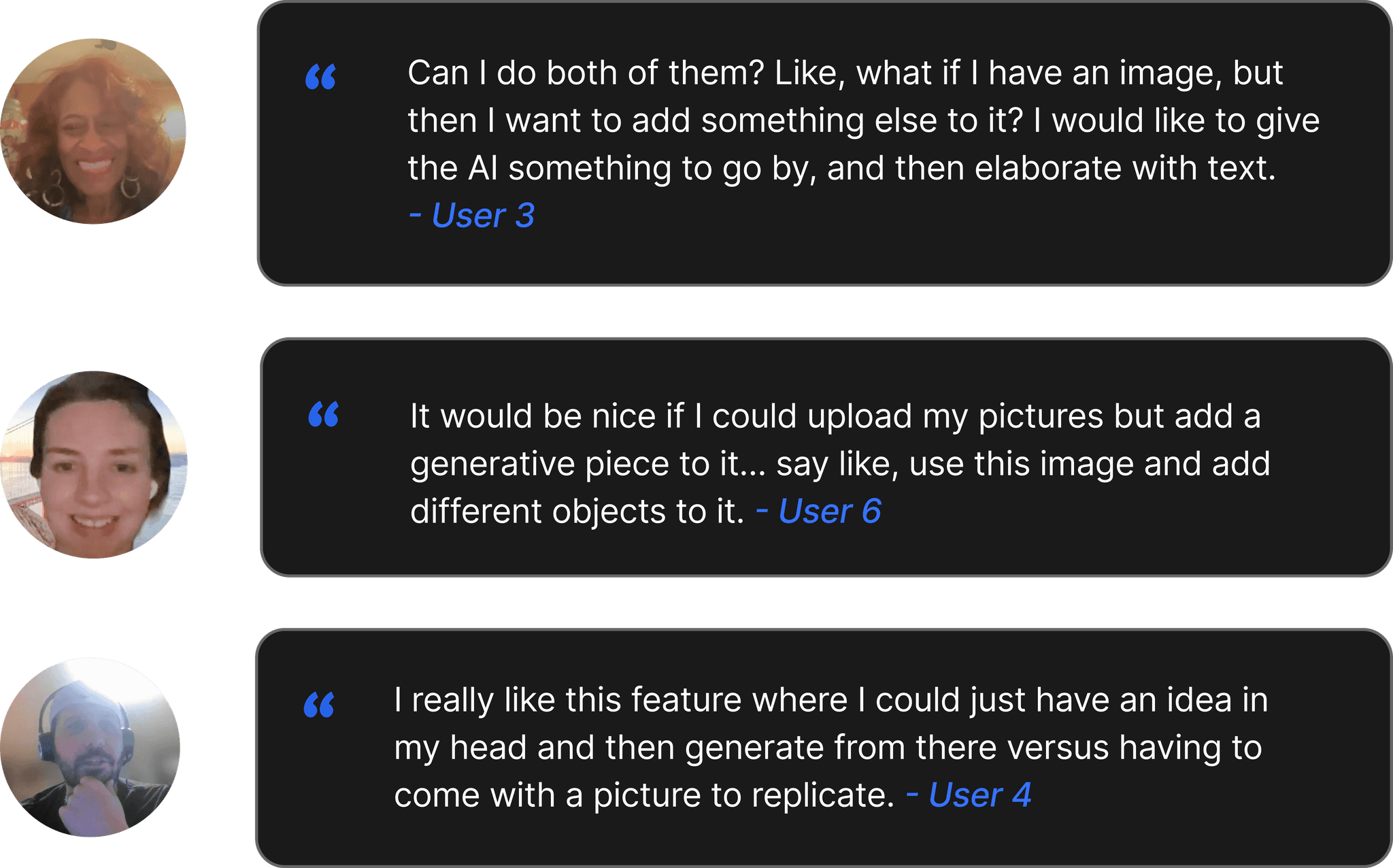
4 out of 6 users expressed strong interest in text to image generation after seeing it on Colorbliss. Users wanted two things — the ability to generate a coloring page from a text prompt alone, and the ability to combine a photo upload with text guidance to refine the output. Neither capability currently exists in Dream and Color.
SUBSCRIPTION COST
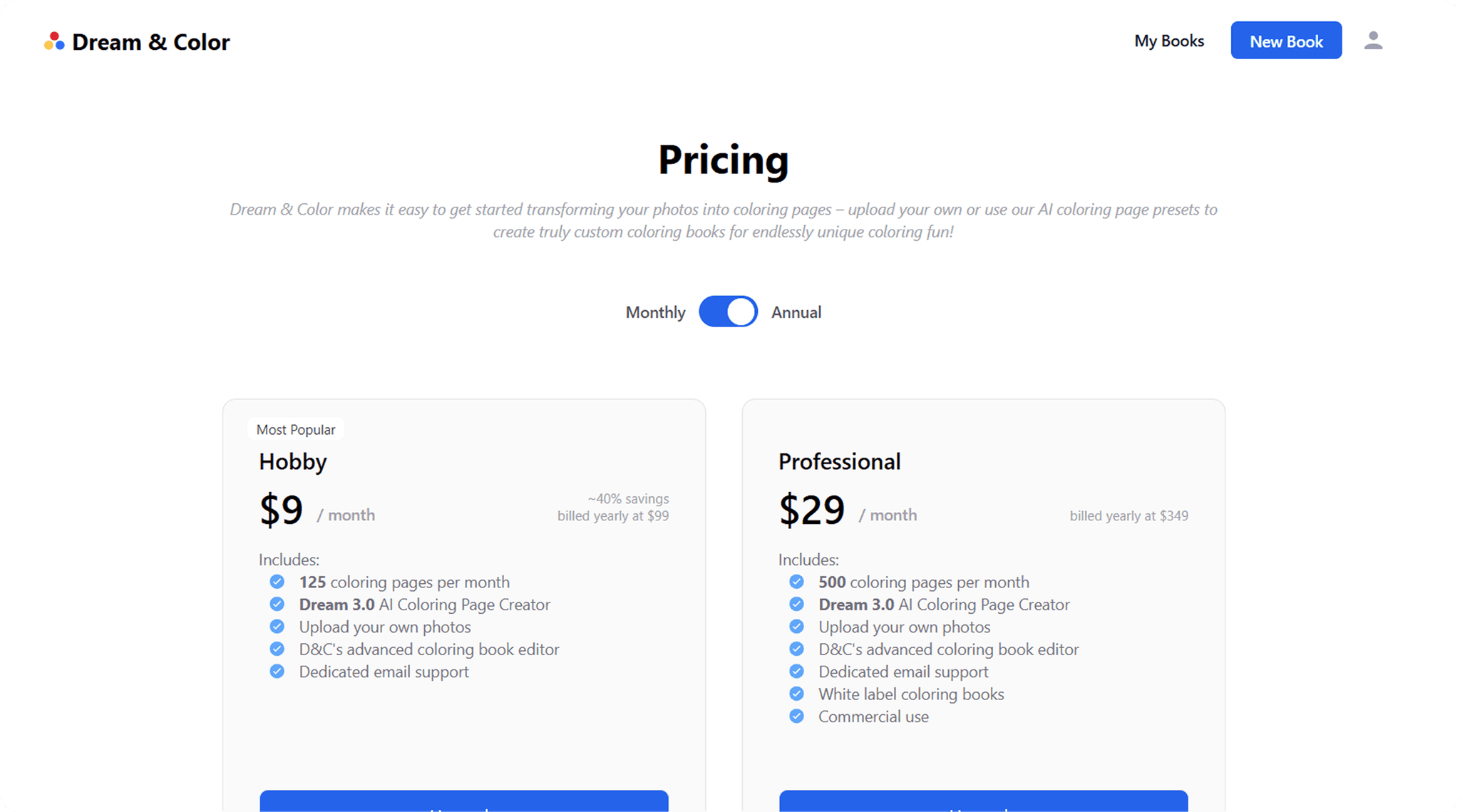
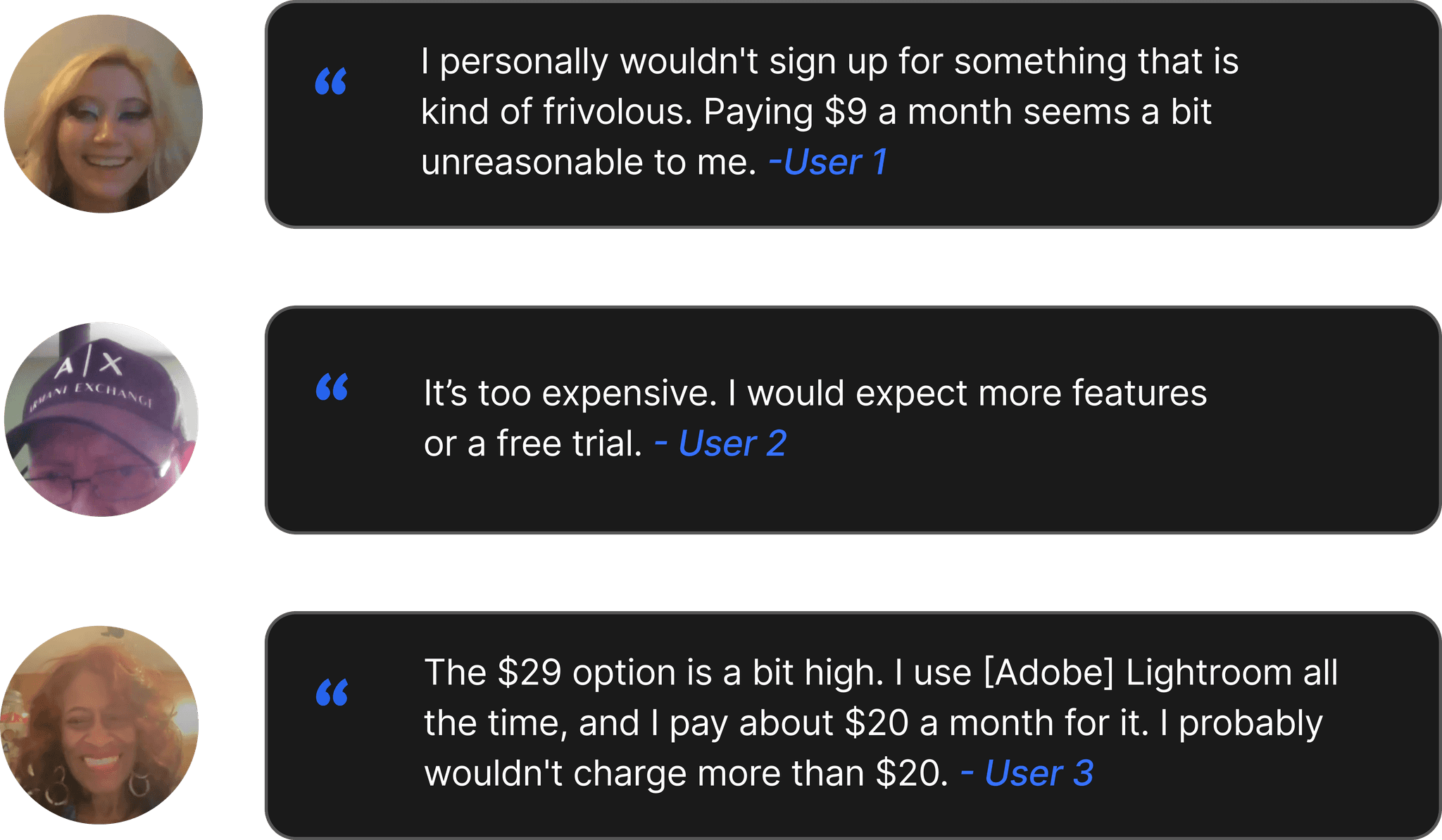
3 out of 6 users said they would not pay for the current subscription. The core problem was the free experience itself, free users only get access to Classic, which most found underwhelming. Without ever experiencing Dream 3.0 quality, users had no motivation to upgrade. The $9/month price point felt unjustified for a single feature.
COMPETITIVE ANALYSIS
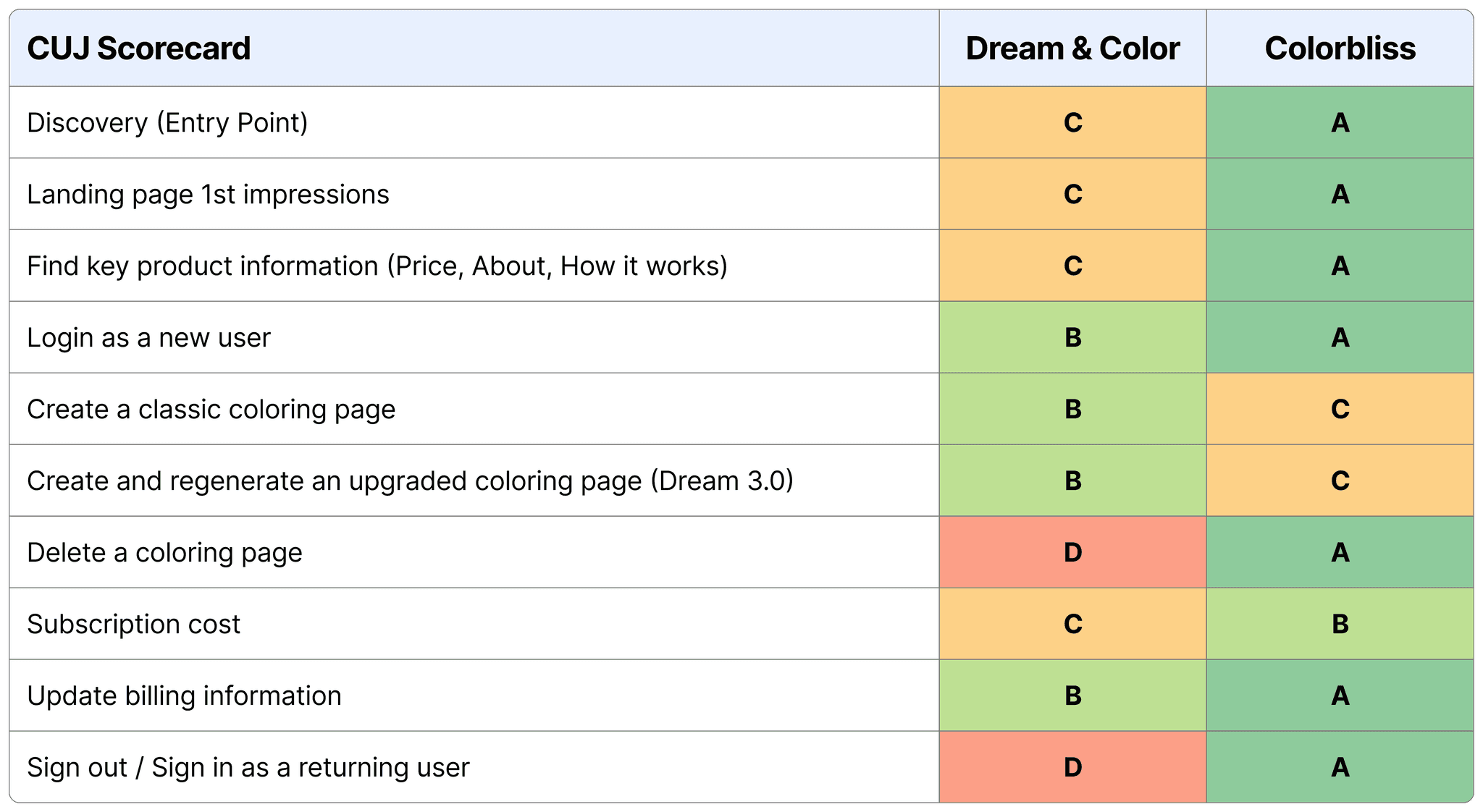
To benchmark Dream and Color against its closest competitor, the team conducted a teardown of Colorbliss across 10 critical user journeys. Each journey was graded on a scale from A to D, A being no issues, D being a major usability problem.
Dream and Color scored a C overall. Colorbliss scored a B. Colorbliss outperformed on discovery, landing page impressions, finding key product information, login, and sign out, all foundational journeys that determine whether a user even gets to the core product.
Dream and Color's strongest scores were in creating coloring pages, where Dream 3.0 output quality gave it an edge. Its weakest scores were in discovery, deletion, and sign out, all rated D.
RECOMMENDATIONS
Six themes, ten user journeys, and one clear pattern — Dream and Color has a strong core product but a weak surrounding experience. The research pointed to three tiers of action.
Quick Wins
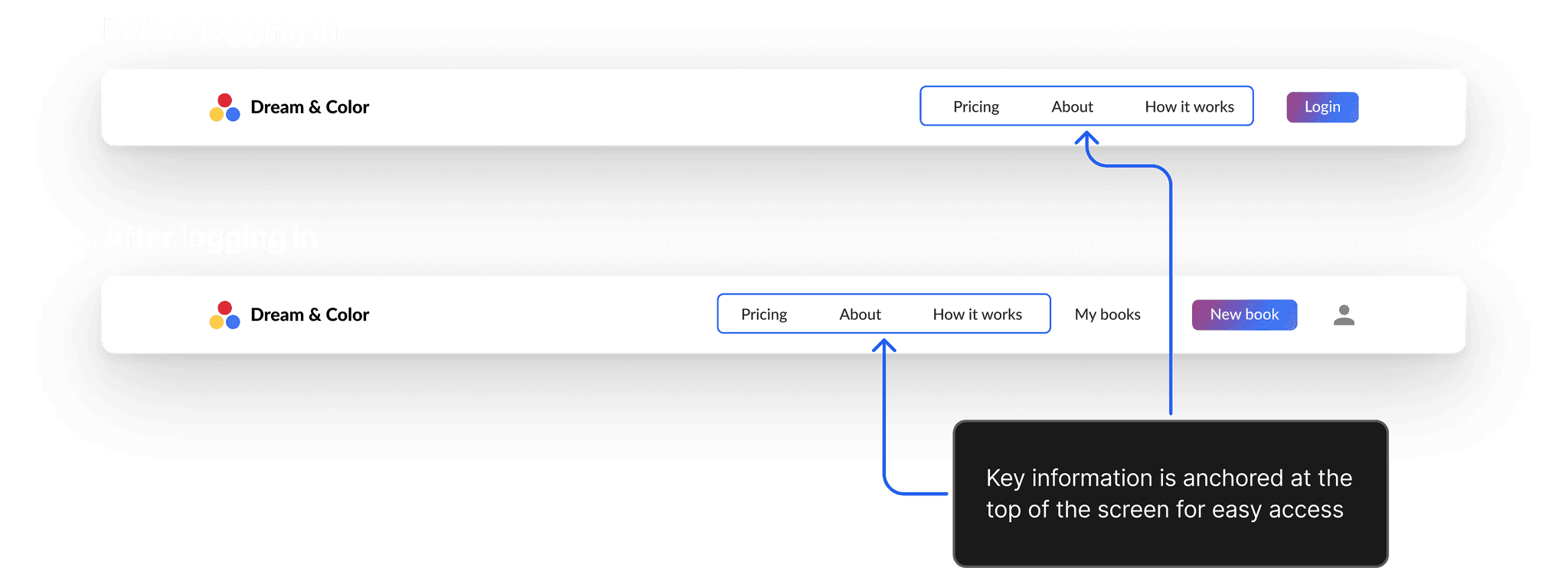
The lowest effort, highest impact fixes. Move Pricing, About, and How it Works back into the top nav after login. Add logout to the profile icon dropdown. Surface remaining credits visibly on the dashboard instead of hiding them behind a profile click. Add a Delete Page CTA near the Export button.
Medium Term
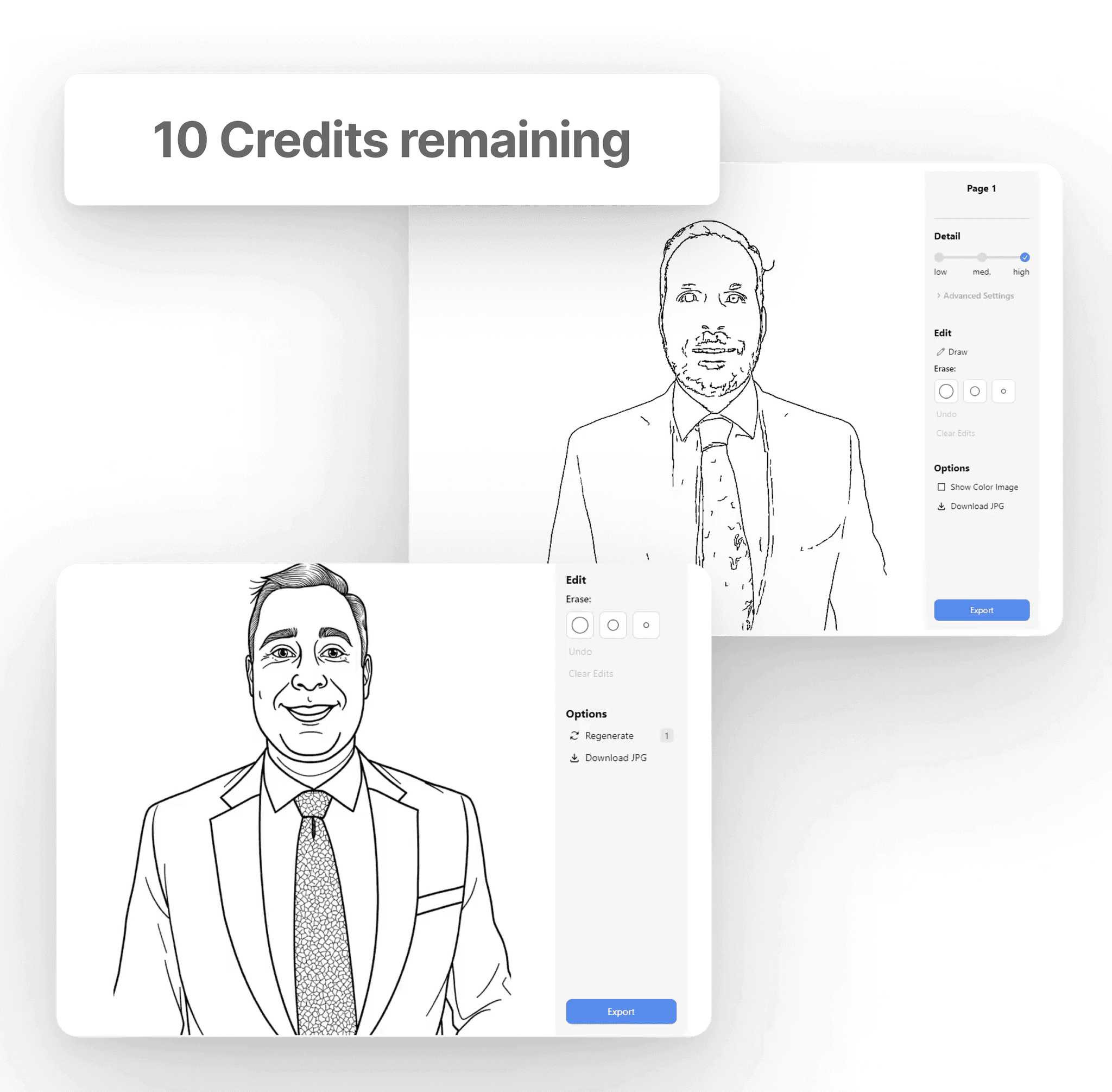
Introduce a freemium model that gives free users a limited number of Dream 3.0 credits. This directly addresses the conversion problem, users who never experience Dream 3.0 have no reason to pay. Add Google sign-in and a remember me option to reduce login friction. Build out a demo gallery that users can explore before signing up.
Strategic
Implement text to image generation to close the feature gap with Colorbliss. Invest in SEO and expand social media presence to fix discoverability. Redesign the visual identity to reflect the creative, personal nature of the product — the site should feel like a place where memories become art.
REFLECTION
This project reinforced something that's easy to overlook in product design — the free experience is the product. For Dream and Color, the biggest barrier to conversion wasn't pricing or competition. It was that free users never got to experience the thing worth paying for. Classic set a low bar, and users walked away before ever seeing Dream 3.0.
The most unexpected finding was the racial bias in Dream 3.5. It wasn't part of our original research questions, but it surfaced naturally during sessions and became the most important insight we documented. It was a reminder that AI products carry real responsibility around training data diversity — and that UX research has a role in surfacing those issues, not just usability ones.
If I could extend this project, the immediate next step would be a follow-up usability test after implementing the freemium model and nav fixes — to measure whether giving users a taste of Dream 3.0 upfront actually moves the conversion needle.
Personally, this was my first team-based UX research project at this scale. Leading sprint planning and synthesizing findings across six interviews pushed me to think beyond individual screens and consider the full user journey as a system.
Role :
UX Researcher
Team:
5 researchers
Duration :
4 Weeks
Platform:
Dream and Color (dreamandcolor.com)
Overview
Dream and Color is a creative platform that transforms personal photos into custom coloring pages using AI. Users upload an image and the platform generates printable line art turning family photos, pet portraits, and personal memories into coloring experiences. The platform offers two generation models. Classic uses traditional edge detection to create line art. Dream 3.0 uses generative AI to produce more detailed, premium coloring pages.
The goal of this research was to evaluate how real users experience the platform where they struggle, what builds confidence, and what stands between them and paying for a subscription.
RESEARCH GOALS
The study set out to answer five core questions.
How easily can users find and access the Dream and Color website?
Can users navigate the platform to find key information before and after logging in?
How do users perceive the quality of generated coloring pages?
How does Dream and Color compare against Colorbliss, its closest competitor?
Do users feel the subscription cost reflects the value they receive?
RESEARCH APPROACH
Six remote in-depth interviews were conducted over Zoom, each lasting approximately 45 minutes. Participants spanned ages 23 to 61 and represented three core user groups — parents, hobbyists, and educators — giving a broad view of how different people experience the platform.
Each session followed a structured moderation guide covering two phases: finding key information on the site, and generating coloring pages using both Classic and Dream 3.0. A competitive teardown of Colorbliss was also conducted across 10 critical user journeys to benchmark Dream and Color against its closest competitor.
My contributions included conducting 2 of the 6 interviews, contributing to the moderation guide, and participating in synthesis and recommendation development across the team.
KEY FINDINGS
Six usability themes emerged consistently across all six participants.
DISCOVERABILITY
3 out of 6 users found the Dream and Color website on their first search attempt. The remaining 3 had to refine their query or scroll past unrelated results. The platform's name overlaps with yarn brands, music videos, and Reddit threads, making it easy to miss in organic search.
SITE NAVIGATION
The navigation changes significantly after logging in, removing key links like Pricing, About, and How it Works from the top bar and burying them in the footer. 4 out of 6 users noticed this shift and found it disorienting. The logout option was also hidden in the footer, which 5 out of 6 users did not expect.
VISUAL APPEAL
3 out of 6 users described the site as visually plain. The white and black aesthetic, while functional, did not reflect the creative and personal nature of the product. Users expected a platform about turning memories into art to feel warmer and more inviting.
COLORING PAGE QUALITY
All 6 users preferred Dream 3.0 over Classic. The Classic model produced excessive noise and lacked detail, while Dream 3.0 generated cleaner, more polished line art. However, Dream 3.0 struggled with facial resemblance in portrait photos a significant gap for users whose primary use case is personal photos.
TEXT TO IMAGE
4 out of 6 users expressed strong interest in text to image generation after seeing it on Colorbliss. Users wanted two things — the ability to generate a coloring page from a text prompt alone, and the ability to combine a photo upload with text guidance to refine the output. Neither capability currently exists in Dream and Color.
SUBSCRIPTION COST
3 out of 6 users said they would not pay for the current subscription. The core problem was the free experience itself, free users only get access to Classic, which most found underwhelming. Without ever experiencing Dream 3.0 quality, users had no motivation to upgrade. The $9/month price point felt unjustified for a single feature.
COMPETITIVE ANALYSIS
To benchmark Dream and Color against its closest competitor, the team conducted a teardown of Colorbliss across 10 critical user journeys. Each journey was graded on a scale from A to D, A being no issues, D being a major usability problem.
Dream and Color scored a C overall. Colorbliss scored a B. Colorbliss outperformed on discovery, landing page impressions, finding key product information, login, and sign out, all foundational journeys that determine whether a user even gets to the core product.
Dream and Color's strongest scores were in creating coloring pages, where Dream 3.0 output quality gave it an edge. Its weakest scores were in discovery, deletion, and sign out, all rated D.
RECOMMENDATIONS
Six themes, ten user journeys, and one clear pattern — Dream and Color has a strong core product but a weak surrounding experience. The research pointed to three tiers of action.
Quick Wins
The lowest effort, highest impact fixes. Move Pricing, About, and How it Works back into the top nav after login. Add logout to the profile icon dropdown. Surface remaining credits visibly on the dashboard instead of hiding them behind a profile click. Add a Delete Page CTA near the Export button.
Medium Term
Introduce a freemium model that gives free users a limited number of Dream 3.0 credits. This directly addresses the conversion problem, users who never experience Dream 3.0 have no reason to pay. Add Google sign-in and a remember me option to reduce login friction. Build out a demo gallery that users can explore before signing up.
Strategic
Implement text to image generation to close the feature gap with Colorbliss. Invest in SEO and expand social media presence to fix discoverability. Redesign the visual identity to reflect the creative, personal nature of the product — the site should feel like a place where memories become art.
REFLECTION
This project reinforced something that's easy to overlook in product design — the free experience is the product. For Dream and Color, the biggest barrier to conversion wasn't pricing or competition. It was that free users never got to experience the thing worth paying for. Classic set a low bar, and users walked away before ever seeing Dream 3.0.
The most unexpected finding was the racial bias in Dream 3.5. It wasn't part of our original research questions, but it surfaced naturally during sessions and became the most important insight we documented. It was a reminder that AI products carry real responsibility around training data diversity — and that UX research has a role in surfacing those issues, not just usability ones.
If I could extend this project, the immediate next step would be a follow-up usability test after implementing the freemium model and nav fixes — to measure whether giving users a taste of Dream 3.0 upfront actually moves the conversion needle.
Personally, this was my first team-based UX research project at this scale. Leading sprint planning and synthesizing findings across six interviews pushed me to think beyond individual screens and consider the full user journey as a system.
Role :
UX Researcher
Team:
5 researchers
Duration :
4 Weeks
Platform:
Dream and Color (dreamandcolor.com)
Overview
Dream and Color is a creative platform that transforms personal photos into custom coloring pages using AI. Users upload an image and the platform generates printable line art turning family photos, pet portraits, and personal memories into coloring experiences. The platform offers two generation models. Classic uses traditional edge detection to create line art. Dream 3.0 uses generative AI to produce more detailed, premium coloring pages.
The goal of this research was to evaluate how real users experience the platform where they struggle, what builds confidence, and what stands between them and paying for a subscription.
RESEARCH GOALS
The study set out to answer five core questions.
How easily can users find and access the Dream and Color website?
Can users navigate the platform to find key information before and after logging in?
How do users perceive the quality of generated coloring pages?
How does Dream and Color compare against Colorbliss, its closest competitor?
Do users feel the subscription cost reflects the value they receive?
RESEARCH APPROACH
Six remote in-depth interviews were conducted over Zoom, each lasting approximately 45 minutes. Participants spanned ages 23 to 61 and represented three core user groups — parents, hobbyists, and educators — giving a broad view of how different people experience the platform.
Each session followed a structured moderation guide covering two phases: finding key information on the site, and generating coloring pages using both Classic and Dream 3.0. A competitive teardown of Colorbliss was also conducted across 10 critical user journeys to benchmark Dream and Color against its closest competitor.
My contributions included conducting 2 of the 6 interviews, contributing to the moderation guide, and participating in synthesis and recommendation development across the team.
KEY FINDINGS
Six usability themes emerged consistently across all six participants.
DISCOVERABILITY
3 out of 6 users found the Dream and Color website on their first search attempt. The remaining 3 had to refine their query or scroll past unrelated results. The platform's name overlaps with yarn brands, music videos, and Reddit threads, making it easy to miss in organic search.
SITE NAVIGATION
The navigation changes significantly after logging in, removing key links like Pricing, About, and How it Works from the top bar and burying them in the footer. 4 out of 6 users noticed this shift and found it disorienting. The logout option was also hidden in the footer, which 5 out of 6 users did not expect.
VISUAL APPEAL
3 out of 6 users described the site as visually plain. The white and black aesthetic, while functional, did not reflect the creative and personal nature of the product. Users expected a platform about turning memories into art to feel warmer and more inviting.
COLORING PAGE QUALITY
All 6 users preferred Dream 3.0 over Classic. The Classic model produced excessive noise and lacked detail, while Dream 3.0 generated cleaner, more polished line art. However, Dream 3.0 struggled with facial resemblance in portrait photos a significant gap for users whose primary use case is personal photos.
TEXT TO IMAGE
4 out of 6 users expressed strong interest in text to image generation after seeing it on Colorbliss. Users wanted two things — the ability to generate a coloring page from a text prompt alone, and the ability to combine a photo upload with text guidance to refine the output. Neither capability currently exists in Dream and Color.
SUBSCRIPTION COST
3 out of 6 users said they would not pay for the current subscription. The core problem was the free experience itself, free users only get access to Classic, which most found underwhelming. Without ever experiencing Dream 3.0 quality, users had no motivation to upgrade. The $9/month price point felt unjustified for a single feature.
COMPETITIVE ANALYSIS
To benchmark Dream and Color against its closest competitor, the team conducted a teardown of Colorbliss across 10 critical user journeys. Each journey was graded on a scale from A to D, A being no issues, D being a major usability problem.
Dream and Color scored a C overall. Colorbliss scored a B. Colorbliss outperformed on discovery, landing page impressions, finding key product information, login, and sign out, all foundational journeys that determine whether a user even gets to the core product.
Dream and Color's strongest scores were in creating coloring pages, where Dream 3.0 output quality gave it an edge. Its weakest scores were in discovery, deletion, and sign out, all rated D.
RECOMMENDATIONS
Six themes, ten user journeys, and one clear pattern — Dream and Color has a strong core product but a weak surrounding experience. The research pointed to three tiers of action.
Quick Wins
The lowest effort, highest impact fixes. Move Pricing, About, and How it Works back into the top nav after login. Add logout to the profile icon dropdown. Surface remaining credits visibly on the dashboard instead of hiding them behind a profile click. Add a Delete Page CTA near the Export button.
Medium Term
Introduce a freemium model that gives free users a limited number of Dream 3.0 credits. This directly addresses the conversion problem, users who never experience Dream 3.0 have no reason to pay. Add Google sign-in and a remember me option to reduce login friction. Build out a demo gallery that users can explore before signing up.
Strategic
Implement text to image generation to close the feature gap with Colorbliss. Invest in SEO and expand social media presence to fix discoverability. Redesign the visual identity to reflect the creative, personal nature of the product — the site should feel like a place where memories become art.
REFLECTION
This project reinforced something that's easy to overlook in product design — the free experience is the product. For Dream and Color, the biggest barrier to conversion wasn't pricing or competition. It was that free users never got to experience the thing worth paying for. Classic set a low bar, and users walked away before ever seeing Dream 3.0.
The most unexpected finding was the racial bias in Dream 3.5. It wasn't part of our original research questions, but it surfaced naturally during sessions and became the most important insight we documented. It was a reminder that AI products carry real responsibility around training data diversity — and that UX research has a role in surfacing those issues, not just usability ones.
If I could extend this project, the immediate next step would be a follow-up usability test after implementing the freemium model and nav fixes — to measure whether giving users a taste of Dream 3.0 upfront actually moves the conversion needle.
Personally, this was my first team-based UX research project at this scale. Leading sprint planning and synthesizing findings across six interviews pushed me to think beyond individual screens and consider the full user journey as a system.