Role :
Product Designer
(End-to-End)
Company :
Marketplace Concept
Duration :
4 Weeks
Mentorship :
Guided by Kevin Cook, Sr. UX Designer at AWS
CONTEXT
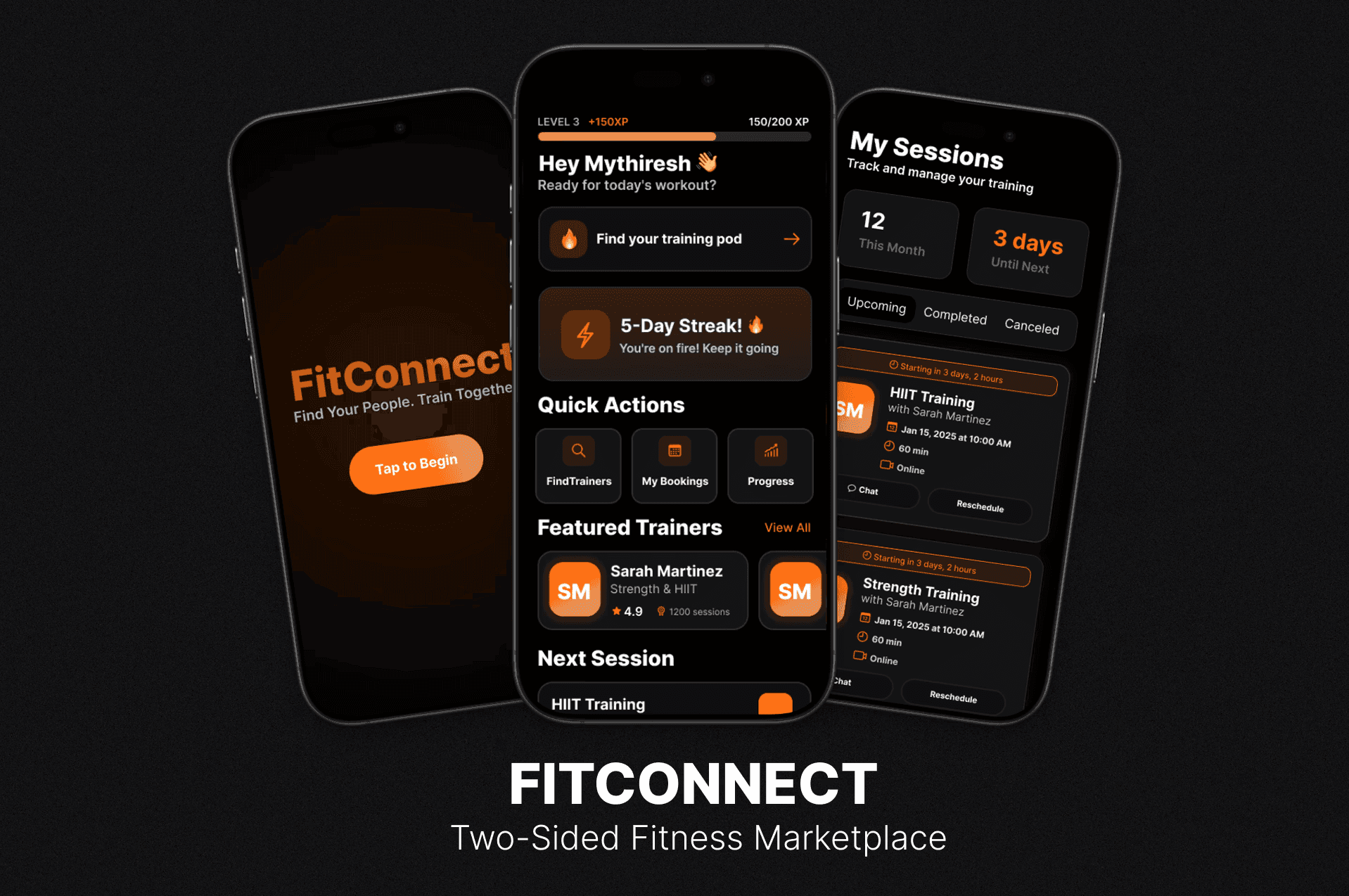
FitConnect is a two-sided marketplace connecting clients with trainers through guided matching and trust-driven interactions. The goal was to reduce decision fatigue while improving visibility and consistency for both sides.
Problem
Clients
Finding the right trainer is overwhelming and uncertain.
Too many similar profiles with nothing to differentiate them
No way to verify if a trainer actually fits their goals
No guidance — just a search bar and a list
Trainers
Building a consistent client base feels like guesswork.
Discovery depends heavily on word-of-mouth or social media
No structured tools to convert, manage, or retain clients in one place
No way to showcase expertise beyond a basic profile
The challenge isn’t access, it’s alignment. Both sides exist on the platform but can’t meaningfully connect.
RESEARCH INSIGHTS
Insights drawn from user interviews, competitive research, and persona development across both client and trainer perspectives.
Users only trust trainers after seeing verified certifications, real results, and reviews from people with similar goals
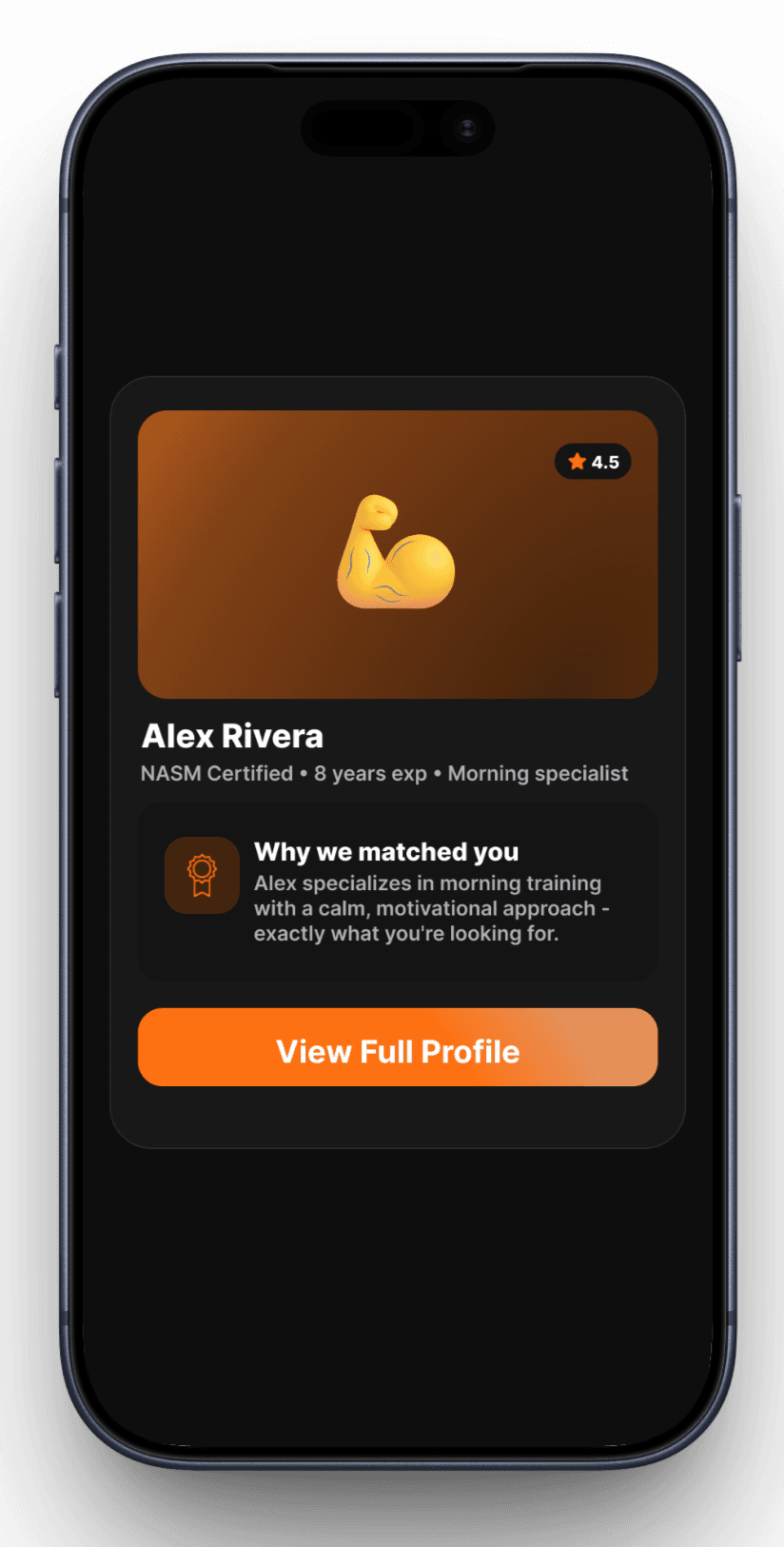
A curated top-3 match with a "why we matched you" explanation outperformed open search every time
Users consistently wanted a low-friction intro interaction before making any booking decision
Most trainers rely on Instagram or referrals with no structured way to attract or retain clients
Scheduling, payments, and progress tracking happen across disconnected apps creating daily friction
Delays in trainer replies push users toward another trainer immediately, response speed directly signals trust
System Thinking
FitConnect only works when both sides win. Every design decision had to account for how an action on one side directly affects the other.
Client reviews don't just reflect past experiences. They improve future matching for every user on the platform. Trainer visibility doesn't just benefit trainers. It gives clients better options. The two sides are permanently connected.
The design had to protect every step in that loop. A weak trainer profile breaks matching. A slow response breaks booking. A bad session breaks retention. One broken link collapses the whole system.
USER JOURNEY
Client JOURNEY
To understand where users struggled, I mapped the full client journey from discovering FitConnect to completing their first session.

The biggest friction points appeared at the discovery and evaluation stages, where users felt overwhelmed by choices and lacked enough trust to commit to a trainer.
Trainer JOURNEY
I mapped the trainer journey from application to long-term growth, focusing on reducing onboarding friction and building platform credibility.

The trainer journey was designed to reduce setup friction and build credibility fast, so trainers could focus on coaching rather than admin.
WIREFRAMES
Wireframes were built to validate structure and flow before any visual decisions were made. The focus was on information hierarchy, user flow, and reducing friction at key decision points.
CLIENT SIDE
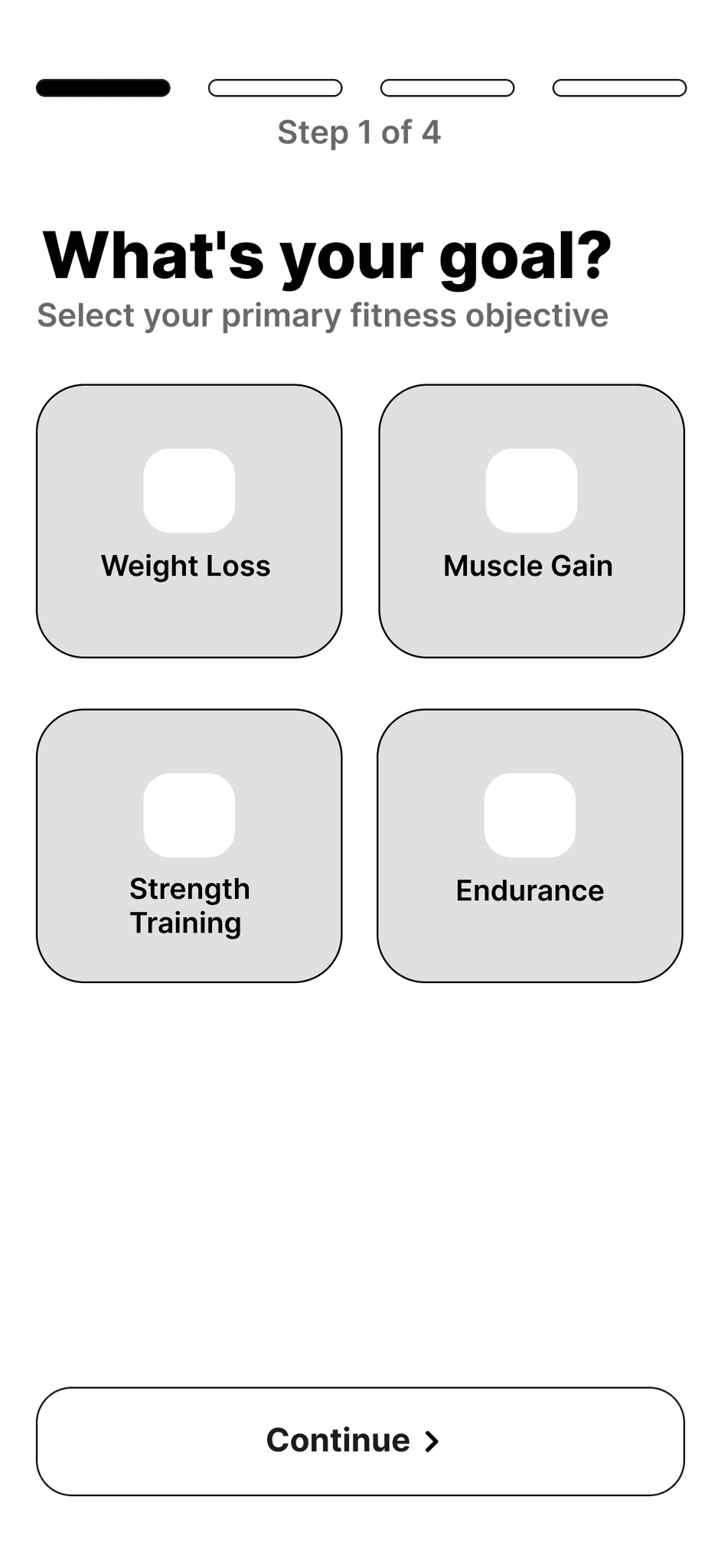
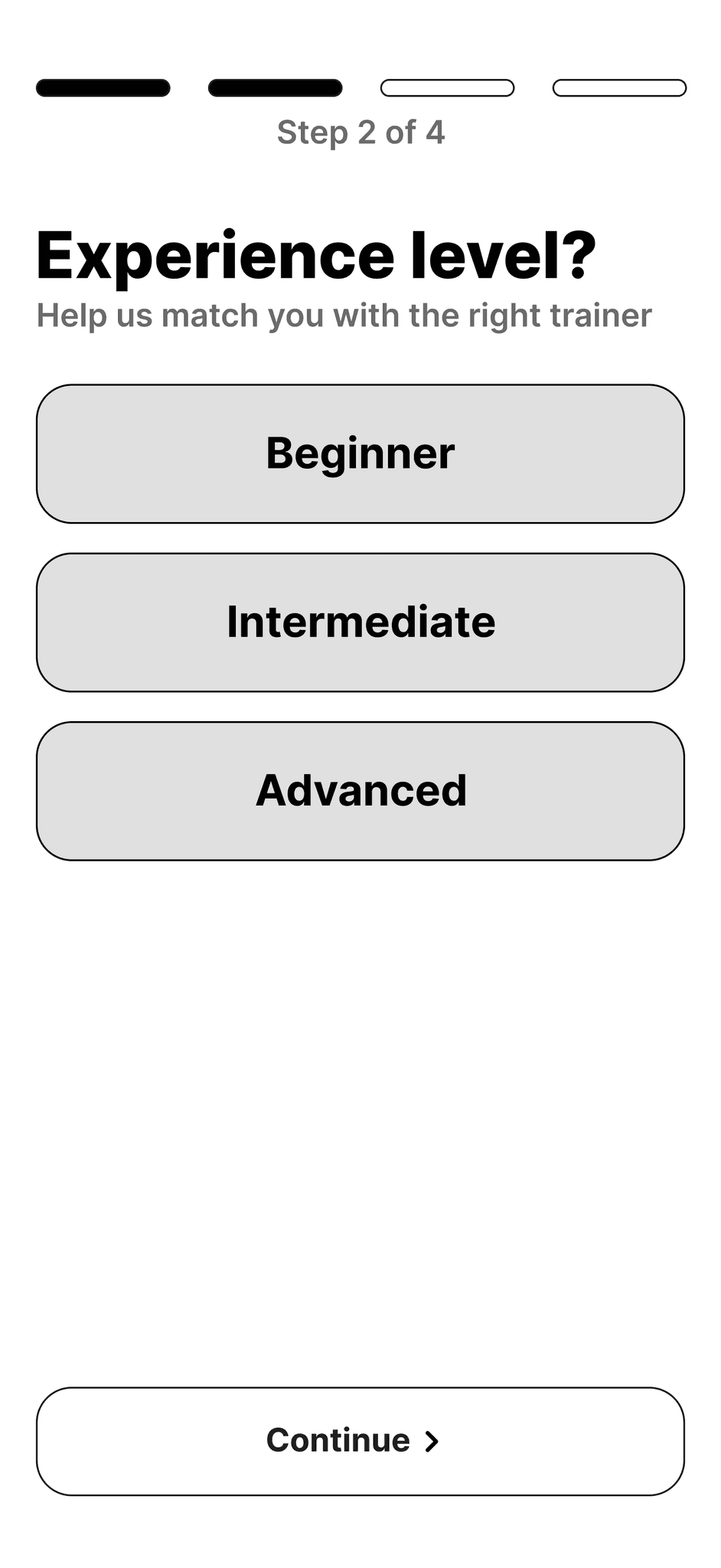
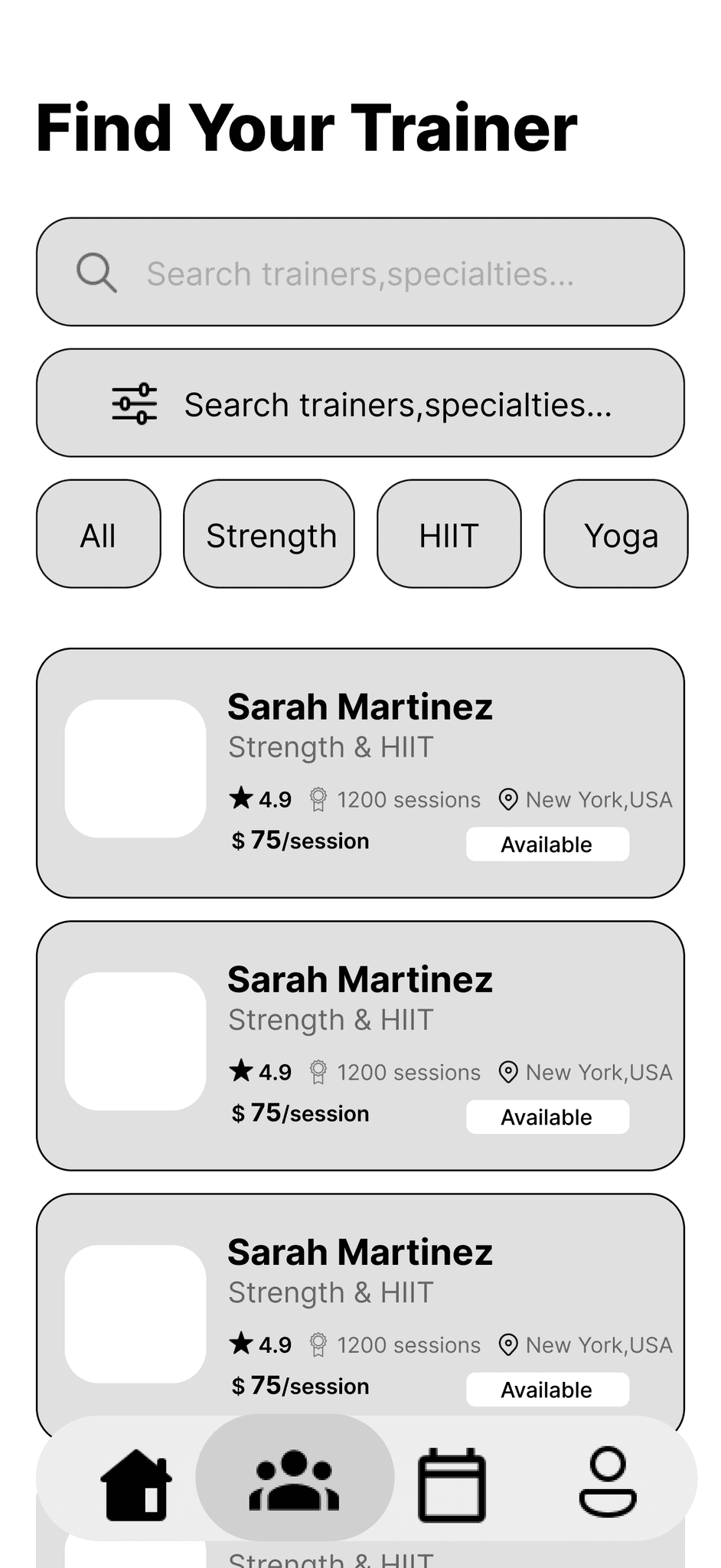
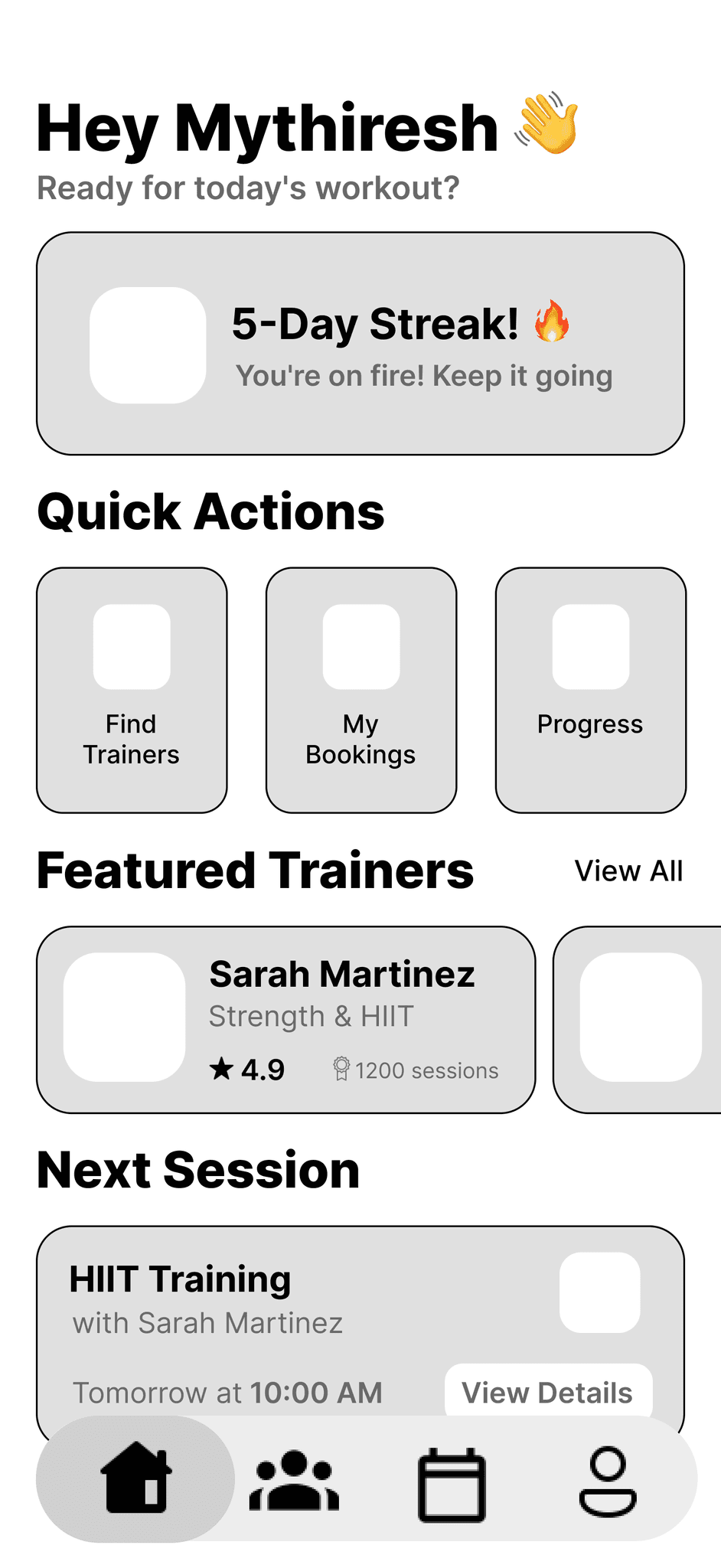
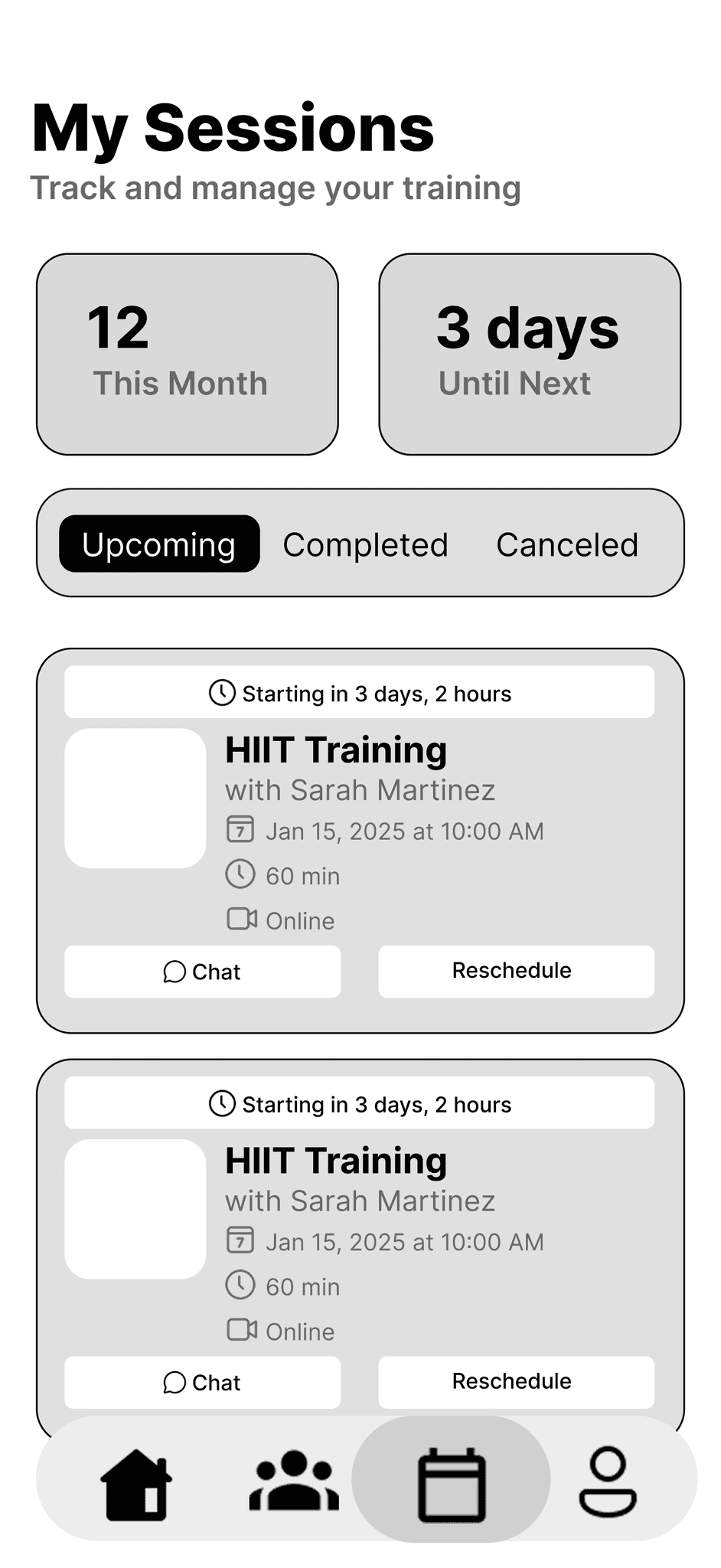
Onboarding captures goals and preferences early, feeding directly into the matching algorithm. Each question was designed to feel like progress, not a form.
TRAINER SIDE

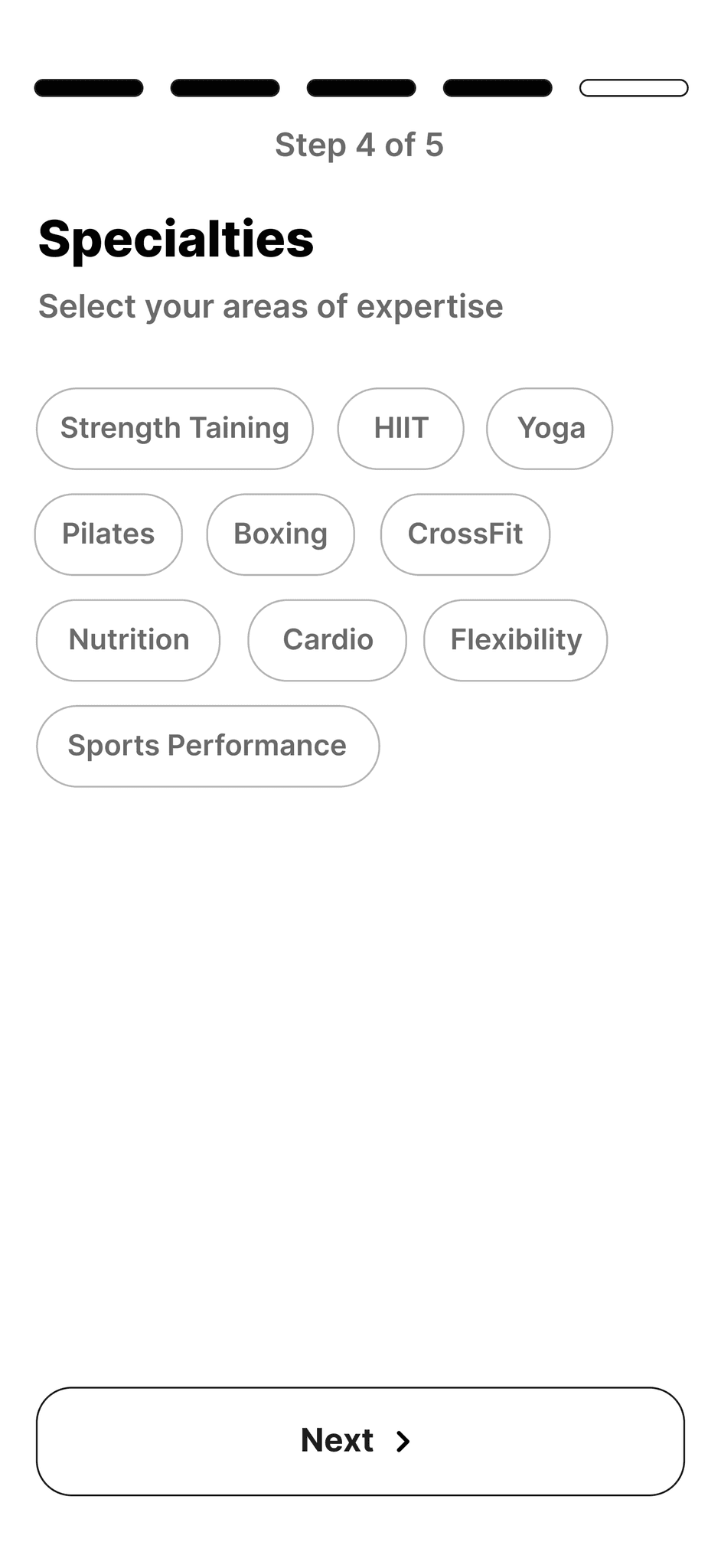
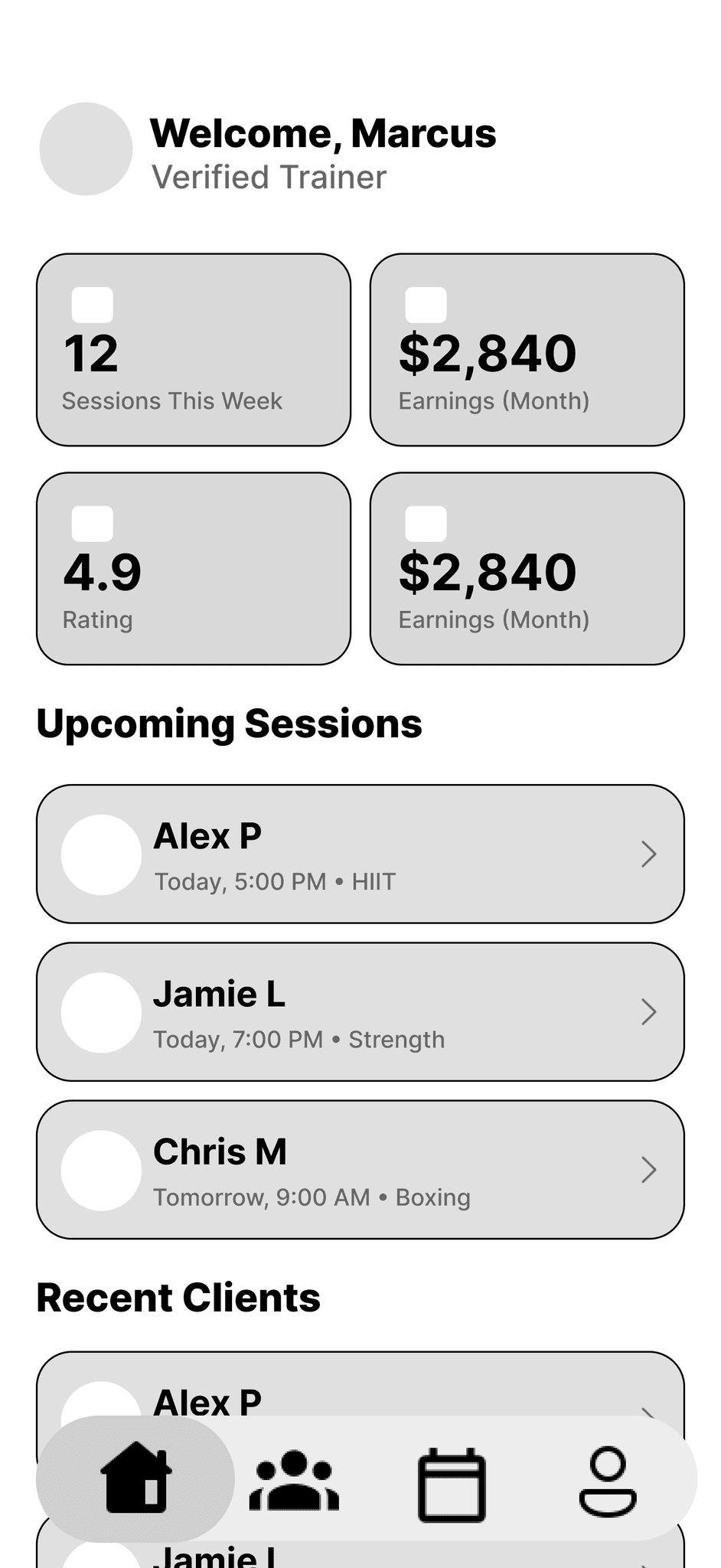
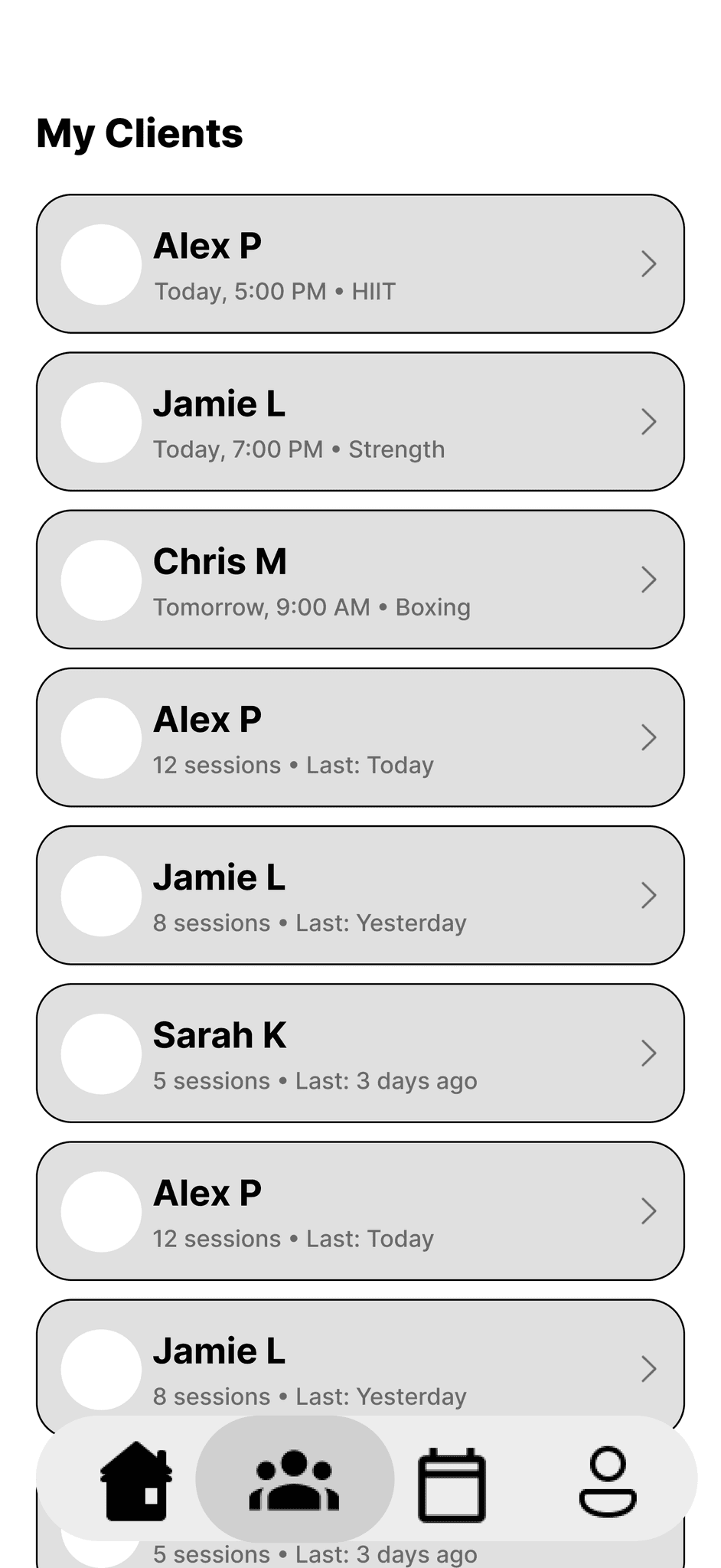
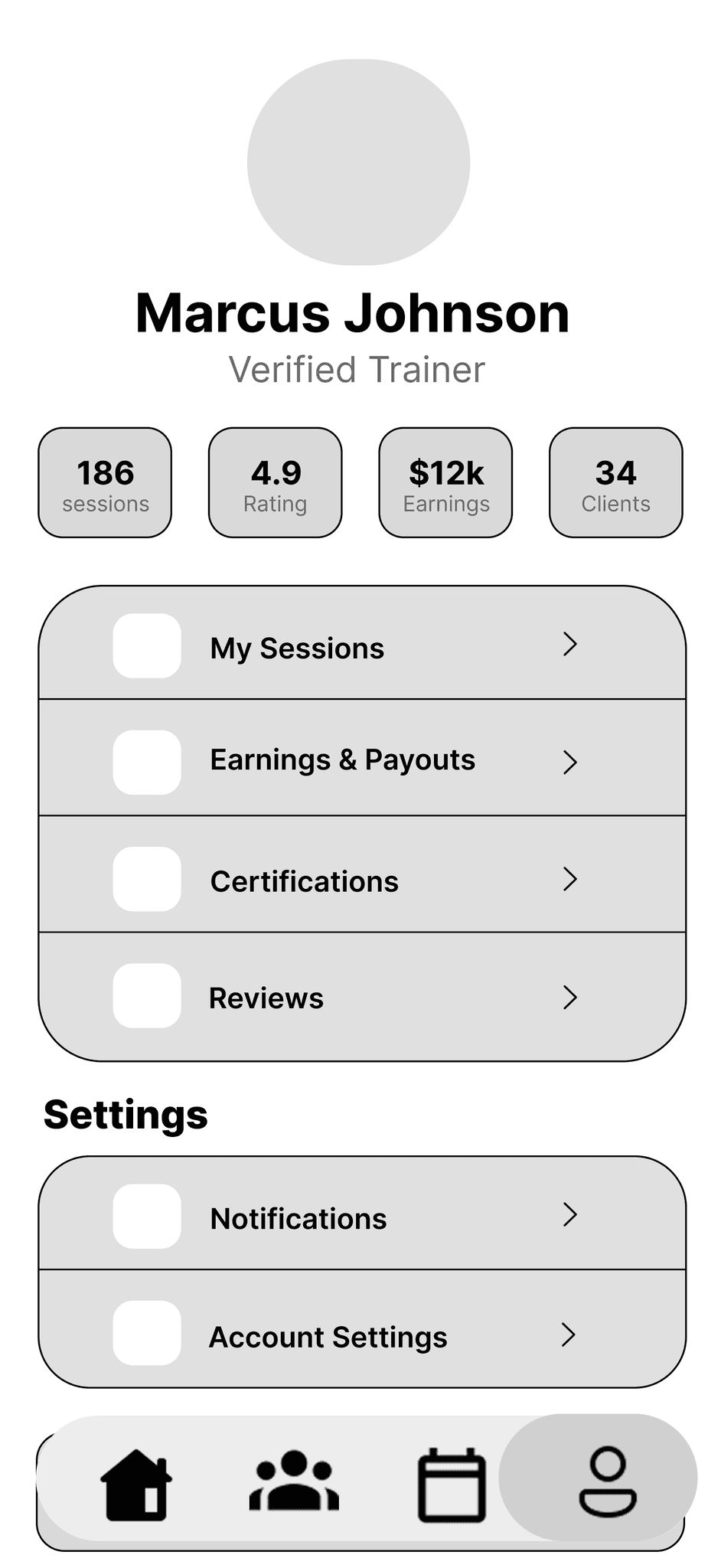
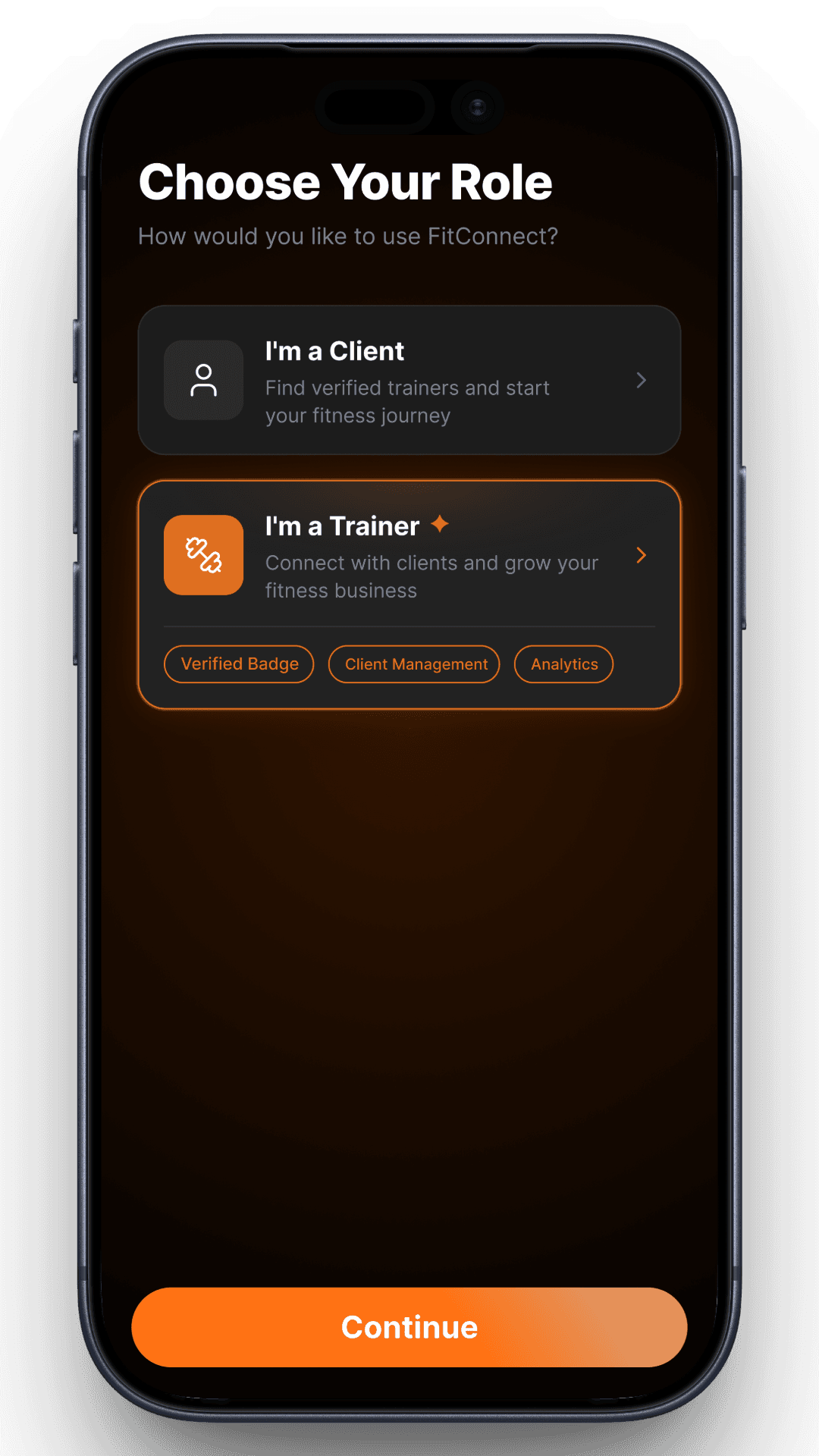
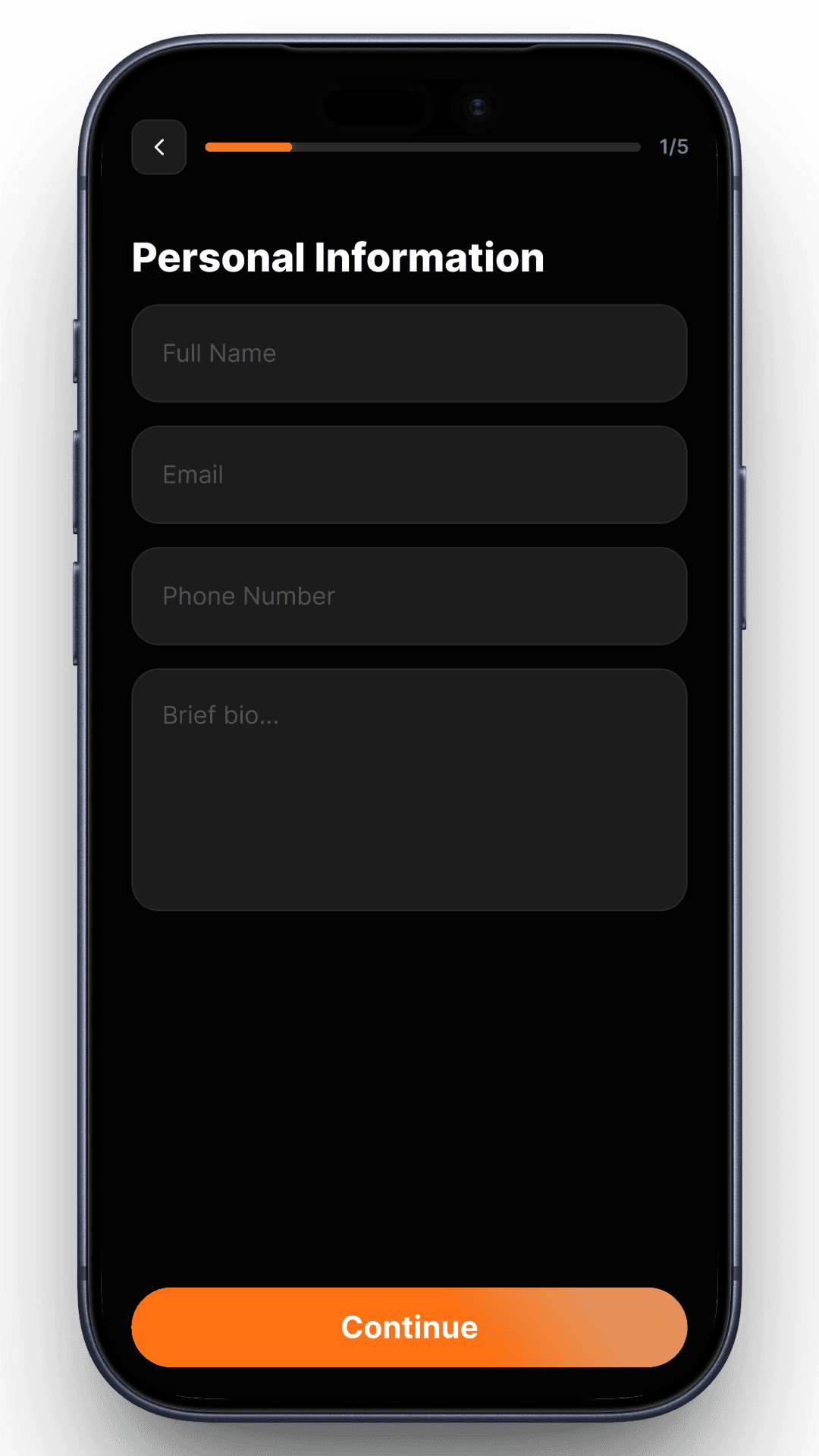
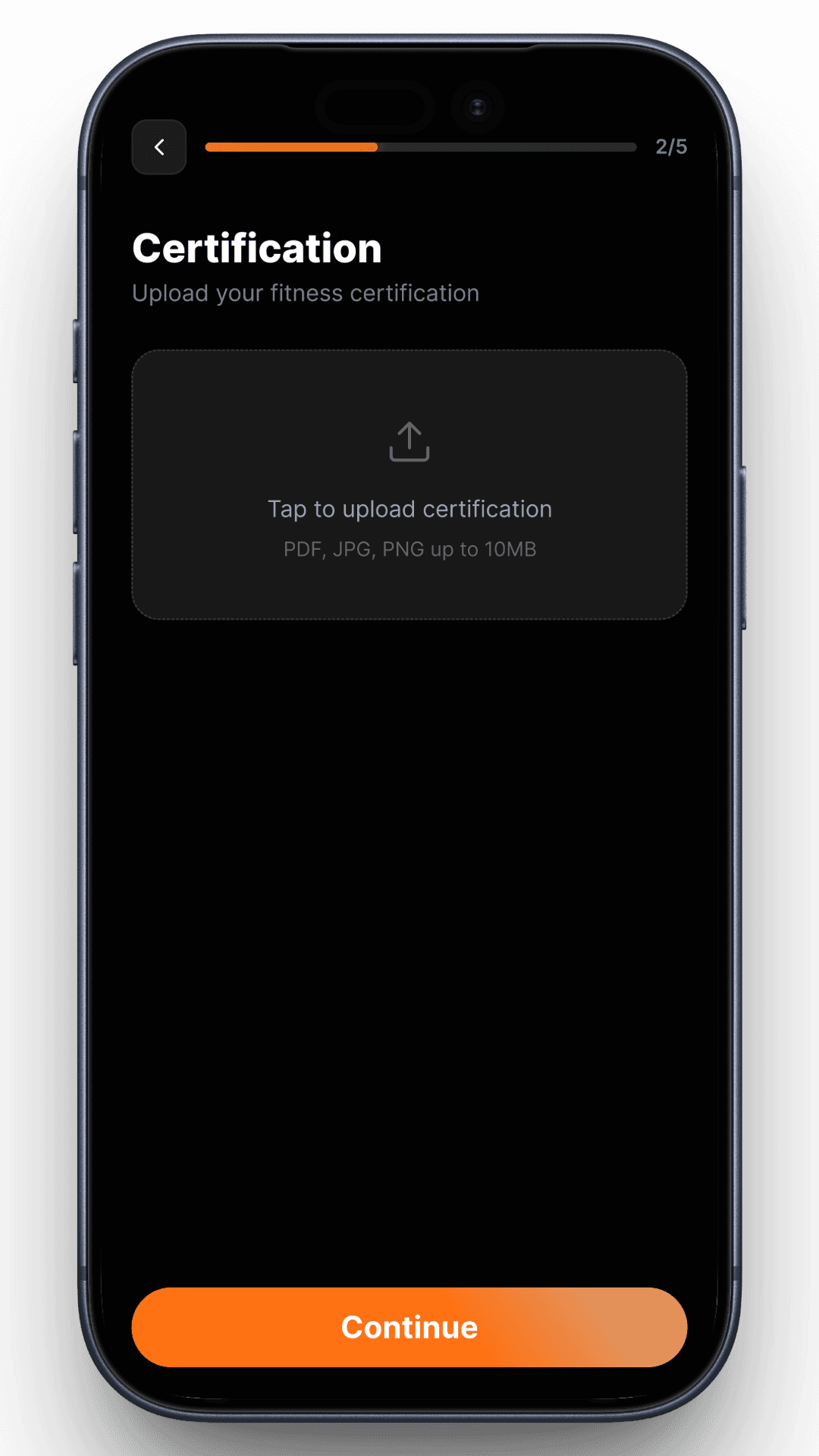
Trainer onboarding prioritized credential verification upfront, establishing trust before the profile goes live on the platform.
CLIENT JOURNEY
The client experience was designed to replace overwhelming search with guided discovery, build trust before commitment, and encourage consistency after the first session.
MATCHING
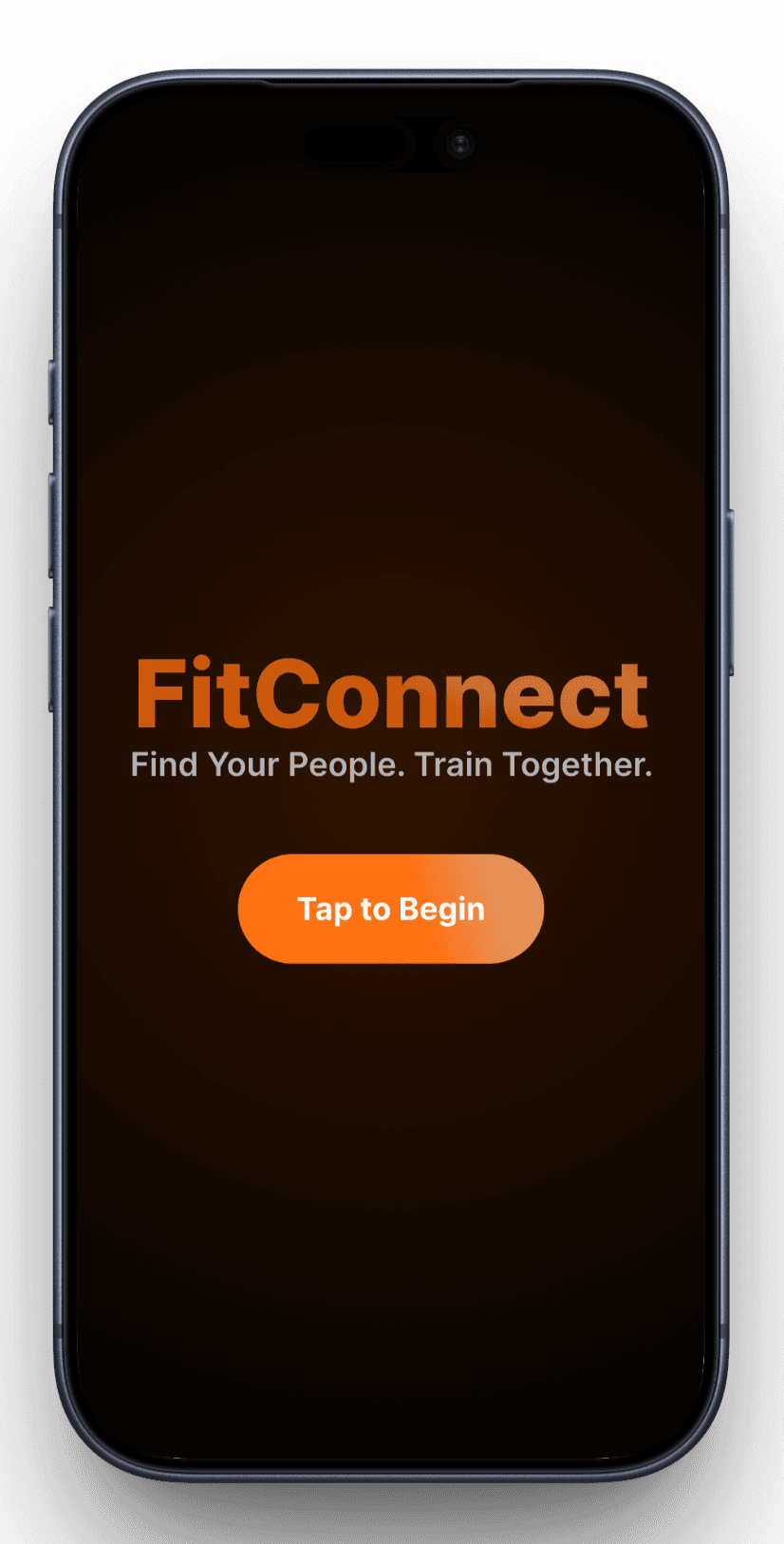
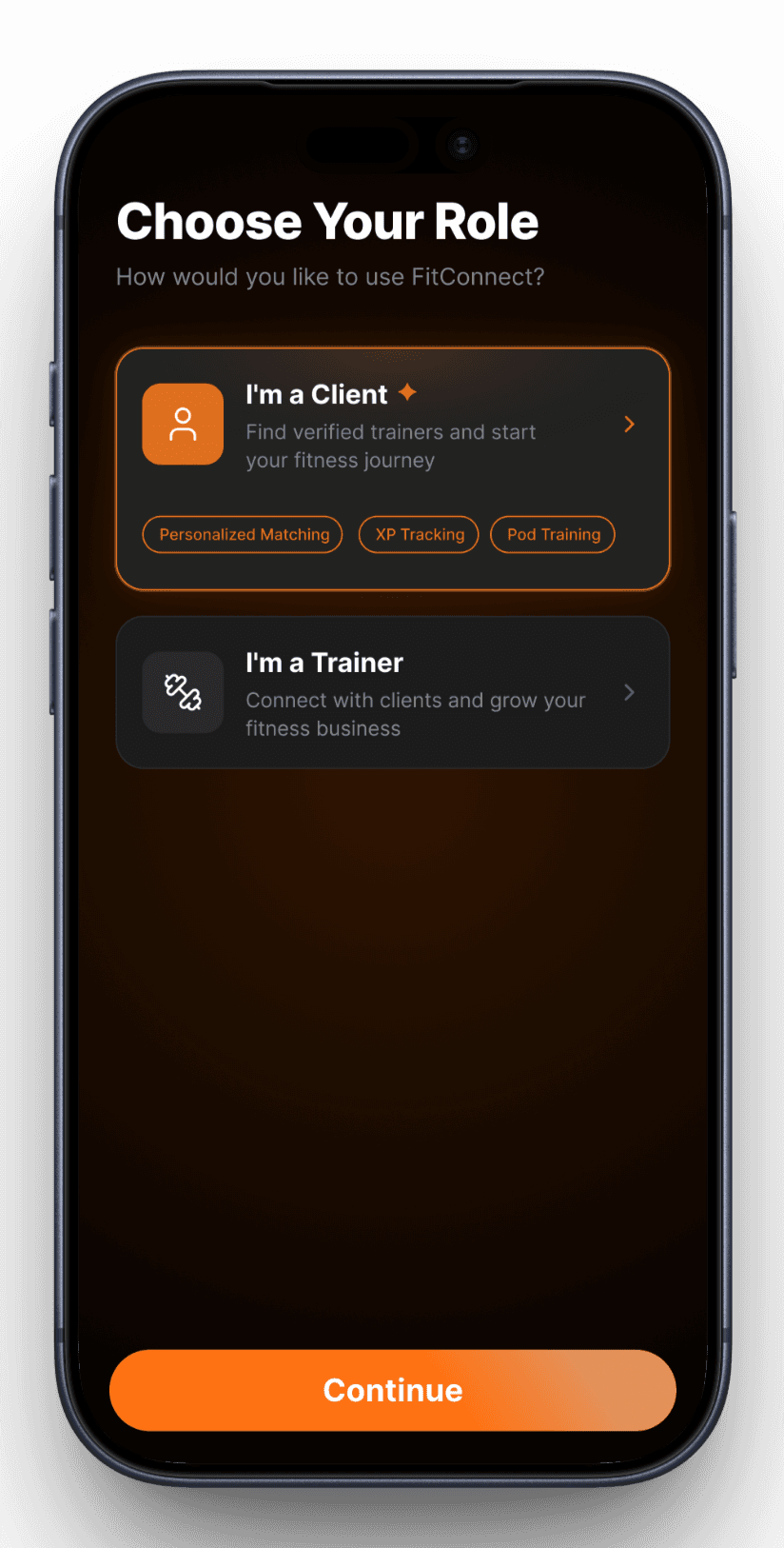
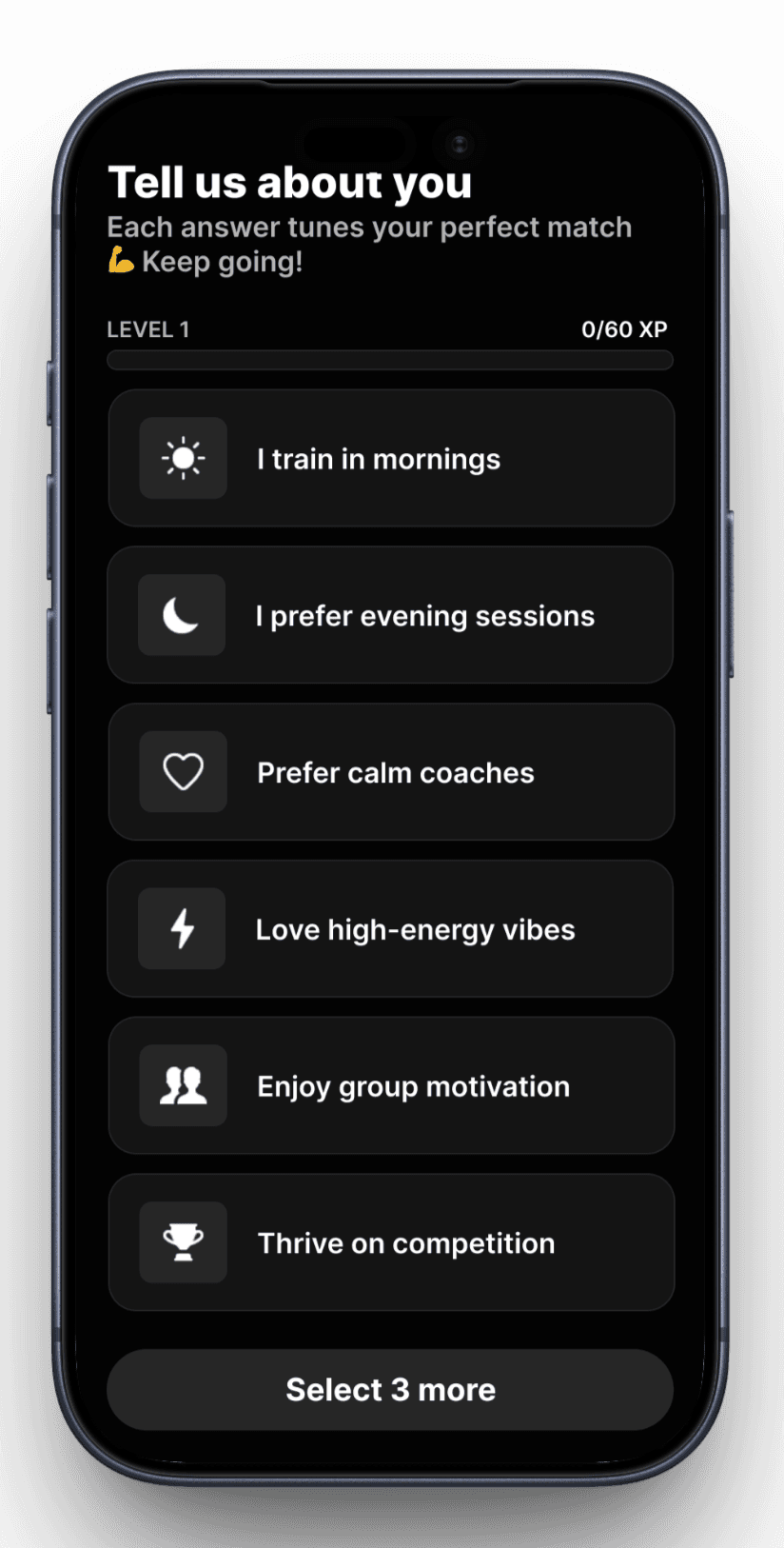
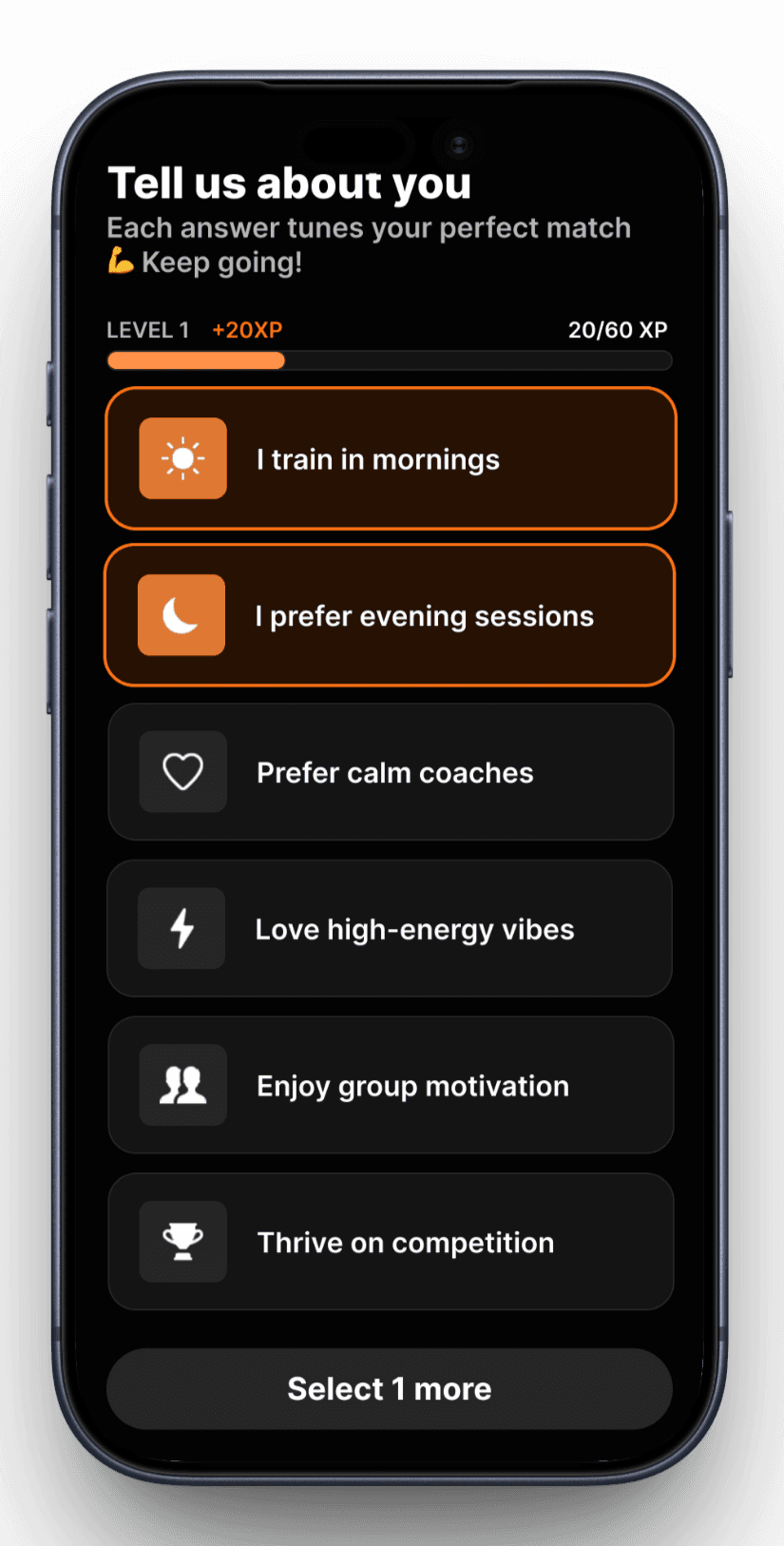
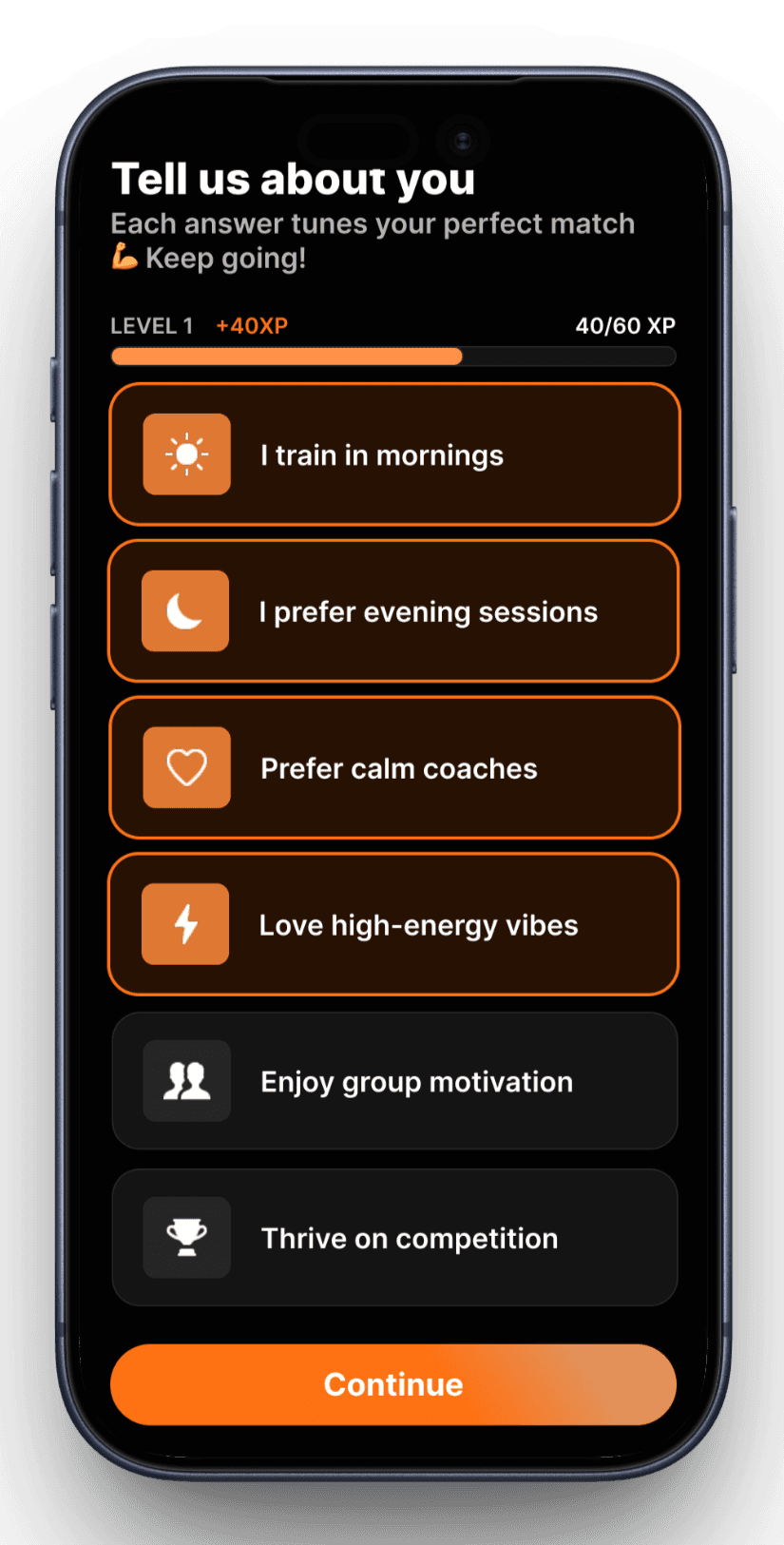
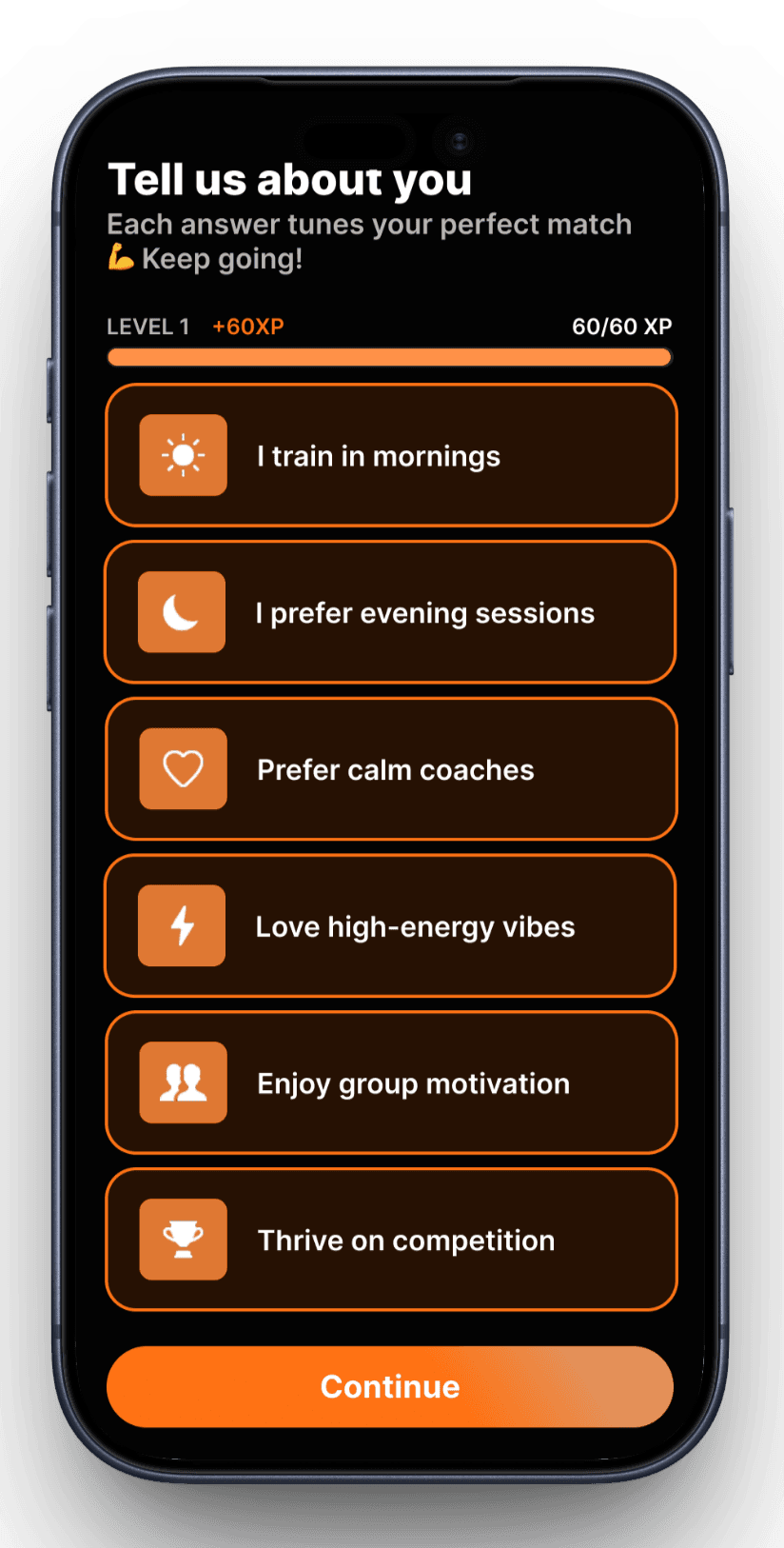
Most fitness apps drop users into a search bar and expect them to figure it out. Onboarding captures preferences through an XP-driven flow where each answer builds a behavioral profile. By the time the match appears, the platform already knows what the user needs.
TRUST LAYER
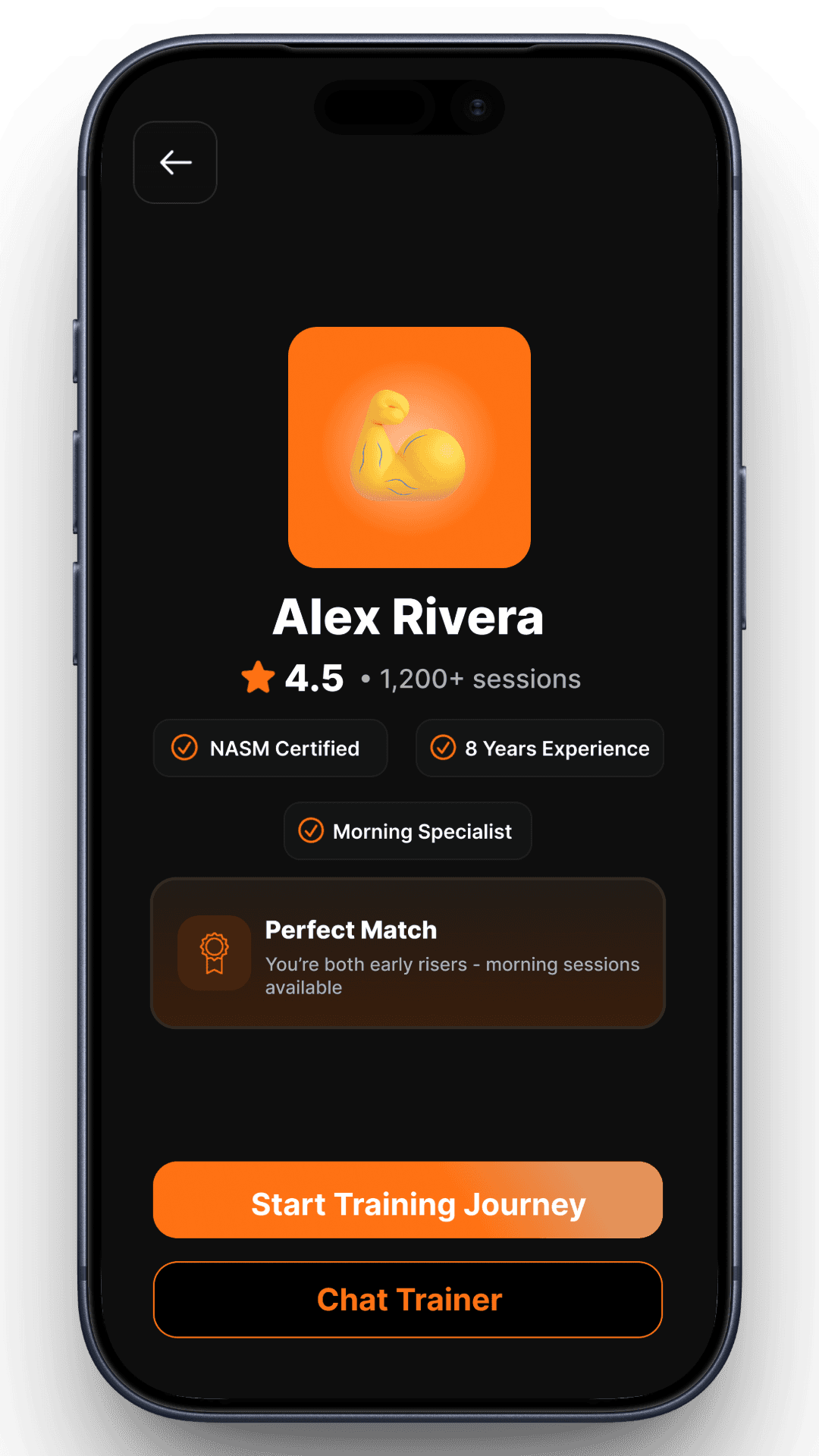
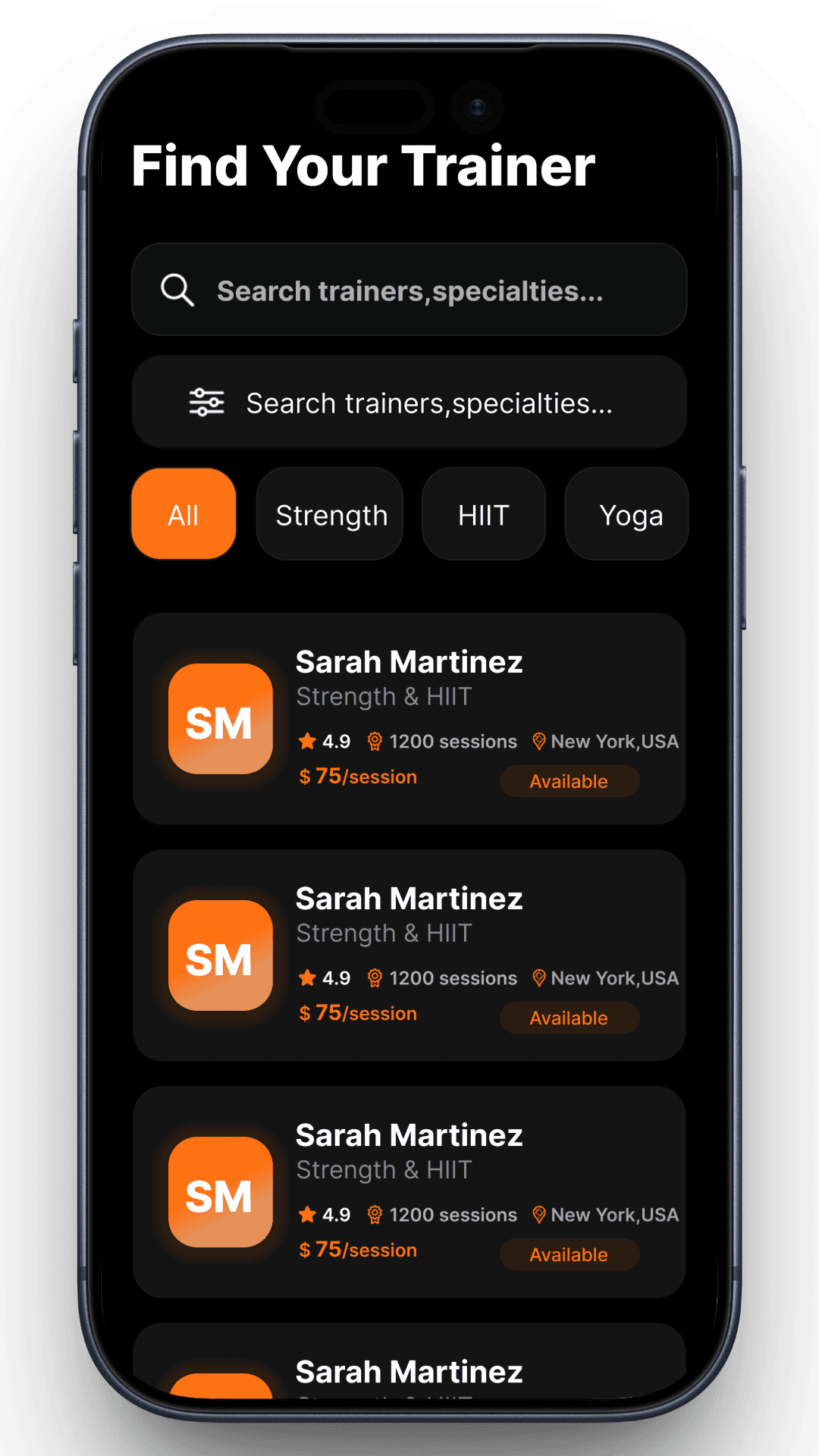
A trainer's name and photo isn't enough to convince someone to commit. Certifications, session count, specialization, and a personalized match explanation give clients proof before they make any decision.
BOOKING
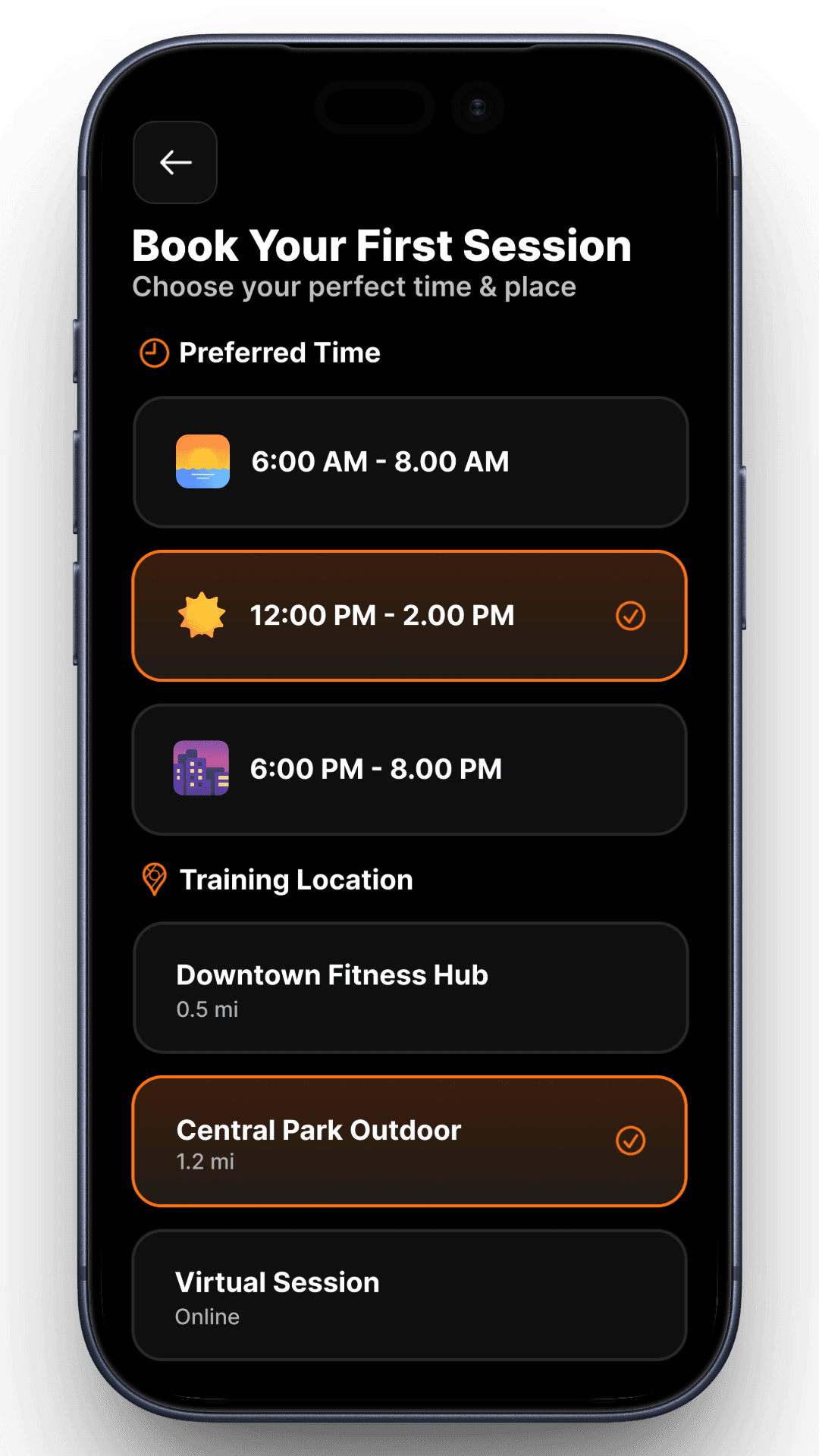
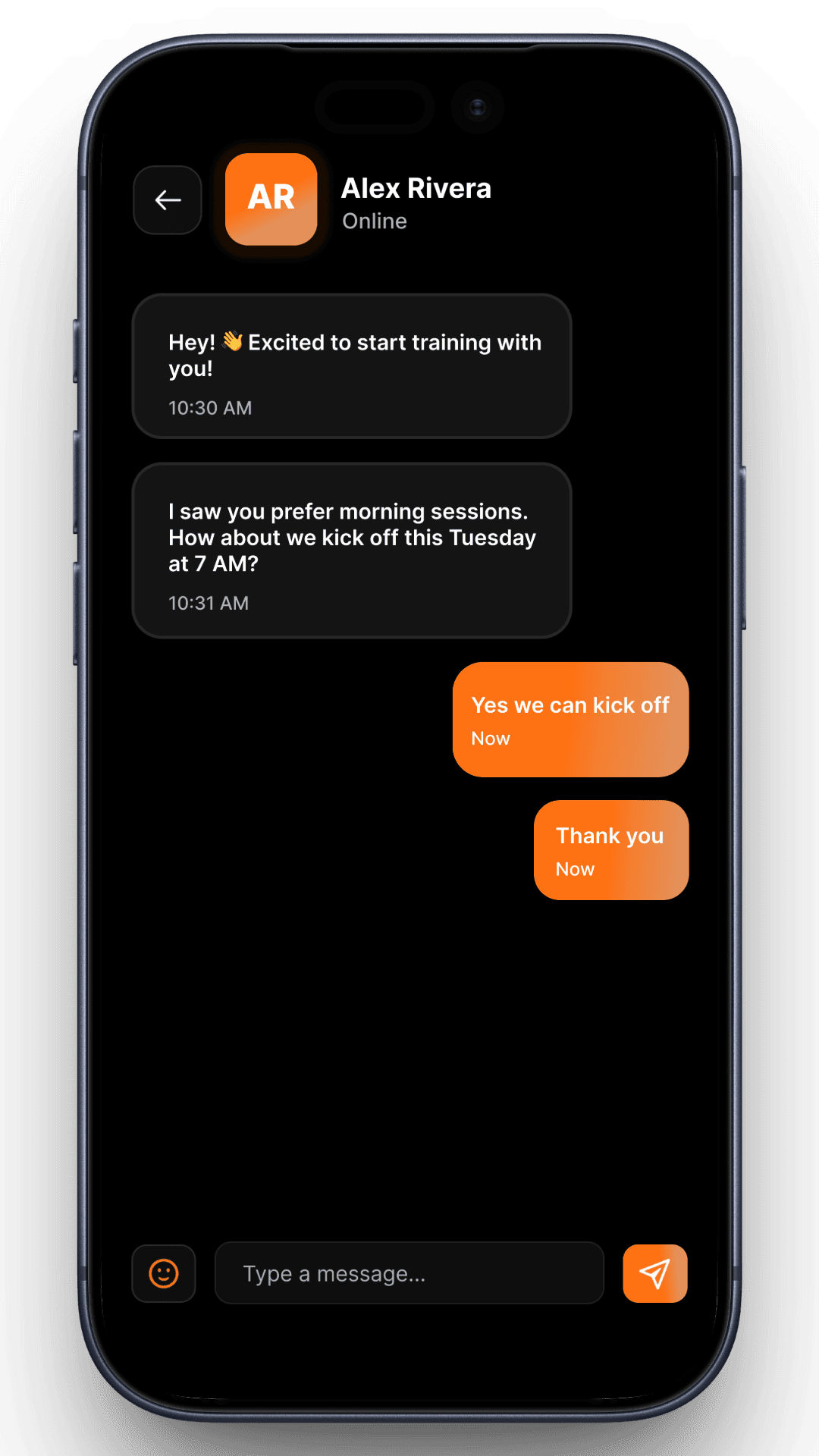
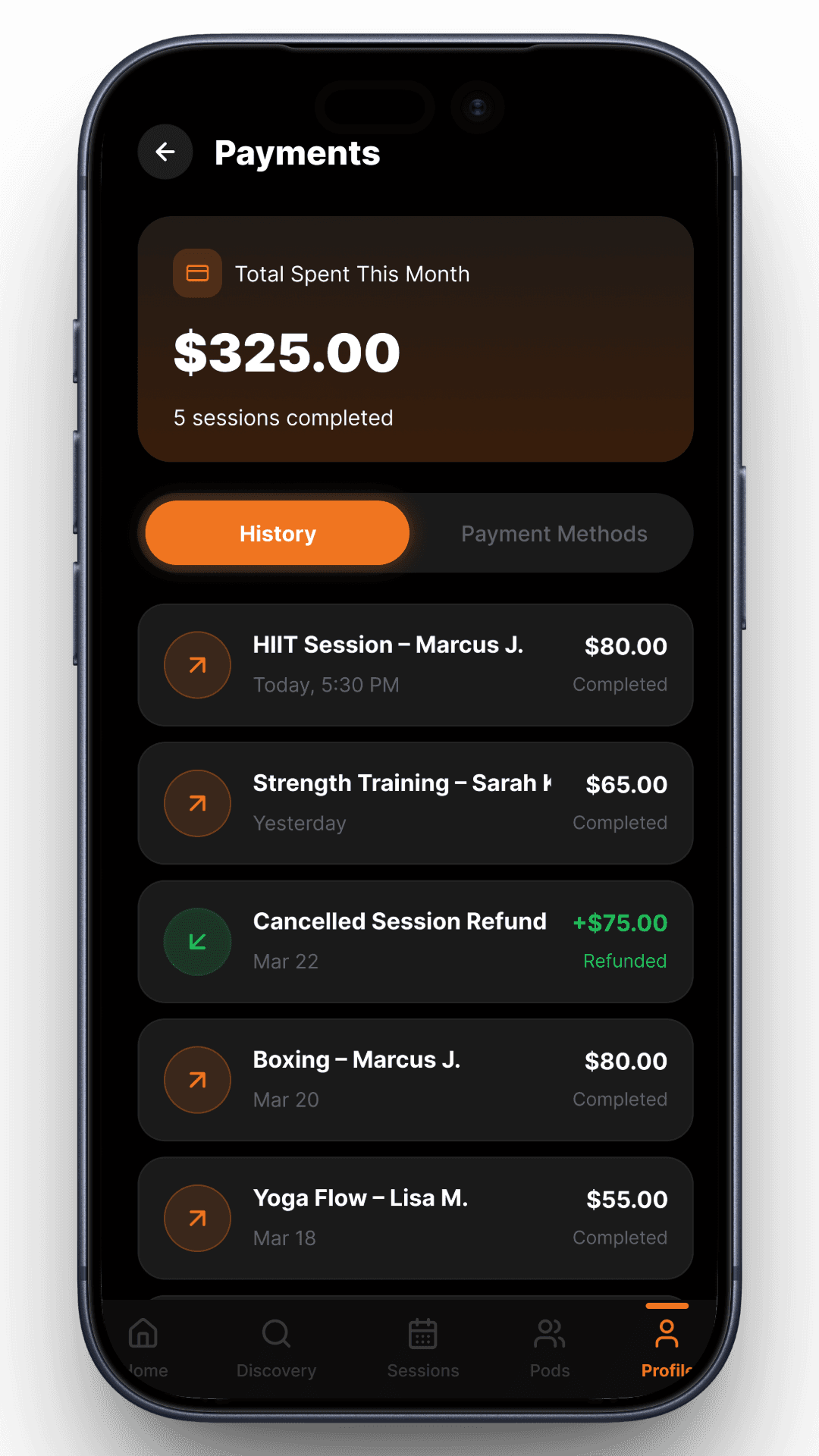
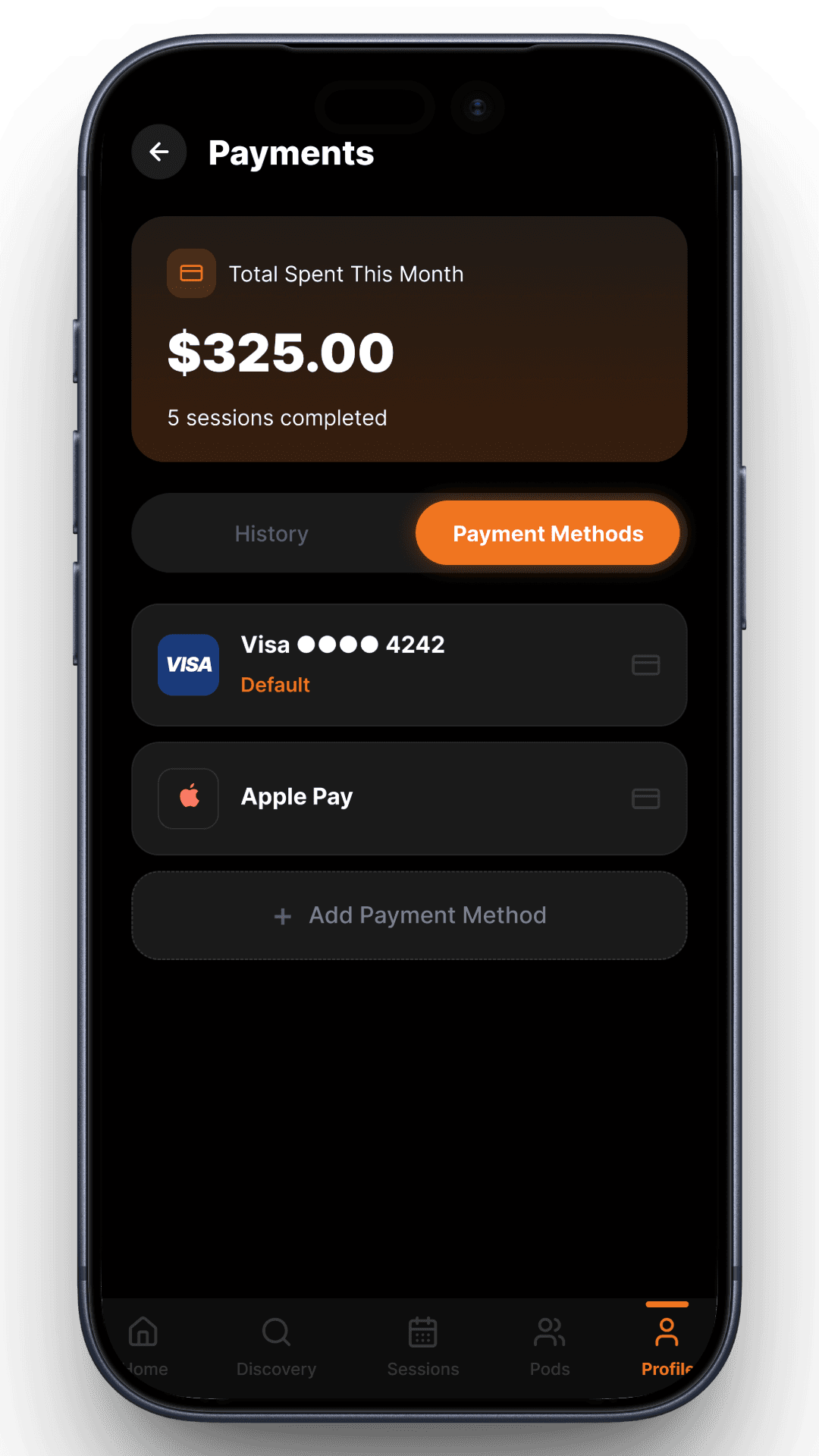
A chat-first approach lets clients connect with their trainer before selecting a time or location. By the time they confirm a session, the relationship has already started.
RETENTION
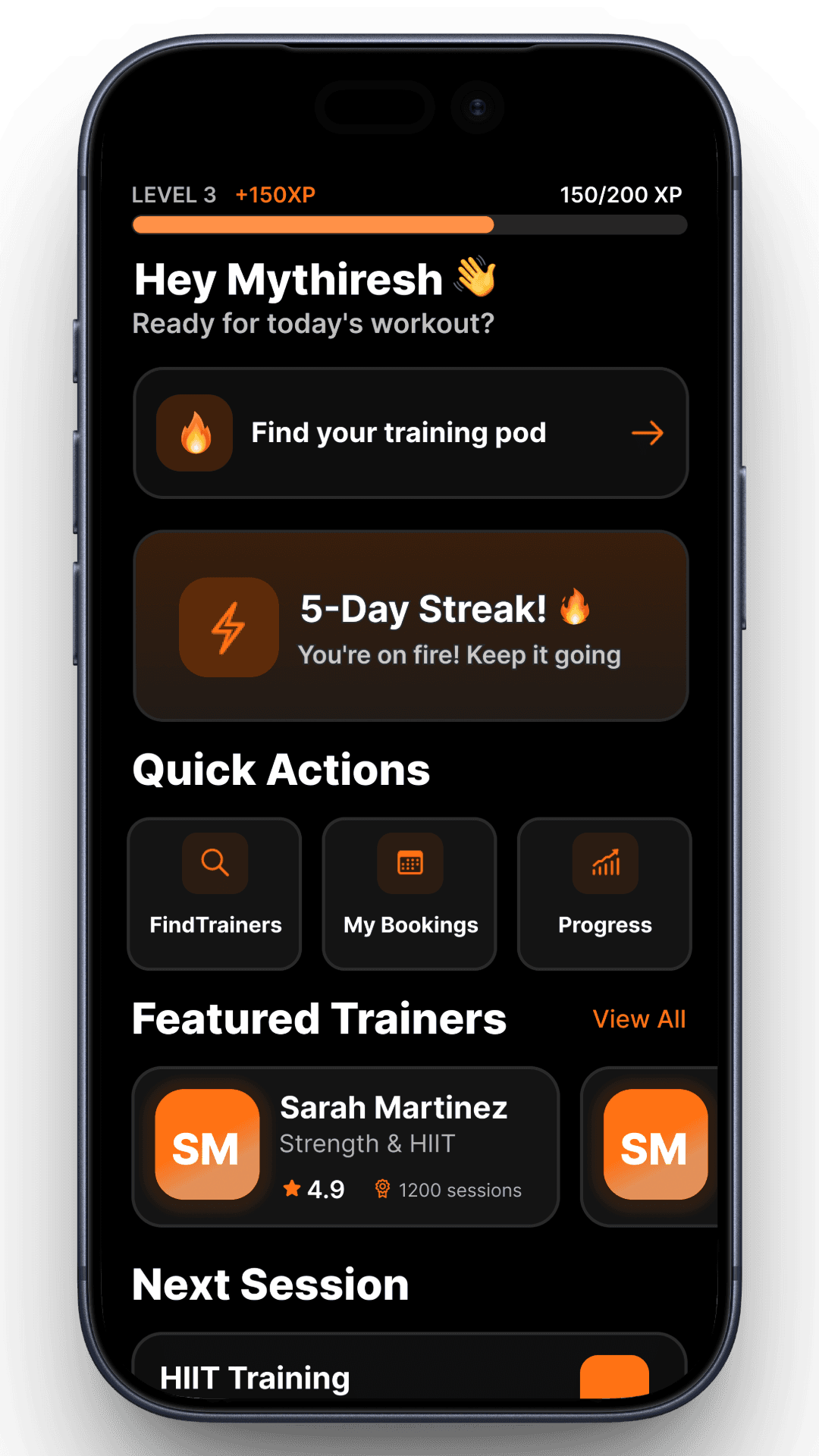
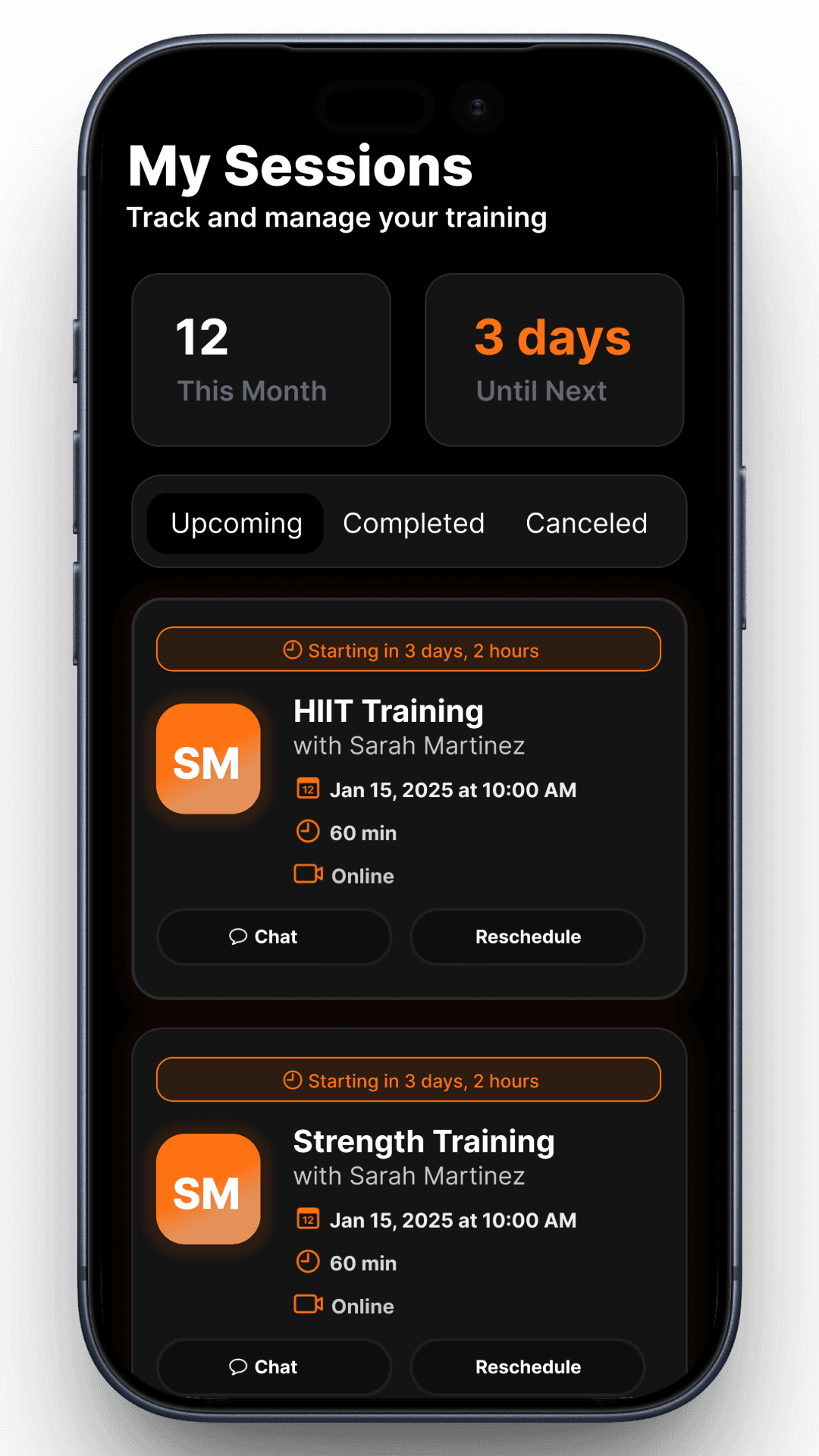
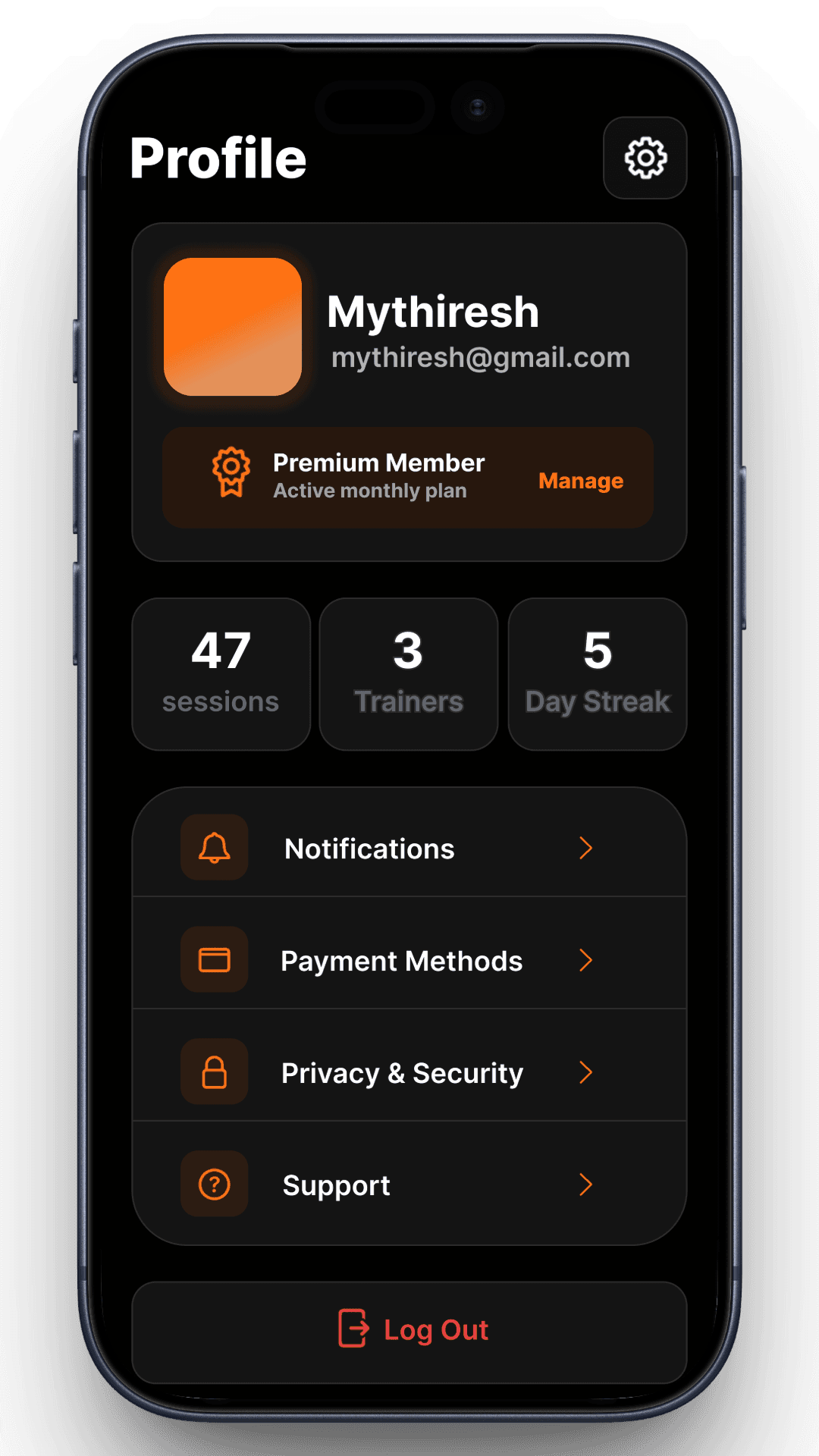
Streaks, upcoming sessions, and XP milestones make progress visible. Small wins keep users engaged between sessions without relying on willpower alone.
PODS
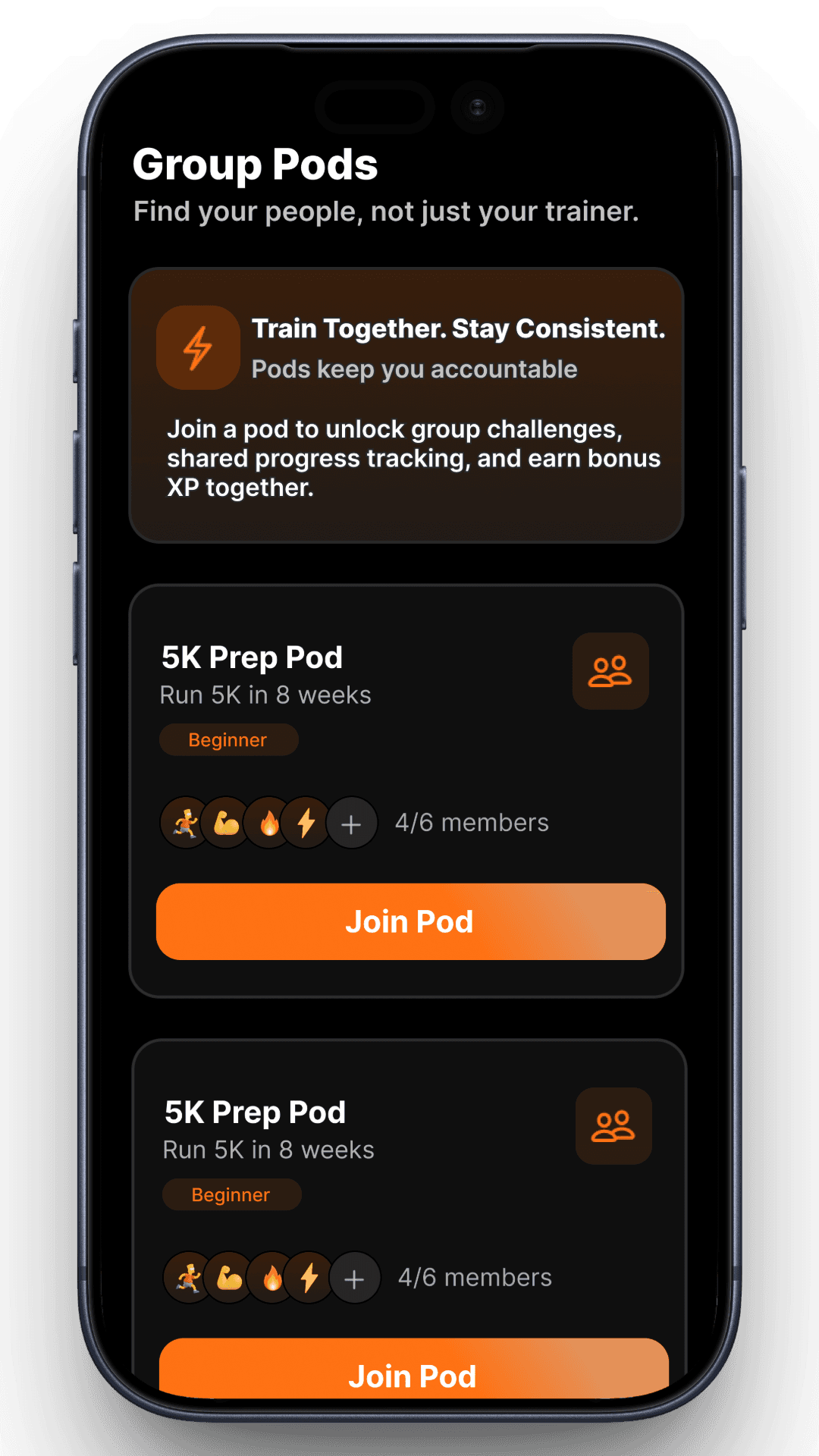
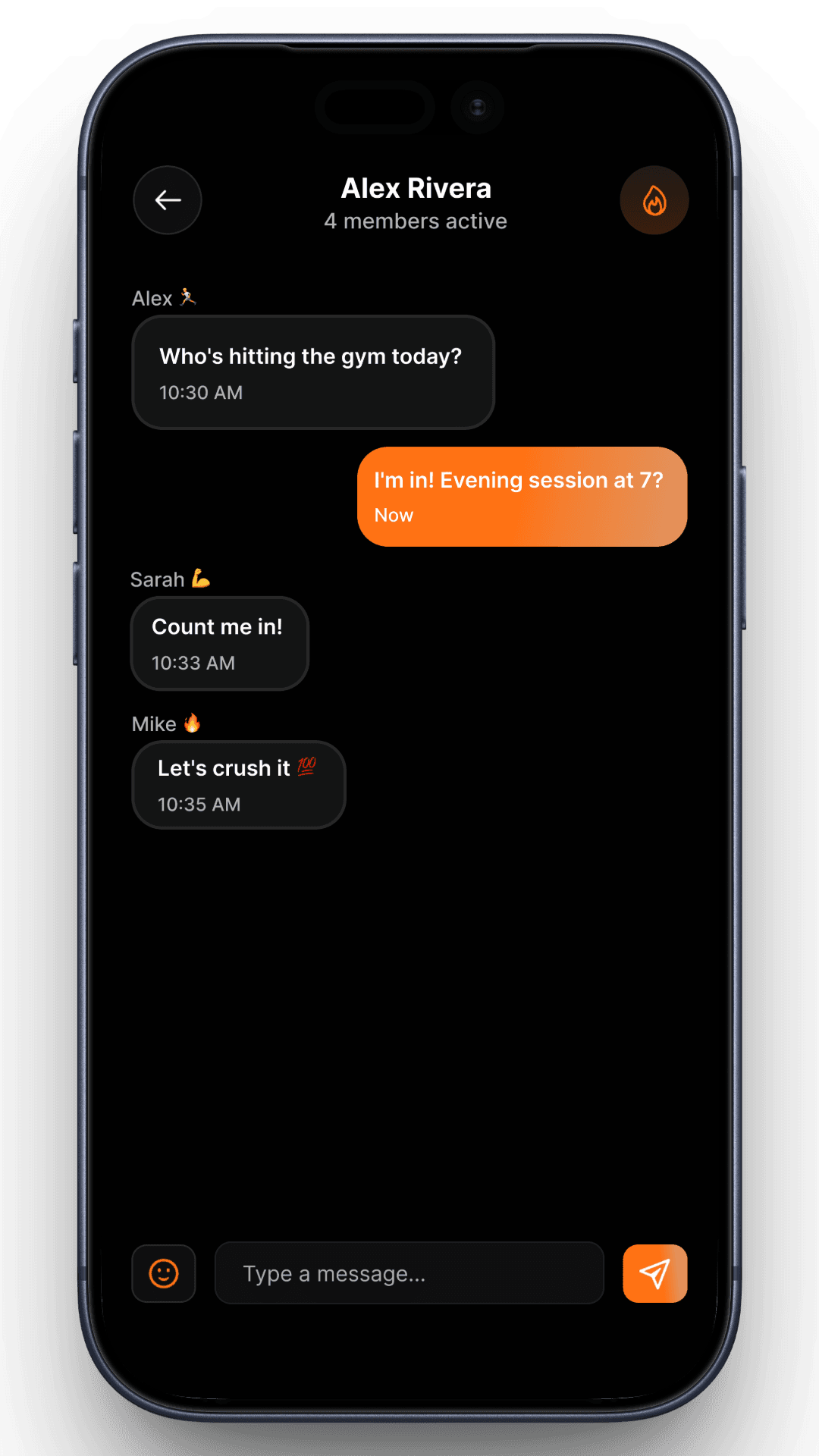
Group pods connect clients with shared goals, group chat, and collective accountability. Users show up for each other when personal motivation isn't enough.
CLIENT JOURNEY
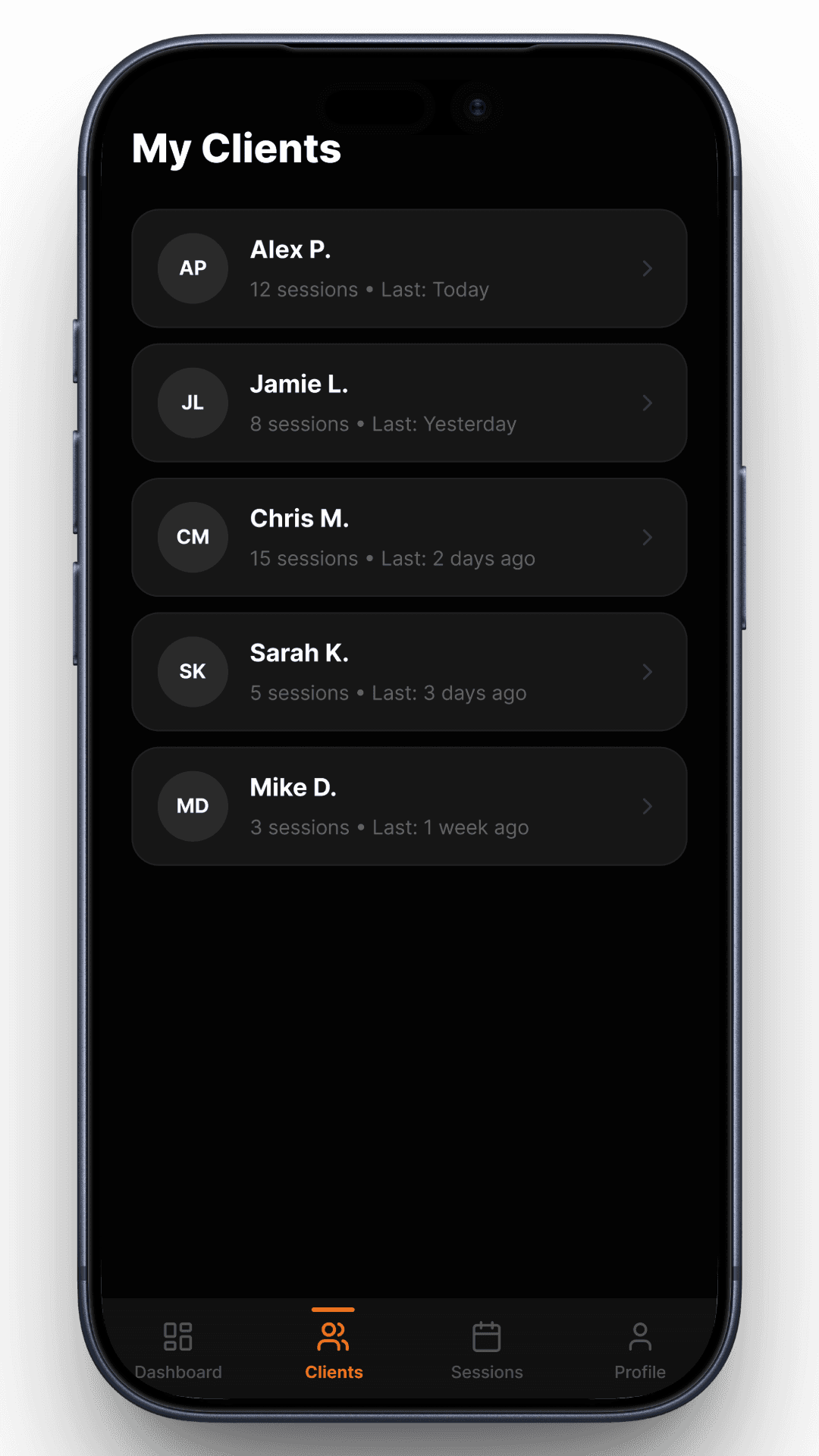
The trainer experience was designed to reduce onboarding friction, establish credibility fast, and give trainers the tools to grow a sustainable client base.
PROFILE CREATION
The onboarding process was built to establish trust from the first step. Trainers verify their identity, upload certifications, and define their expertise before their profile goes live. Verification upfront protects clients and gives trainers instant credibility on the platform.

GETS DISCOVERED
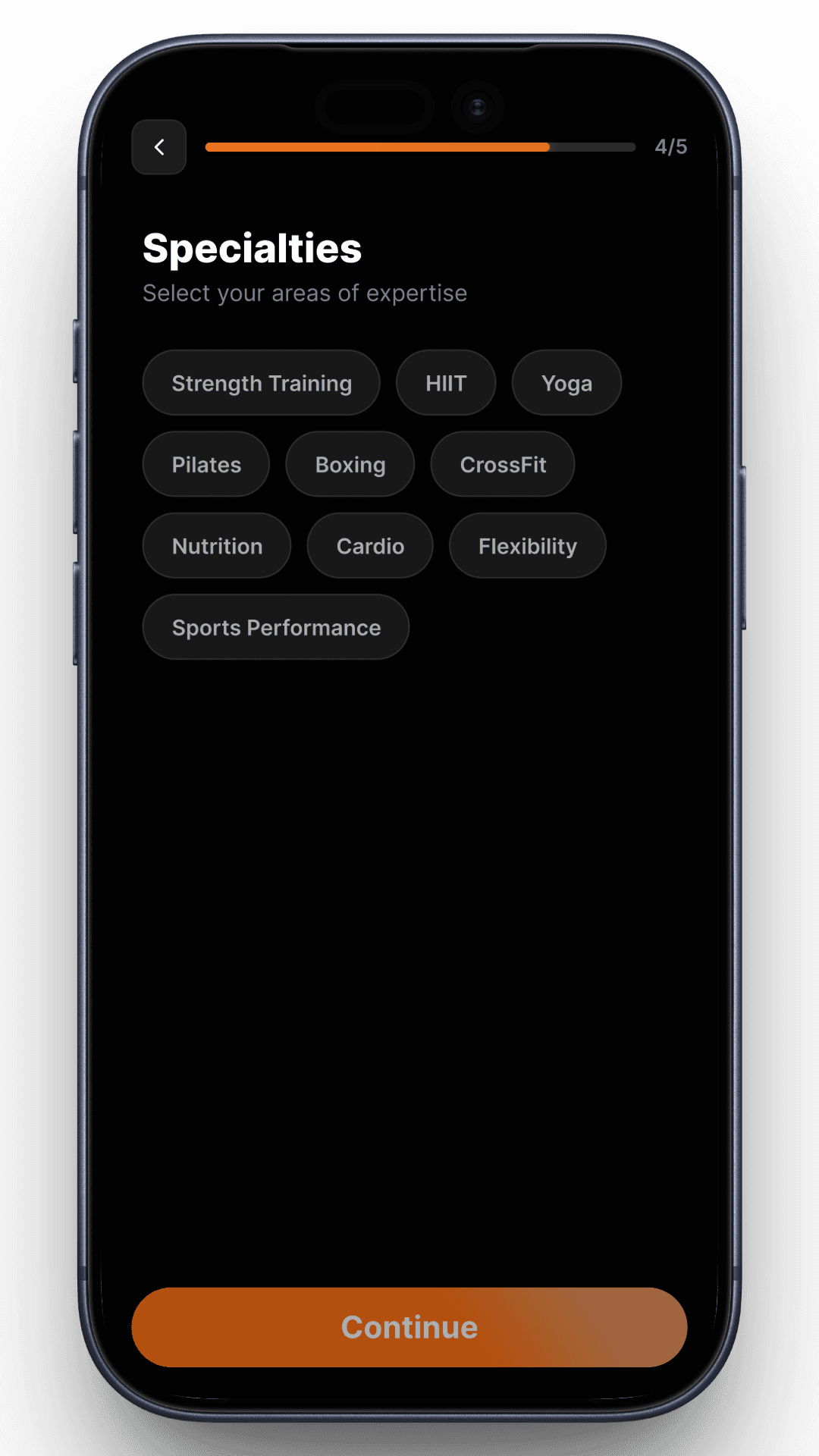
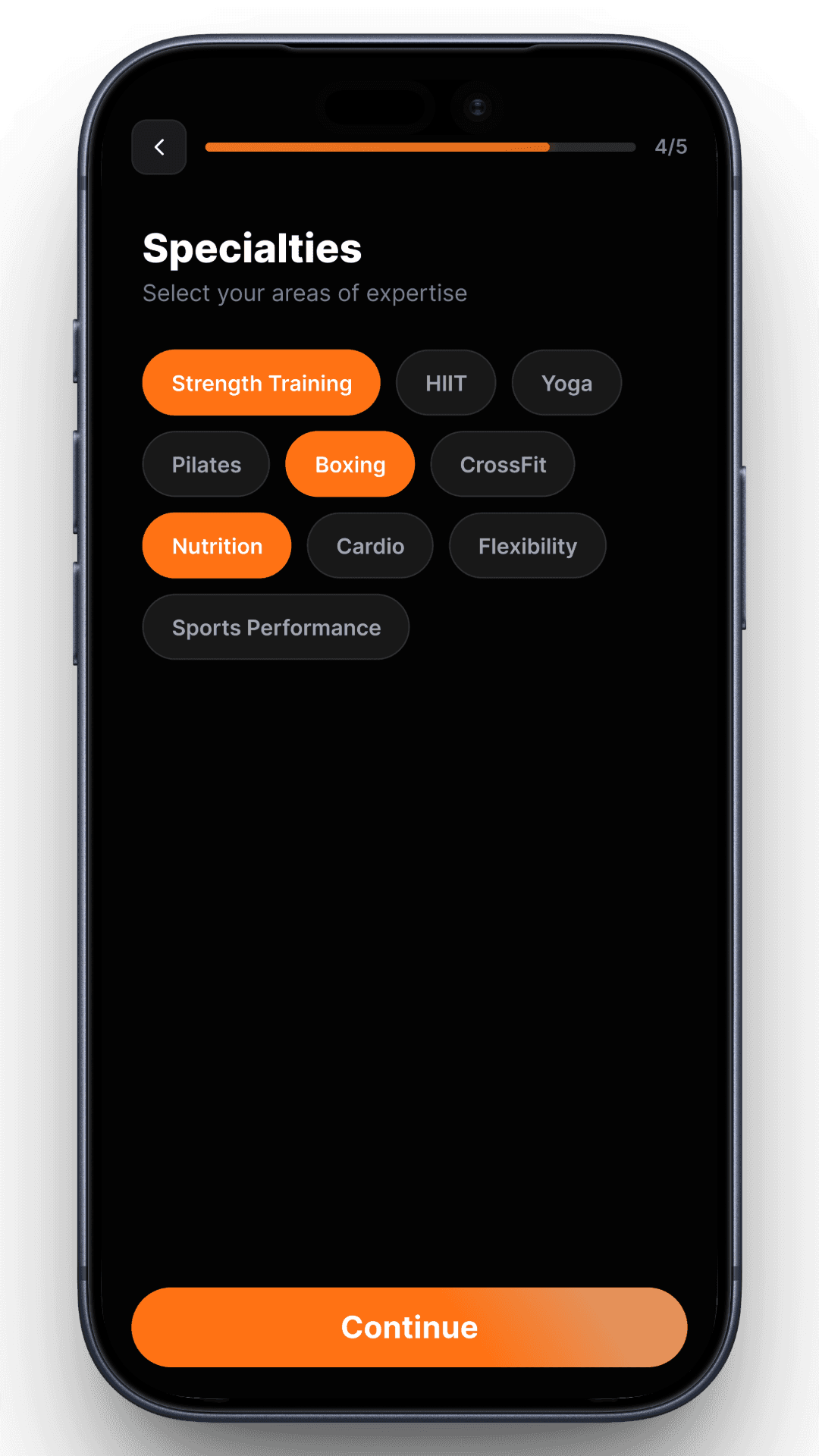
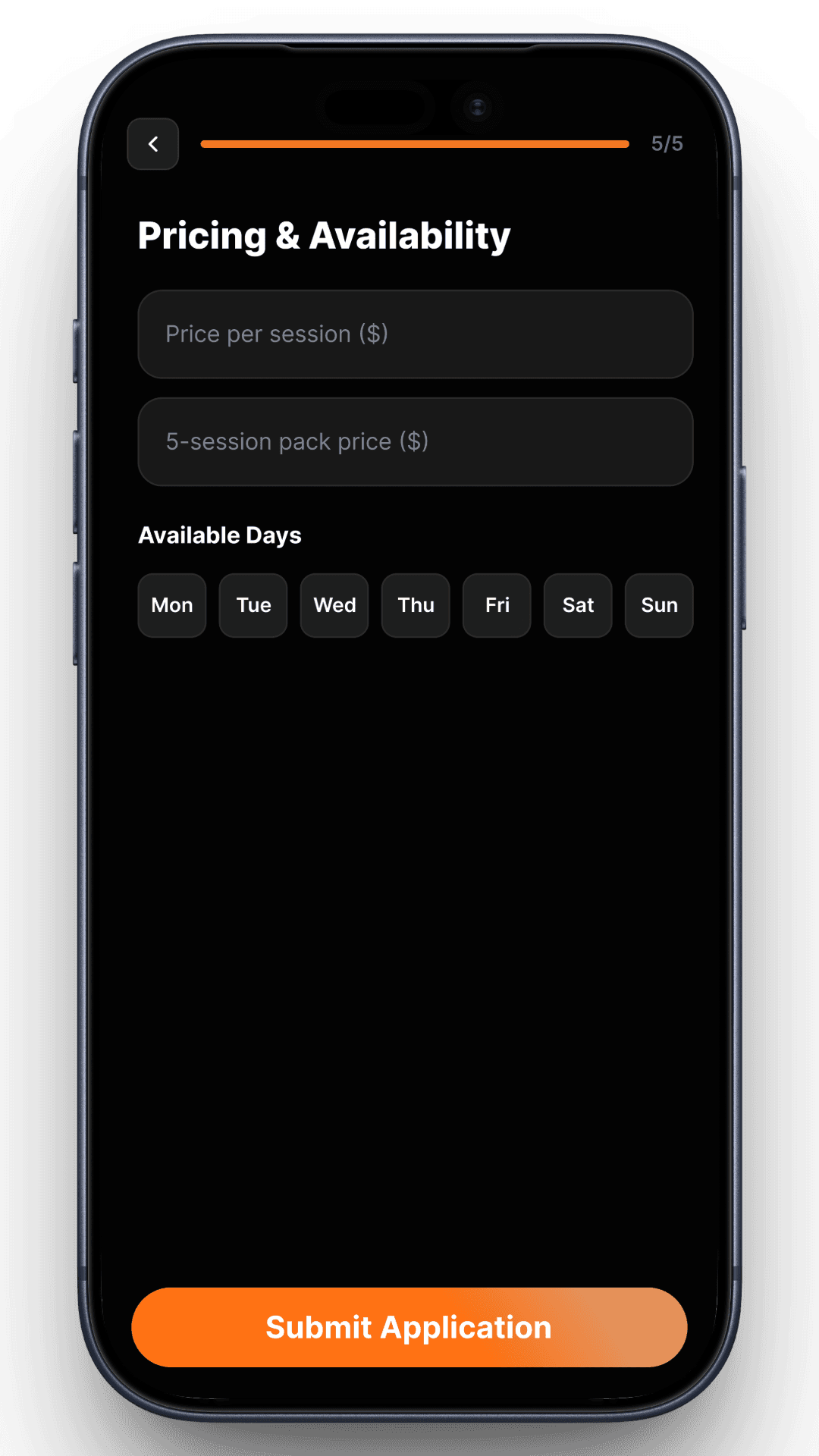
Specialties and availability aren't just profile fields. They directly determine how and when a trainer surfaces in client matching. The more precise a trainer's profile, the more relevant the clients they attract.
RECEIVES BOOKINGS
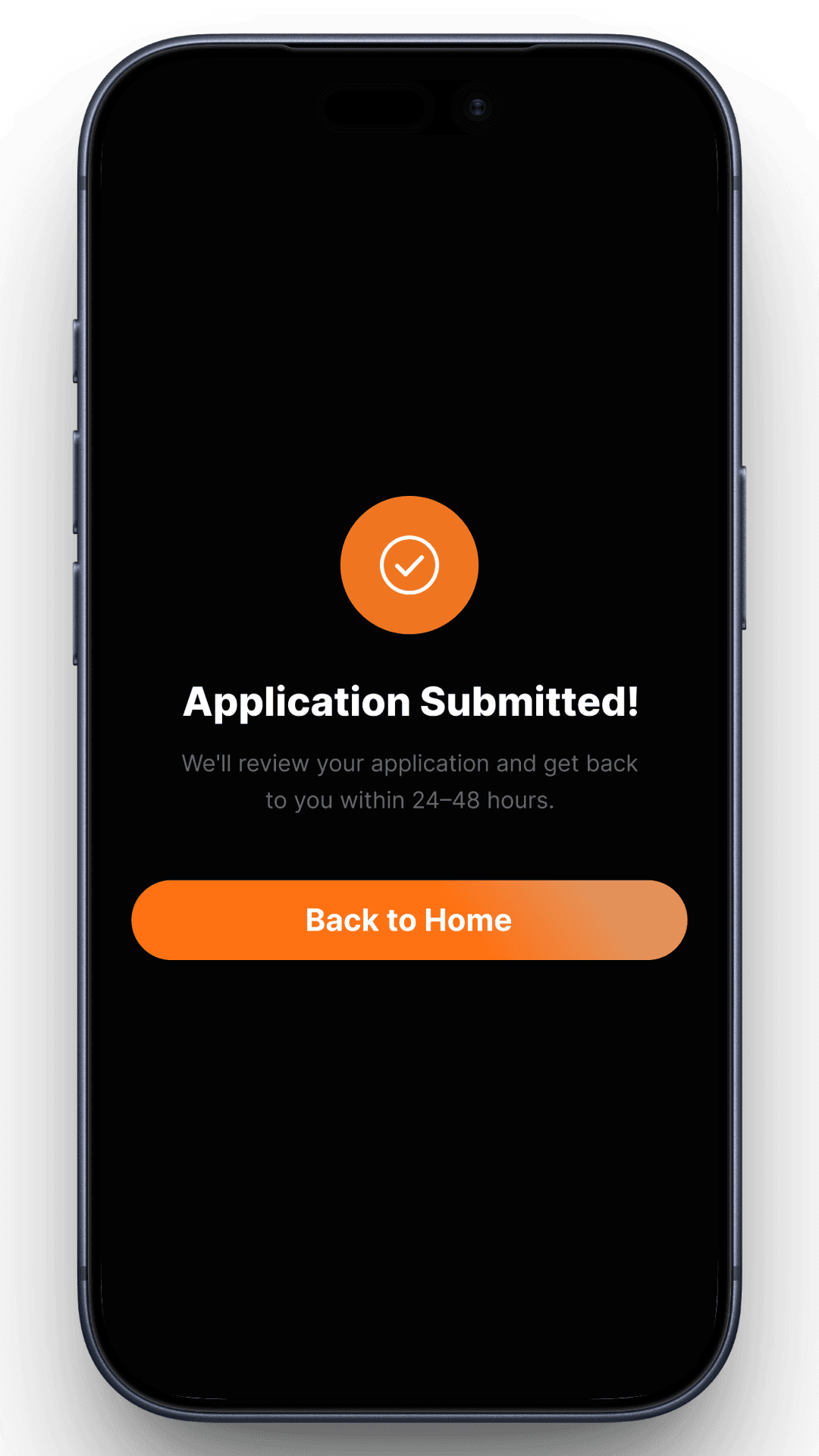
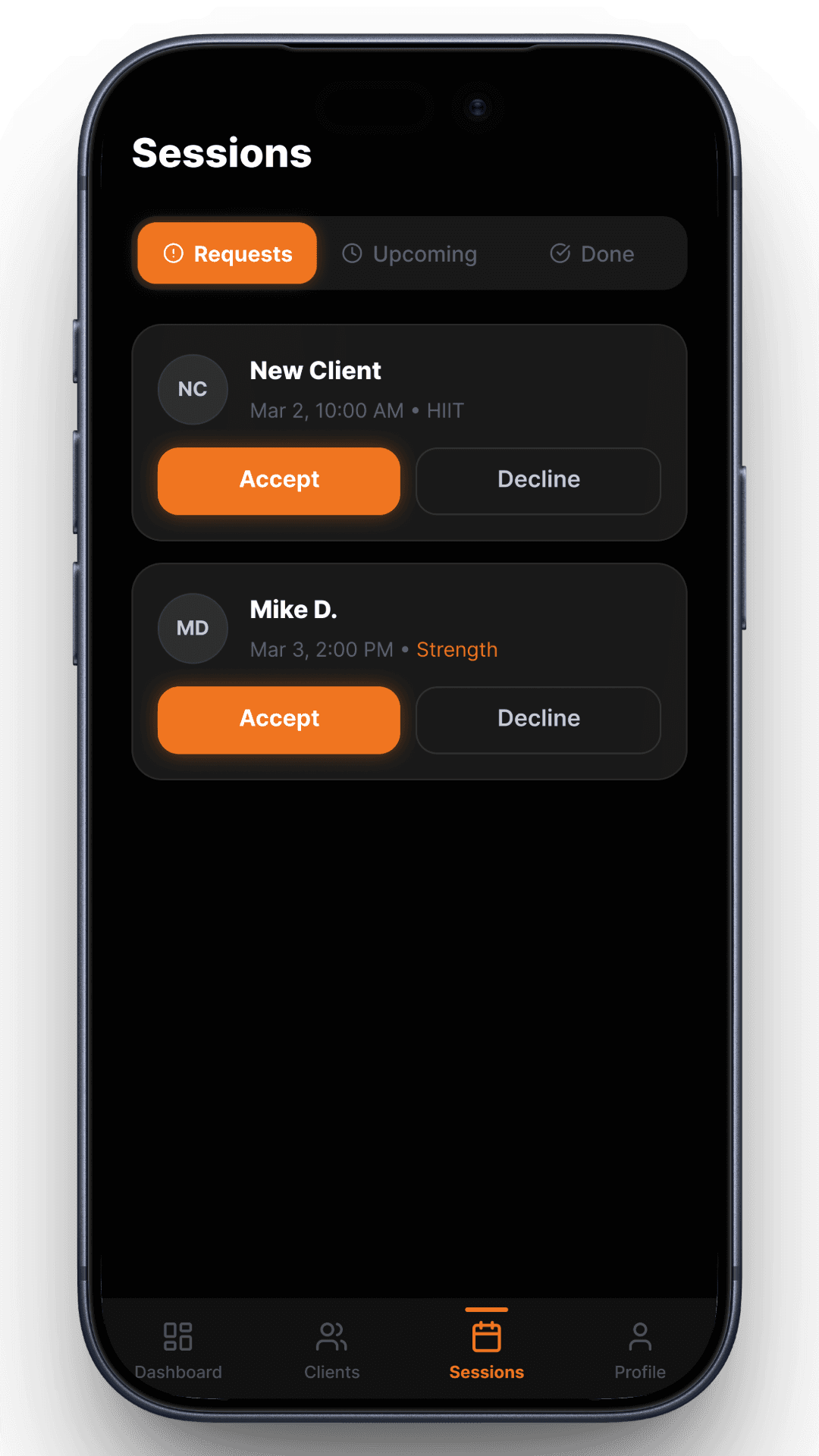
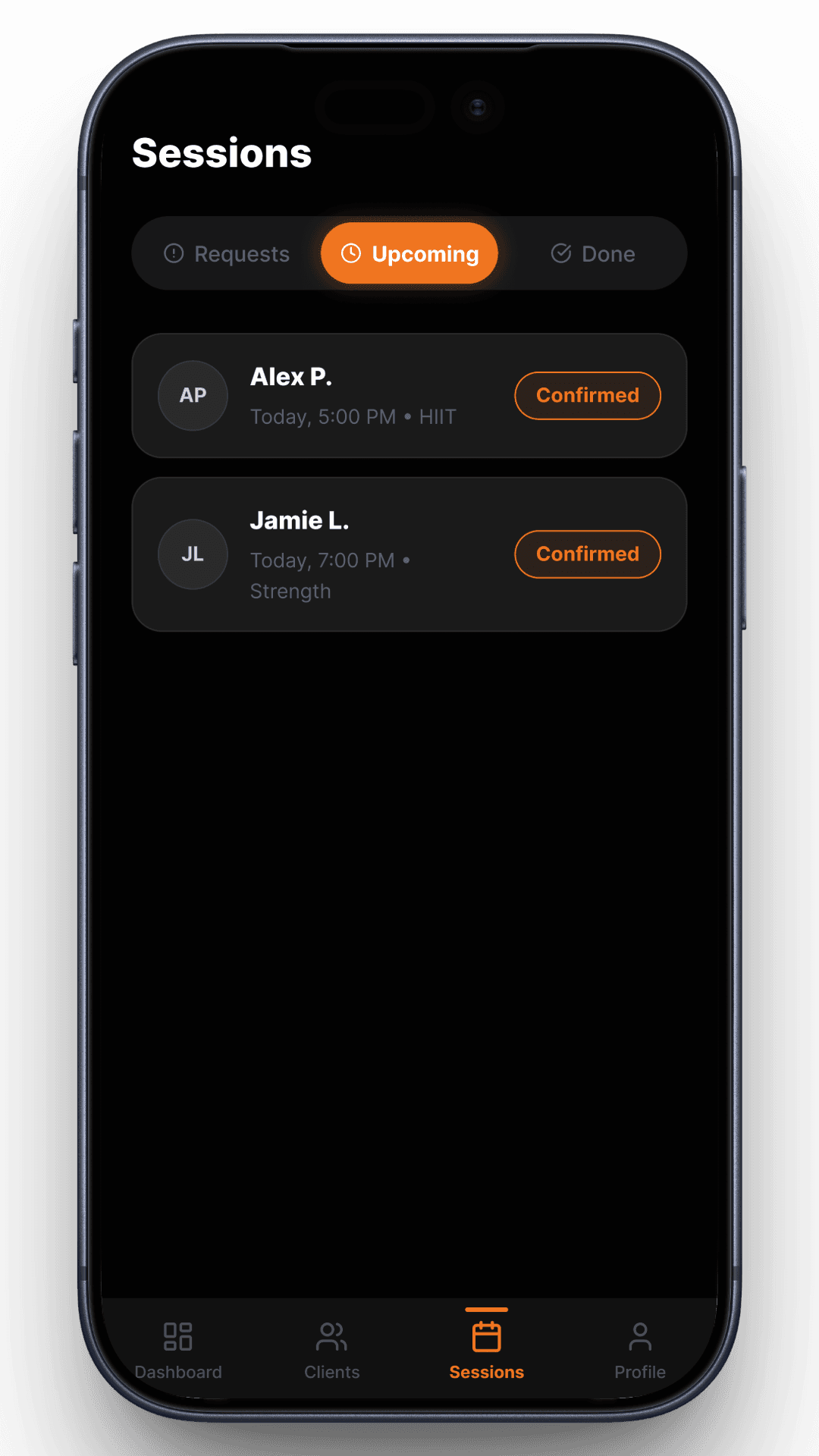
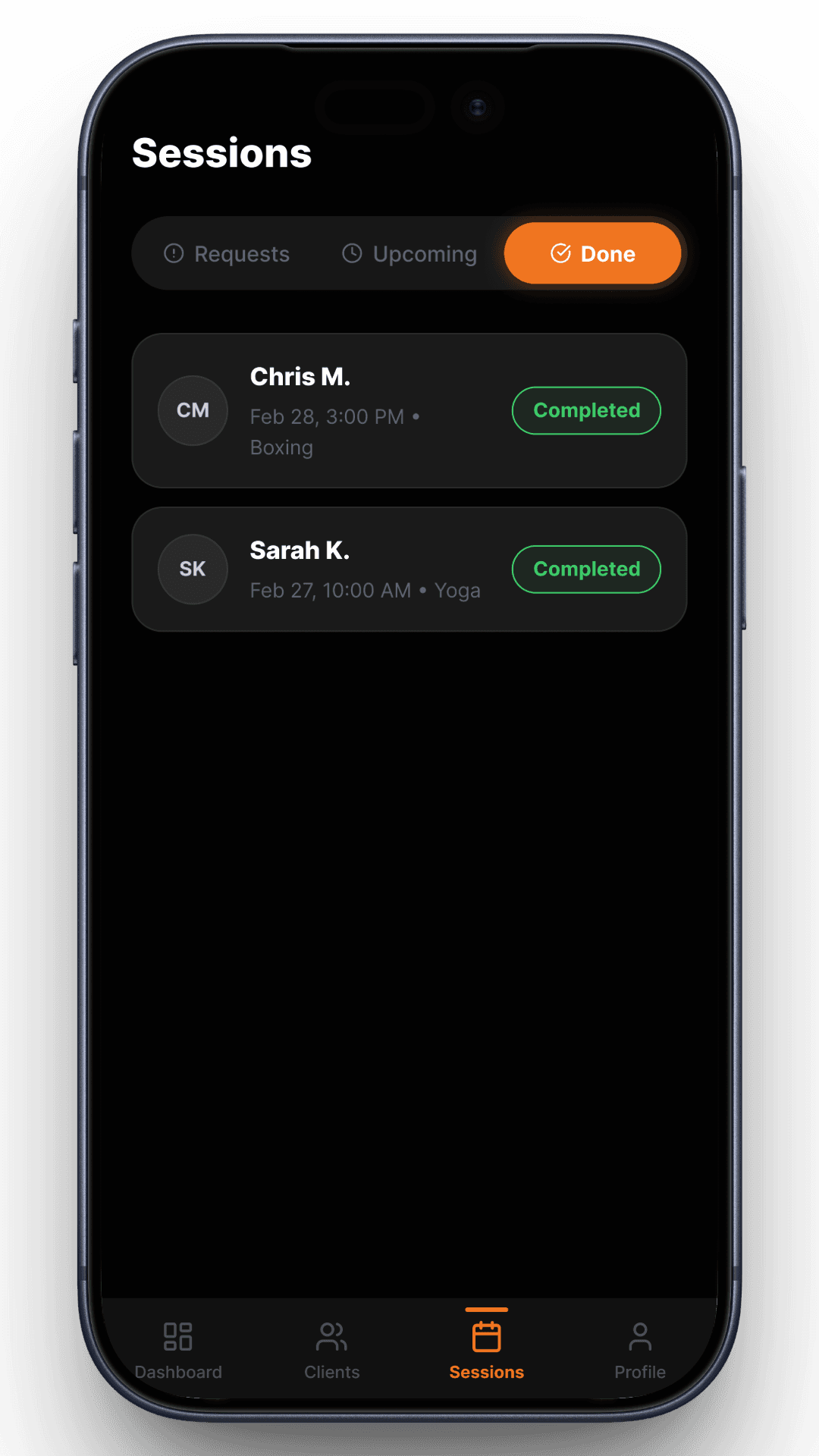
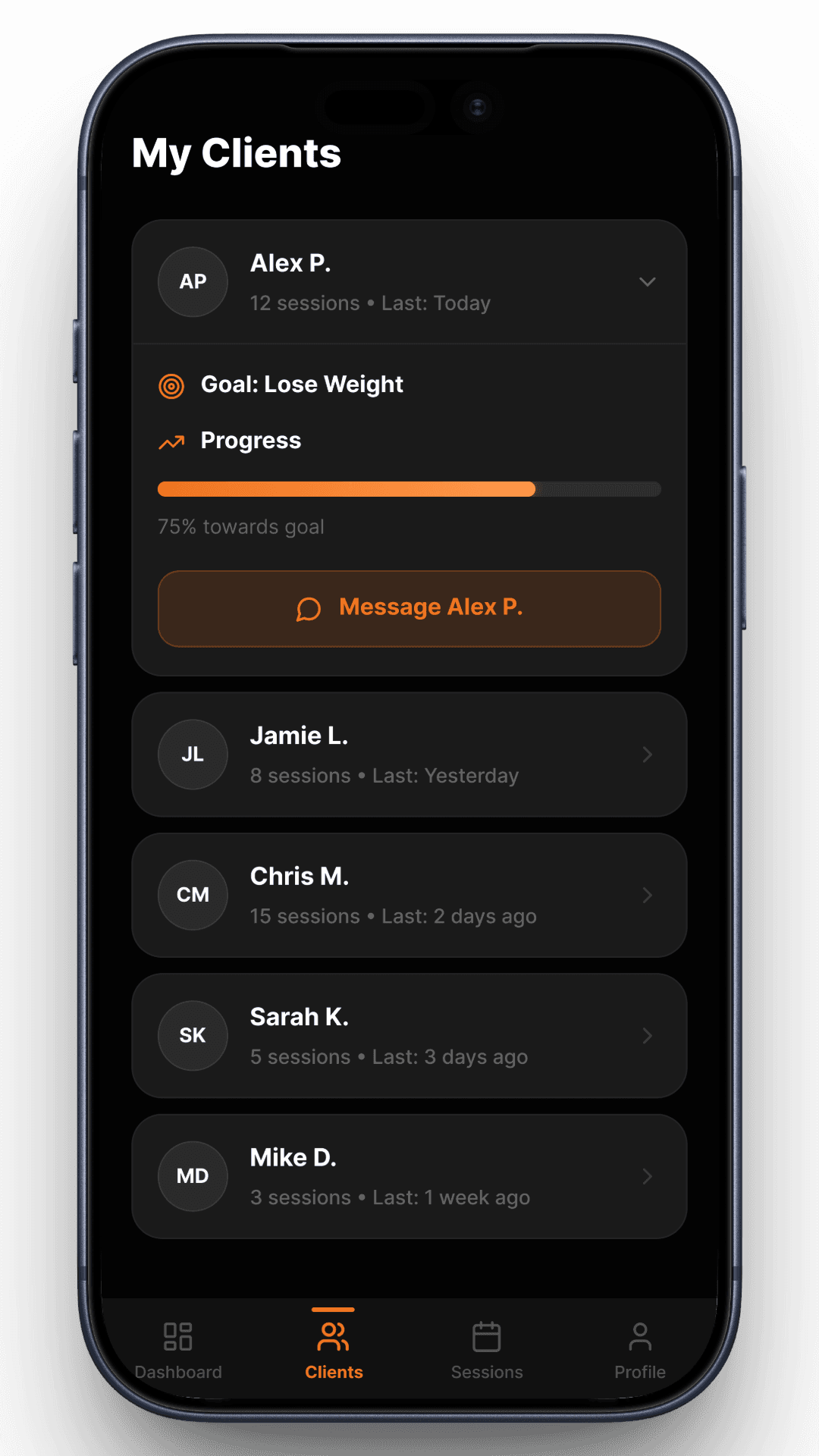
Once live, trainers receive client requests directly through the platform. Requests, upcoming sessions, and completed sessions are managed in one place, replacing the scattered mix of DMs, spreadsheets, and manual follow-ups most trainers rely on.
DELIVERS SESSIONS
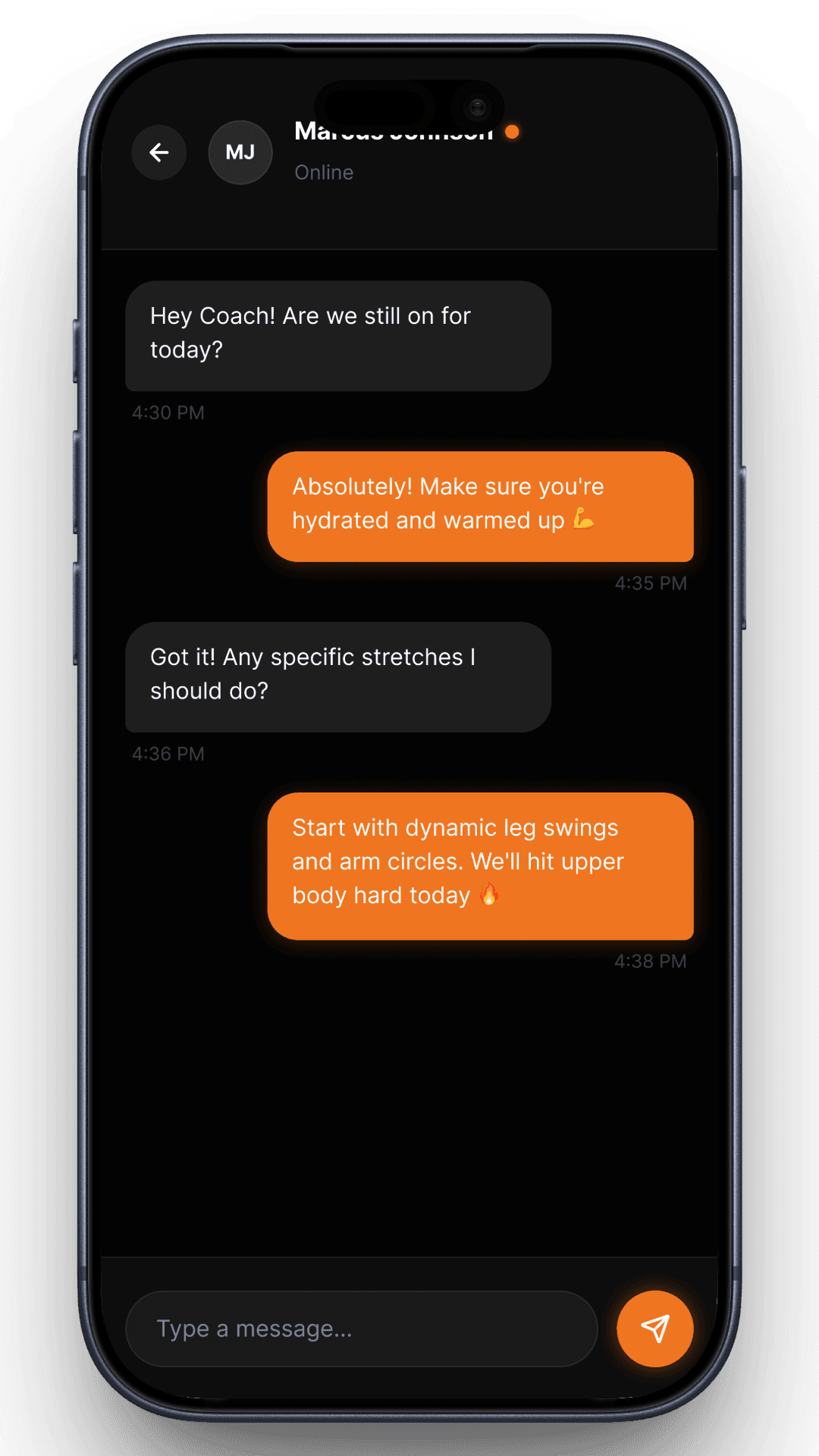
Client communication happens inside the platform through direct chat. Trainers can send personalized guidance, check in between sessions, and build relationships that go beyond a single booking.
GAINS VISIBILITY
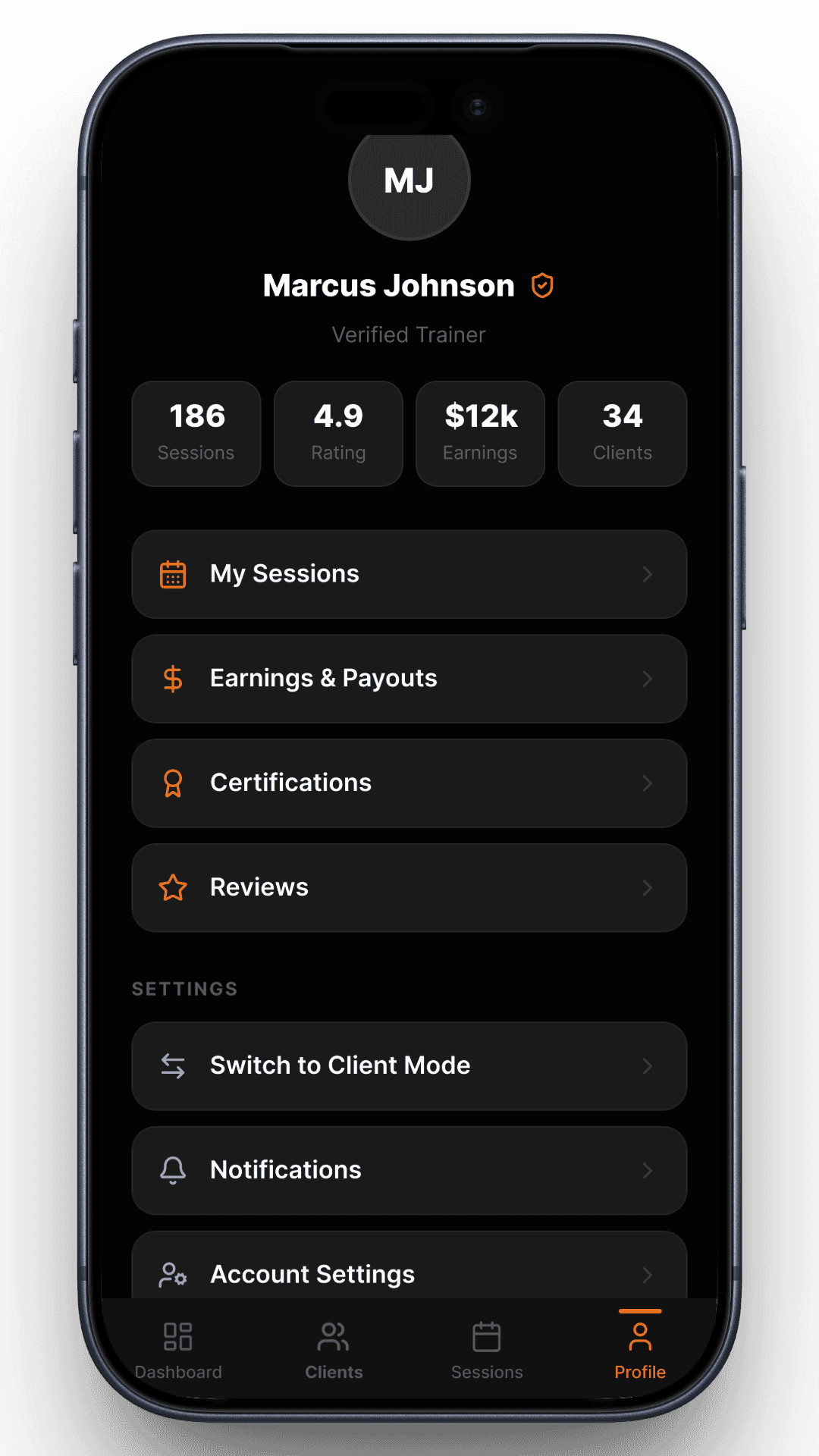
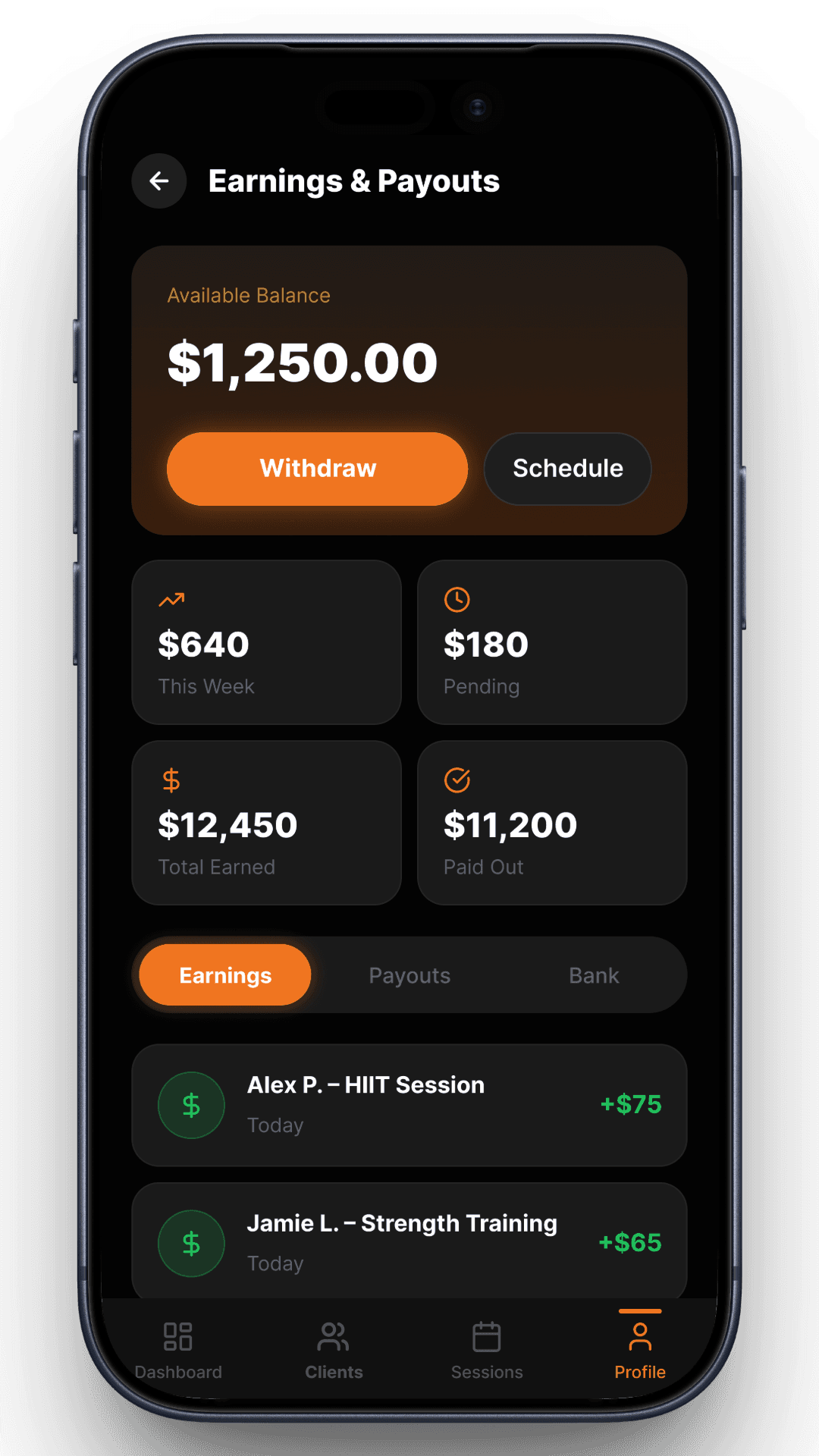
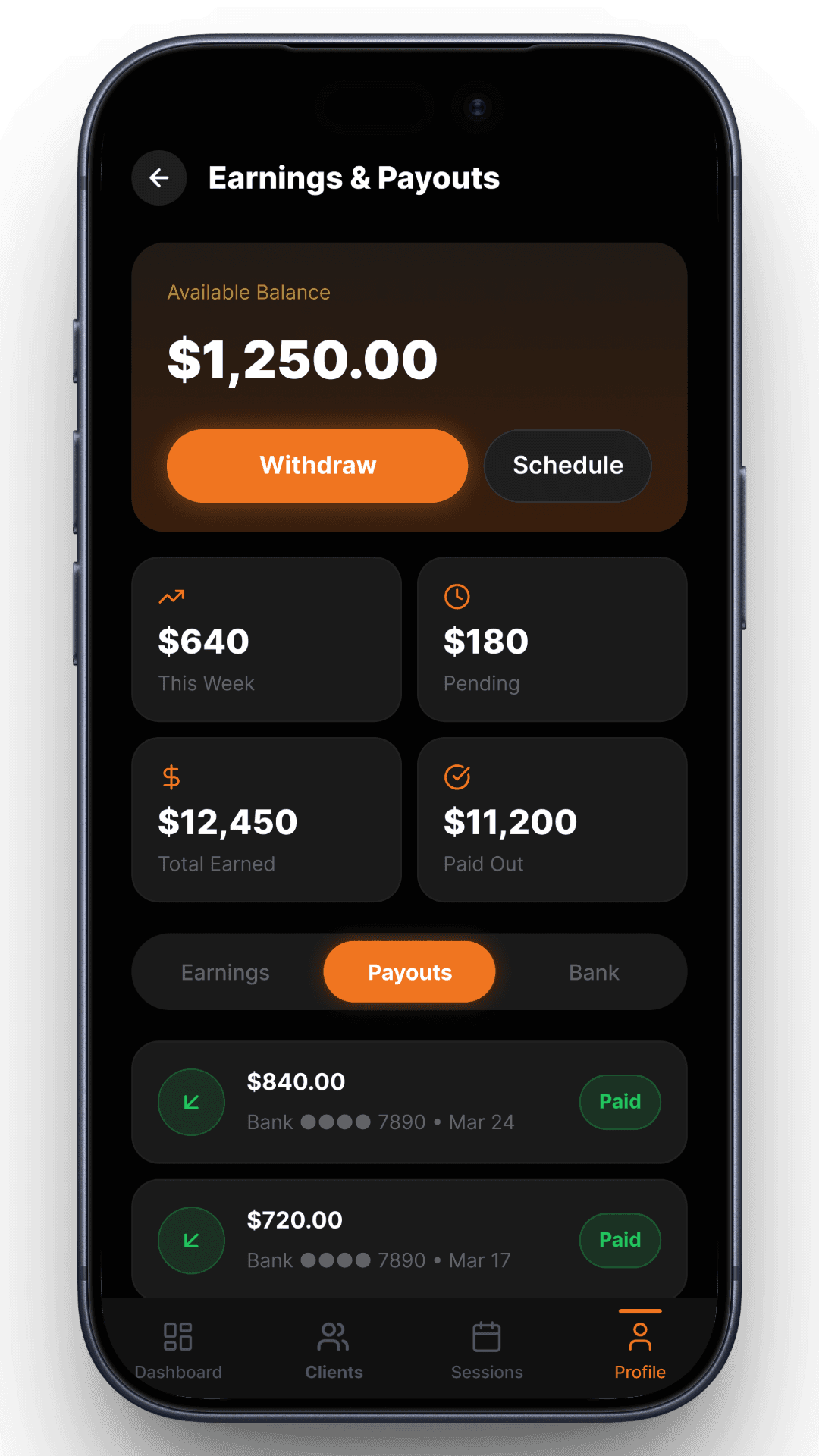
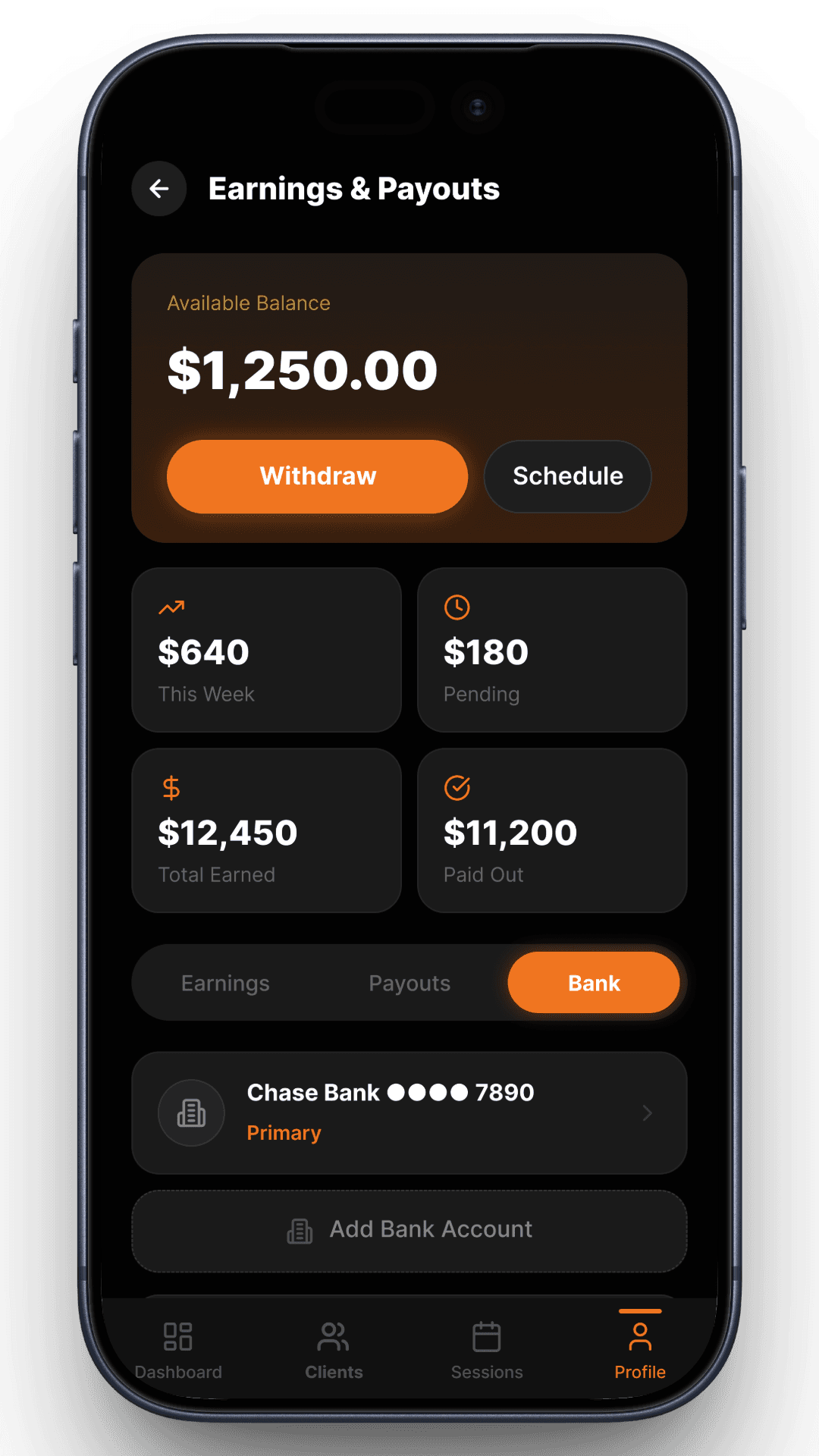
Strong sessions lead to strong reviews, and strong reviews improve matching visibility. Earnings, payouts, and performance metrics are tracked in one dashboard, giving trainers a clear picture of their growth over time.
KEY DECISIONS
Every design decision was made to solve a real problem for one or both sides of the platform. These are the choices that shaped the experience.
MATCHING OVER BROWSING
Open search puts the burden on the user. A guided onboarding flow captures preferences from both sides , clients get curated matches, trainers get relevant clients. Neither side wastes time on poor fits.
VERIFICATION BEFORE VISIBILITY
Trainers complete identity and certification verification before their profile goes live. This protects clients from unqualified coaches and gives verified trainers instant credibility the moment they appear in search results.
CHAT BEFORE BOOKING
Asking users to pay before they feel comfortable always loses conversions. A low-commitment chat interaction between client and trainer builds familiarity before any financial decision is made. By the time they book, the relationship has already started.
TRUST-FIRST PROFILES
Star ratings alone don't build confidence. Surfacing certifications, session count, specialization, and a personalized match explanation gives clients the proof they need and gives trainers a structured way to communicate their expertise.
PODS OVER SOLO GAMIFICATION
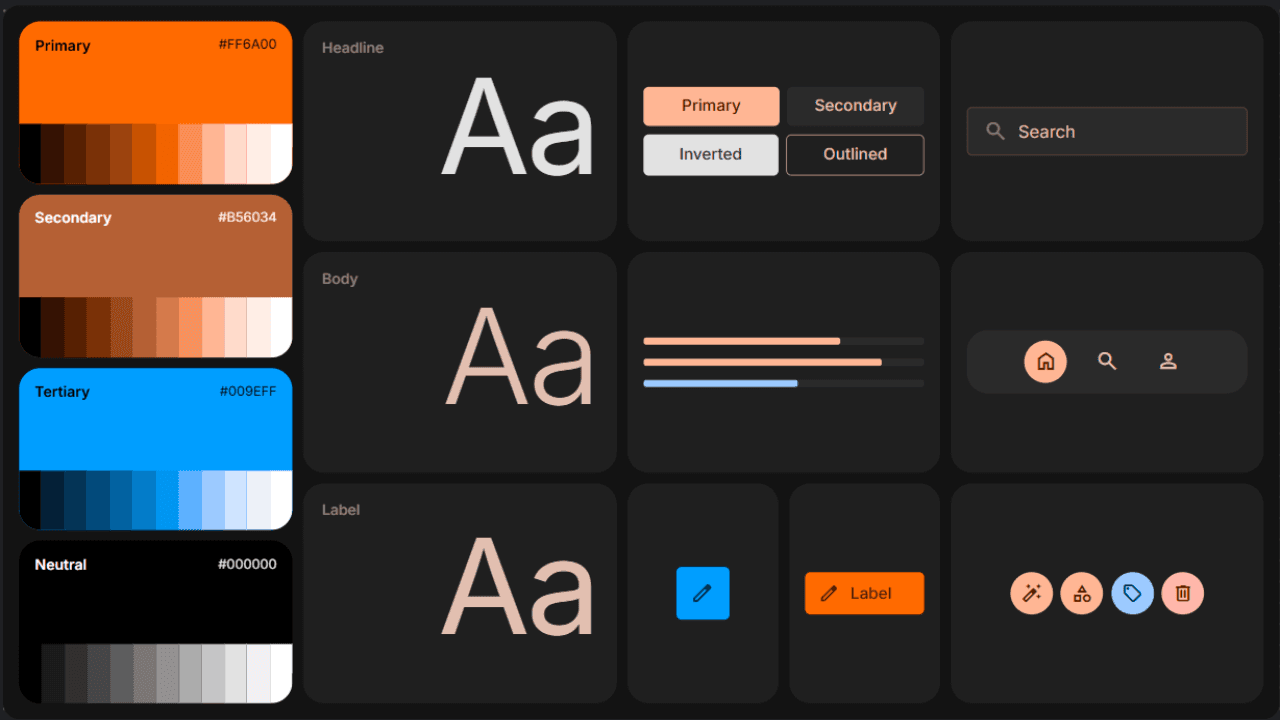
A consistent visual language was established before building screens, ensuring coherence across both client and trainer experiences.
DESIGN SYSTEM
Individual streaks help short term. Community makes consistency stick long term. Group pods introduced shared accountability and collective motivation that kept clients engaged beyond one-on-one coaching, reducing churn for trainers too.
REFLECTION
Designing FitConnect taught me that a marketplace is only as strong as the trust between its two sides. Every feature had to earn that trust before asking anything from the user.
The hardest part wasn't designing the screens. It was deciding what not to build. A platform that tries to solve everything solves nothing. Guided matching, chat-first booking, and community accountability were chosen because they addressed the real barriers, not because they were the most obvious features to add.
Designing for two users simultaneously also meant every decision had a second-order effect. A change to the trainer profile affected client confidence. A change to the matching flow affected trainer visibility. Nothing existed in isolation.
NEXT STEPS
Build out the trainer analytics dashboard with performance insights and client retention metrics
Introduce AI-powered matching that improves recommendations based on session history and user feedback
Explore subscription models for both clients and trainers to support long-term platform sustainability
Role :
Product Designer
(End-to-End)
Company :
Marketplace Concept
Duration :
4 Weeks
Mentorship :
Guided by Kevin Cook, Sr. UX Designer at AWS
CONTEXT
FitConnect is a two-sided marketplace connecting clients with trainers through guided matching and trust-driven interactions. The goal was to reduce decision fatigue while improving visibility and consistency for both sides.
Problem
Clients
Finding the right trainer is overwhelming and uncertain.
Too many similar profiles with nothing to differentiate them
No way to verify if a trainer actually fits their goals
No guidance — just a search bar and a list
Trainers
Building a consistent client base feels like guesswork.
Discovery depends heavily on word-of-mouth or social media
No structured tools to convert, manage, or retain clients in one place
No way to showcase expertise beyond a basic profile
The challenge isn’t access, it’s alignment. Both sides exist on the platform but can’t meaningfully connect.
RESEARCH INSIGHTS
Insights drawn from user interviews, competitive research, and persona development across both client and trainer perspectives.
Users only trust trainers after seeing verified certifications, real results, and reviews from people with similar goals
A curated top-3 match with a "why we matched you" explanation outperformed open search every time
Users consistently wanted a low-friction intro interaction before making any booking decision
Most trainers rely on Instagram or referrals with no structured way to attract or retain clients
Scheduling, payments, and progress tracking happen across disconnected apps creating daily friction
Delays in trainer replies push users toward another trainer immediately, response speed directly signals trust
System Thinking
FitConnect only works when both sides win. Every design decision had to account for how an action on one side directly affects the other.
Client reviews don't just reflect past experiences. They improve future matching for every user on the platform. Trainer visibility doesn't just benefit trainers. It gives clients better options. The two sides are permanently connected.
The design had to protect every step in that loop. A weak trainer profile breaks matching. A slow response breaks booking. A bad session breaks retention. One broken link collapses the whole system.
USER JOURNEY
Client JOURNEY
To understand where users struggled, I mapped the full client journey from discovering FitConnect to completing their first session.
The biggest friction points appeared at the discovery and evaluation stages, where users felt overwhelmed by choices and lacked enough trust to commit to a trainer.
Trainer JOURNEY
I mapped the trainer journey from application to long-term growth, focusing on reducing onboarding friction and building platform credibility.
The trainer journey was designed to reduce setup friction and build credibility fast, so trainers could focus on coaching rather than admin.
WIREFRAMES
Wireframes were built to validate structure and flow before any visual decisions were made. The focus was on information hierarchy, user flow, and reducing friction at key decision points.
CLIENT SIDE
Onboarding captures goals and preferences early, feeding directly into the matching algorithm. Each question was designed to feel like progress, not a form.
TRAINER SIDE
Trainer onboarding prioritized credential verification upfront, establishing trust before the profile goes live on the platform.
CLIENT JOURNEY
The client experience was designed to replace overwhelming search with guided discovery, build trust before commitment, and encourage consistency after the first session.
MATCHING
Most fitness apps drop users into a search bar and expect them to figure it out. Onboarding captures preferences through an XP-driven flow where each answer builds a behavioral profile. By the time the match appears, the platform already knows what the user needs.
TRUST LAYER
A trainer's name and photo isn't enough to convince someone to commit. Certifications, session count, specialization, and a personalized match explanation give clients proof before they make any decision.
BOOKING
A chat-first approach lets clients connect with their trainer before selecting a time or location. By the time they confirm a session, the relationship has already started.
RETENTION
Streaks, upcoming sessions, and XP milestones make progress visible. Small wins keep users engaged between sessions without relying on willpower alone.
PODS
Group pods connect clients with shared goals, group chat, and collective accountability. Users show up for each other when personal motivation isn't enough.
CLIENT JOURNEY
The trainer experience was designed to reduce onboarding friction, establish credibility fast, and give trainers the tools to grow a sustainable client base.
PROFILE CREATION
The onboarding process was built to establish trust from the first step. Trainers verify their identity, upload certifications, and define their expertise before their profile goes live. Verification upfront protects clients and gives trainers instant credibility on the platform.
GETS DISCOVERED
Specialties and availability aren't just profile fields. They directly determine how and when a trainer surfaces in client matching. The more precise a trainer's profile, the more relevant the clients they attract.
RECEIVES BOOKINGS
Once live, trainers receive client requests directly through the platform. Requests, upcoming sessions, and completed sessions are managed in one place, replacing the scattered mix of DMs, spreadsheets, and manual follow-ups most trainers rely on.
DELIVERS SESSIONS
Client communication happens inside the platform through direct chat. Trainers can send personalized guidance, check in between sessions, and build relationships that go beyond a single booking.
GAINS VISIBILITY
Strong sessions lead to strong reviews, and strong reviews improve matching visibility. Earnings, payouts, and performance metrics are tracked in one dashboard, giving trainers a clear picture of their growth over time.
KEY DECISIONS
Every design decision was made to solve a real problem for one or both sides of the platform. These are the choices that shaped the experience.
MATCHING OVER BROWSING
Open search puts the burden on the user. A guided onboarding flow captures preferences from both sides , clients get curated matches, trainers get relevant clients. Neither side wastes time on poor fits.
VERIFICATION BEFORE VISIBILITY
Trainers complete identity and certification verification before their profile goes live. This protects clients from unqualified coaches and gives verified trainers instant credibility the moment they appear in search results.
CHAT BEFORE BOOKING
Asking users to pay before they feel comfortable always loses conversions. A low-commitment chat interaction between client and trainer builds familiarity before any financial decision is made. By the time they book, the relationship has already started.
TRUST-FIRST PROFILES
Star ratings alone don't build confidence. Surfacing certifications, session count, specialization, and a personalized match explanation gives clients the proof they need and gives trainers a structured way to communicate their expertise.
PODS OVER SOLO GAMIFICATION
A consistent visual language was established before building screens, ensuring coherence across both client and trainer experiences.
DESIGN SYSTEM
Individual streaks help short term. Community makes consistency stick long term. Group pods introduced shared accountability and collective motivation that kept clients engaged beyond one-on-one coaching, reducing churn for trainers too.
REFLECTION
Designing FitConnect taught me that a marketplace is only as strong as the trust between its two sides. Every feature had to earn that trust before asking anything from the user.
The hardest part wasn't designing the screens. It was deciding what not to build. A platform that tries to solve everything solves nothing. Guided matching, chat-first booking, and community accountability were chosen because they addressed the real barriers, not because they were the most obvious features to add.
Designing for two users simultaneously also meant every decision had a second-order effect. A change to the trainer profile affected client confidence. A change to the matching flow affected trainer visibility. Nothing existed in isolation.
NEXT STEPS
Build out the trainer analytics dashboard with performance insights and client retention metrics
Introduce AI-powered matching that improves recommendations based on session history and user feedback
Explore subscription models for both clients and trainers to support long-term platform sustainability
Role :
Product Designer
(End-to-End)
Company :
Marketplace Concept
Duration :
4 Weeks
Mentorship :
Guided by Kevin Cook, Sr. UX Designer at AWS
CONTEXT
FitConnect is a two-sided marketplace connecting clients with trainers through guided matching and trust-driven interactions. The goal was to reduce decision fatigue while improving visibility and consistency for both sides.
Problem
Clients
Finding the right trainer is overwhelming and uncertain.
Too many similar profiles with nothing to differentiate them
No way to verify if a trainer actually fits their goals
No guidance — just a search bar and a list
Trainers
Building a consistent client base feels like guesswork.
Discovery depends heavily on word-of-mouth or social media
No structured tools to convert, manage, or retain clients in one place
No way to showcase expertise beyond a basic profile
The challenge isn’t access, it’s alignment. Both sides exist on the platform but can’t meaningfully connect.
RESEARCH INSIGHTS
Insights drawn from user interviews, competitive research, and persona development across both client and trainer perspectives.
Users only trust trainers after seeing verified certifications, real results, and reviews from people with similar goals
A curated top-3 match with a "why we matched you" explanation outperformed open search every time
Users consistently wanted a low-friction intro interaction before making any booking decision
Most trainers rely on Instagram or referrals with no structured way to attract or retain clients
Scheduling, payments, and progress tracking happen across disconnected apps creating daily friction
Delays in trainer replies push users toward another trainer immediately, response speed directly signals trust
System Thinking
FitConnect only works when both sides win. Every design decision had to account for how an action on one side directly affects the other.
Client reviews don't just reflect past experiences. They improve future matching for every user on the platform. Trainer visibility doesn't just benefit trainers. It gives clients better options. The two sides are permanently connected.
The design had to protect every step in that loop. A weak trainer profile breaks matching. A slow response breaks booking. A bad session breaks retention. One broken link collapses the whole system.
USER JOURNEY
Client JOURNEY
To understand where users struggled, I mapped the full client journey from discovering FitConnect to completing their first session.
The biggest friction points appeared at the discovery and evaluation stages, where users felt overwhelmed by choices and lacked enough trust to commit to a trainer.
Trainer JOURNEY
I mapped the trainer journey from application to long-term growth, focusing on reducing onboarding friction and building platform credibility.
The trainer journey was designed to reduce setup friction and build credibility fast, so trainers could focus on coaching rather than admin.
WIREFRAMES
Wireframes were built to validate structure and flow before any visual decisions were made. The focus was on information hierarchy, user flow, and reducing friction at key decision points.
CLIENT SIDE
Onboarding captures goals and preferences early, feeding directly into the matching algorithm. Each question was designed to feel like progress, not a form.
TRAINER SIDE
Trainer onboarding prioritized credential verification upfront, establishing trust before the profile goes live on the platform.
CLIENT JOURNEY
The client experience was designed to replace overwhelming search with guided discovery, build trust before commitment, and encourage consistency after the first session.
MATCHING
Most fitness apps drop users into a search bar and expect them to figure it out. Onboarding captures preferences through an XP-driven flow where each answer builds a behavioral profile. By the time the match appears, the platform already knows what the user needs.
TRUST LAYER
A trainer's name and photo isn't enough to convince someone to commit. Certifications, session count, specialization, and a personalized match explanation give clients proof before they make any decision.
BOOKING
A chat-first approach lets clients connect with their trainer before selecting a time or location. By the time they confirm a session, the relationship has already started.
RETENTION
Streaks, upcoming sessions, and XP milestones make progress visible. Small wins keep users engaged between sessions without relying on willpower alone.
PODS
Group pods connect clients with shared goals, group chat, and collective accountability. Users show up for each other when personal motivation isn't enough.
CLIENT JOURNEY
The trainer experience was designed to reduce onboarding friction, establish credibility fast, and give trainers the tools to grow a sustainable client base.
PROFILE CREATION
The onboarding process was built to establish trust from the first step. Trainers verify their identity, upload certifications, and define their expertise before their profile goes live. Verification upfront protects clients and gives trainers instant credibility on the platform.
GETS DISCOVERED
Specialties and availability aren't just profile fields. They directly determine how and when a trainer surfaces in client matching. The more precise a trainer's profile, the more relevant the clients they attract.
RECEIVES BOOKINGS
Once live, trainers receive client requests directly through the platform. Requests, upcoming sessions, and completed sessions are managed in one place, replacing the scattered mix of DMs, spreadsheets, and manual follow-ups most trainers rely on.
DELIVERS SESSIONS
Client communication happens inside the platform through direct chat. Trainers can send personalized guidance, check in between sessions, and build relationships that go beyond a single booking.
GAINS VISIBILITY
Strong sessions lead to strong reviews, and strong reviews improve matching visibility. Earnings, payouts, and performance metrics are tracked in one dashboard, giving trainers a clear picture of their growth over time.
KEY DECISIONS
Every design decision was made to solve a real problem for one or both sides of the platform. These are the choices that shaped the experience.
MATCHING OVER BROWSING
Open search puts the burden on the user. A guided onboarding flow captures preferences from both sides , clients get curated matches, trainers get relevant clients. Neither side wastes time on poor fits.
VERIFICATION BEFORE VISIBILITY
Trainers complete identity and certification verification before their profile goes live. This protects clients from unqualified coaches and gives verified trainers instant credibility the moment they appear in search results.
CHAT BEFORE BOOKING
Asking users to pay before they feel comfortable always loses conversions. A low-commitment chat interaction between client and trainer builds familiarity before any financial decision is made. By the time they book, the relationship has already started.
TRUST-FIRST PROFILES
Star ratings alone don't build confidence. Surfacing certifications, session count, specialization, and a personalized match explanation gives clients the proof they need and gives trainers a structured way to communicate their expertise.
PODS OVER SOLO GAMIFICATION
A consistent visual language was established before building screens, ensuring coherence across both client and trainer experiences.
DESIGN SYSTEM
Individual streaks help short term. Community makes consistency stick long term. Group pods introduced shared accountability and collective motivation that kept clients engaged beyond one-on-one coaching, reducing churn for trainers too.
REFLECTION
Designing FitConnect taught me that a marketplace is only as strong as the trust between its two sides. Every feature had to earn that trust before asking anything from the user.
The hardest part wasn't designing the screens. It was deciding what not to build. A platform that tries to solve everything solves nothing. Guided matching, chat-first booking, and community accountability were chosen because they addressed the real barriers, not because they were the most obvious features to add.
Designing for two users simultaneously also meant every decision had a second-order effect. A change to the trainer profile affected client confidence. A change to the matching flow affected trainer visibility. Nothing existed in isolation.
NEXT STEPS
Build out the trainer analytics dashboard with performance insights and client retention metrics
Introduce AI-powered matching that improves recommendations based on session history and user feedback
Explore subscription models for both clients and trainers to support long-term platform sustainability